Vampire immortality
Interview with the VampireVampire immortality is presented as an existence beyond ordinary human time, acquired through a violent transformation and sustained by a body that heals almost perfectly. For Louis, its decisive meaning lies in the contradiction between limitless duration and unending moral exposure: immortality grants power, but it does not erase grief, responsibility, revulsion, or the knowledge that every human life taken remains a death.
Becoming a Vampire
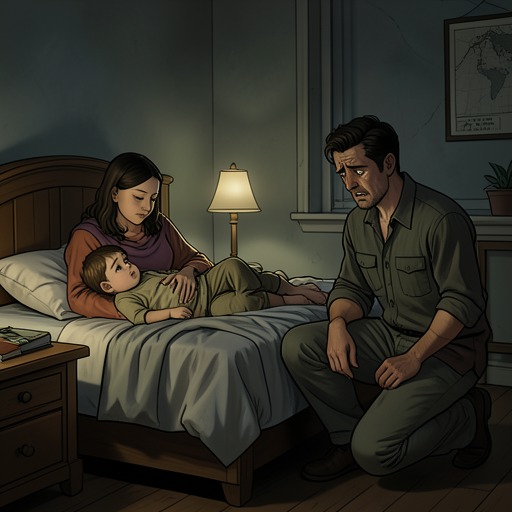
Louis’s transformation begins with Lestat’s promise of a life that will last “until the end of the world.” The promise is attached to a practical bargain: Lestat wants Pointe du Lac plantation and needs a companion who can help him manage his blind father while concealing his vampiric nature. Immortality therefore enters the story not as an abstract gift but as part of an exchange involving property, secrecy, family obligation, and dependence.
The change is not described as a single instantaneous act. Louis insists that several acts are involved, though one of them becomes the irreversible threshold. The first is the overseer’s death. Lestat kills the man in his sleep while Louis watches, and Louis must witness the entire process as proof of commitment. The overseer struggles, gradually weakens, and takes nearly an hour to die. Louis’s horror is intensified by the fact that he has recently developed an especially strong fear of death after his brother’s death. Even after becoming the cause of death himself, he does not lose that fear or his regard for the lives of others.
The treatment of the overseer’s body further defines the moral burden of the condition. Louis is weak and feverish, and handling the corpse makes him nauseated. Lestat expects vampirism to transform this response into laughter, but he is wrong. Louis states that he never laughs at death, however frequently he causes it. The new body gives him the capacity to kill, but it does not automatically supply emotional detachment; immortality enlarges his power without resolving his conscience.
Powers, Limits, and the Body
The most explicit account of vampire resilience comes through Armand’s instruction. A vampire may be injured, scarred, or apparently destroyed without ordinary wounds ending the existence. Bones heal as skin heals, and even a fall onto cobblestones would cause only temporary harm. The body is therefore radically resistant to the injuries that govern mortal life. Armand identifies the true means of destruction as the destruction of the remains themselves: fire, dismemberment, and the heat of the sun. Apart from these, the vampire is resilient and immortal.
This apparent invulnerability creates a sharp contrast with mortal decay. Louis has seen Lestat’s father as a “living corpse,” a body reduced by years of illness and time while remaining animated by will. Louis experiences this slow deterioration as more disturbing than the swift, unconscious deaths caused by vampires, because the dying man remains lucid and burdened by the past. Vampire immortality is thus defined not merely by survival but by a changed relation to bodily time: the vampire escapes gradual human decay, while mortal bodies become reminders of the condition from which the vampire has been separated.
The limits of immortality remain materially concrete. Louis disposes of bodies by burning or abandoning them in places where they will not expose the vampire community. The theater vampires sleep in coffins during the day, and the hidden spaces beneath the Théâtre des Vampires are organized around protection from daylight and discovery. When Louis burns the theater, fire becomes both an instrument of revenge and the one force capable of destroying vampire remains. Immortality therefore depends on concealment, enclosure, and a continual management of the conditions that can end it.
Immortality and Mortal Death
Louis’s first transformation is preceded by a final sunrise. After Lestat’s visit, Louis watches daylight spread across the French windows, lace curtains, trees, floor, water, and his sleeping sister. He says goodbye to the sunrise before leaving to become a vampire and calls it the last sunrise. The scene establishes immortality as a severance from a recurring human rhythm. Daylight will no longer be an ordinary promise of waking life; it becomes an image of what has been relinquished.
The condition does not make Louis indifferent to mortal death. At the Théâtre des Vampires, he watches a performance in which a human woman is surrounded by seven vampires and killed before an audience that responds with gasps, laughter, sighs, and applause. The theatrical frame makes predation appear as entertainment, but Louis remains physically and emotionally disturbed by the scene. Afterward, the taste of the girl remains with him, and he recognizes that he could seize a human usher and take him in the darkness to silence his confusion. Claudia tells him to be patient. Immortality has made violence available at every moment, yet the availability of killing does not remove conflict over whether to act.
The same tension appears in the account of Emily’s grave. Morgan describes a woman buried for six months whose body is found fresh and flexible, only for men to drive a stake into her breast and sever her head with a shovel. Louis responds with intense revulsion, imagining the corpse and feeling unable to breathe. The scene places two competing forms of death beside one another: vampiric preservation beyond the limits of ordinary decay and human violence directed against a body believed to harbor a supernatural threat. Immortality destabilizes the boundary between corpse and living person, making the body an object of fear, proof, and ritual destruction.
Immortality as a Social Condition
Vampire immortality is never purely individual. It requires a concealed community with rules about where vampires may gather, how they may be seen, and how their deaths or victims are managed. The Théâtre des Vampires operates by invitation, presenting an ordinary human theater above a hidden subterranean world. Louis and Claudia enter through Armand’s invitation, pass through the performance space, and descend into rooms filled with monumental images of death and damnation. The architecture turns immortality into a spatial order: public spectacle conceals private existence, while underground rooms preserve the group from the mortal world.
The theater’s performances also reveal how immortality reorganizes time into repetition. The same acts of disguise, seduction, feeding, theatrical death, and return can be staged before successive human audiences. The crowd experiences a temporary illusion that ends when the lights rise and the theater empties into rain and carriage traffic. The vampires, however, carry the reality of the performance beyond the curtain. Their endless existence depends on making mortality appear consumable, decorative, and repeatable.
That system is vulnerable whenever mortals recognize what they have seen. Morgan hears that vampires are responsible for the unexplained corpse and fears what will happen to Emily. At the Théâtre des Vampires, the hidden group regards Madeleine with suspicion because she knows about them while they do not know her. Knowledge itself becomes a danger to immortal life. Louis understands that immortality requires not only physical survival but the preservation of secrecy, and the community responds to exposure by controlling, intimidating, or eliminating those who threaten it.
Loss, Choice, and Meaning
For Louis, immortality intensifies attachment rather than replacing it. His memories of Claudia include the physical comfort of holding her weight against his chest, while her later warning that he may be choosing wrongly reveals that endless life does not prevent separation. When Louis decides that Armand alone can give him the strength to become what he is, he describes the alternative starkly: either he goes with Armand or he dies. Immortality has become a condition that must be interpreted and chosen within relationships, not simply enjoyed as an automatic blessing.
The destruction of the Théâtre des Vampires demonstrates the paradox most completely. Louis seals the theater’s doors, enters the hidden cells, pours kerosene over beams, wooden doors, chairs, draperies, and the stage curtain, and sets the building alight. He hesitates at the door behind which Claudia and Madeleine were killed, but knows that their remains are gone and that opening it would serve no purpose. Fire consumes the theater in the gray light before dawn, turning the supposed permanence of the vampire community into ruins. Immortality can endure ordinary injury, but it cannot guarantee the survival of institutions, companions, or memories in their original form.
At the end of the recorded interview, the boy hears Louis’s account of passion, love, power, and despair and asks to be made a vampire. Louis reacts with rage because the request appears to misunderstand the meaning of the story. Yet he finally bites the boy, giving him the condition whose costs he has spent the narrative describing. The ending makes immortality a recurring transmission rather than a completed revelation: even after its grief and violence have been explained, its promise of power and endless sensation remains irresistible to the mortal listener. The vampire condition survives because human beings continue to desire the very freedom from death that exposes them to an eternal knowledge of it.