Vampire nature
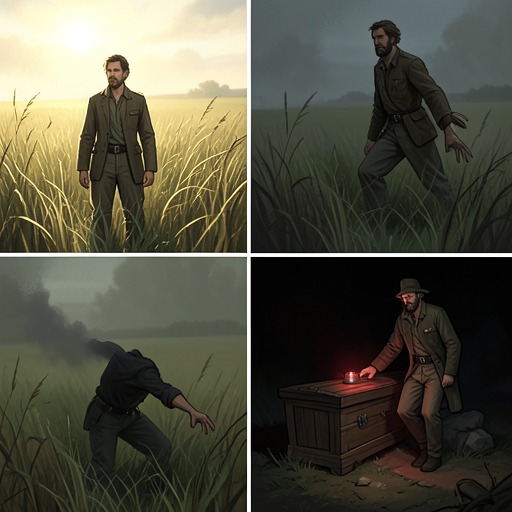
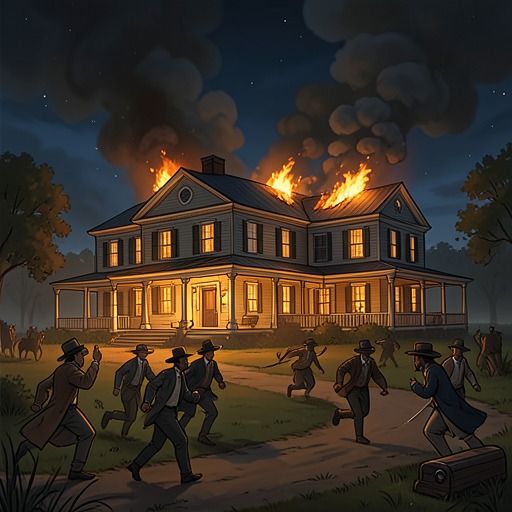
Interview with the VampireVampire nature is the central problem through which Louis interprets his existence. It names the condition he both inhabits and resists: a life sustained by blood, in which killing brings physical satisfaction while also producing guilt, despair, and an intensified awareness of mortality. For Louis, the question is never simply what a vampire can do. It is whether the vampire’s appetite constitutes a moral destiny, whether humane restraint is possible, and whether an immortal being can remain attached to the values of mortal life.
Definition and Physical Imperative
Vampire nature first appears to Louis as a conflict between bodily necessity and chosen conduct. In the hotel, while Lestat prepares to feed and urges him to kill, Louis experiences a desire for death that is calm, nearly emotionless, and constant. He wishes to die rather than continue under Lestat’s influence, yet thirst rises in him like a fever and forces him to seek nourishment. He turns to rats because he does not wish to kill human beings, but the animal blood gives him only limited satisfaction. His body therefore contradicts his ethical intention: he can refuse human victims, but he cannot refuse the need to feed.
Louis later recognizes that his preference for animals was not merely an aesthetic arrangement in which death could be studied gradually. He had imagined that animal killing allowed him to preserve the experience of human death for a more mature understanding, but he comes to see that the choice was moral as well. His formulation that every aesthetic decision is moral turns feeding into a question of responsibility. The manner in which a vampire selects, observes, and experiences death cannot be separated from the values that govern the selection. Louis’s attempt to call his restraint aesthetic is therefore also an attempt to postpone the larger question of whether his nature has already damned him.
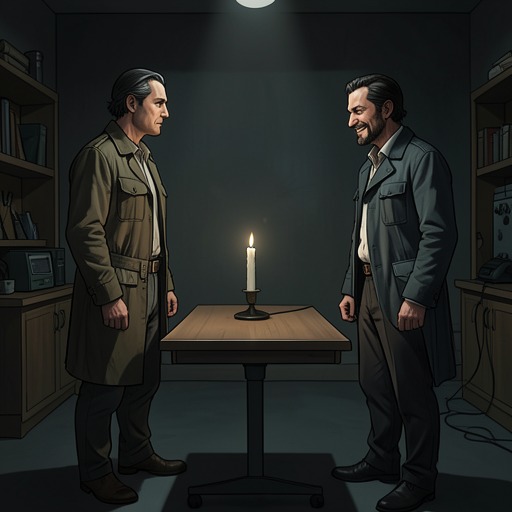
Lestat rejects the idea that Louis can remain faithful to mortal sensibility while living as a vampire. He argues that killing is not an accidental abuse of vampiric power but its proper activity. The vampire is a predator whose heightened vision is meant to provide detachment: the capacity to apprehend a human life as a whole and to take satisfaction in bringing that life to its end. In Lestat’s account, the vampire does not merely hunger for blood; the vampire occupies the point at which life becomes death and experiences that passage with an intensity unavailable to mortal beings.
Louis’s Resistance and Lestat’s Doctrine
Louis’s resistance is rooted in his continuing attachment to human warmth, sympathy, and the possibility of a moral life. Lestat accuses him of being in love with his mortal nature and of pursuing images of his former self through Freniere and Babette’s sister. Louis answers that vampirism has been the greatest adventure of his life: before becoming a vampire, he moved through existence as if blind, whereas the vampire’s senses revealed living bodies and made life visible through blood. This defense is double-edged. The vampire state has enlarged his perception, but it has also made him unable to enjoy life without confronting the violence by which he experiences it.
Lestat presses the contradiction through Louis’s attachment to Babette. He argues that watching a mortal woman from a window, caring for her, and imagining her acceptance can lead only to grief because she will age and die while Louis remains unchanged. If Louis kills a woman as rich and beautiful as Babette, Lestat claims, his hunger for her image and voice will disappear; the blood will satisfy him, and the moon, candlelight, and roses will retain their beauty. In this vision, killing does not destroy aesthetic sensitivity. It completes it by allowing the vampire to see death within every beautiful thing without the limitations of mortal regret.
The doctrine reaches its most forceful expression when Lestat describes vampires as dark angels, creatures whose relation to God is revealed through indiscriminate killing. He treats vampiric violence as analogous to divine power: God takes both rich and poor, and vampires likewise possess the ability to strike without regard to human distinctions. His claim that evil is a point of view attempts to release vampiric action from ordinary moral judgment. Louis is mesmerized because Lestat speaks directly to his pain, promising that the torment caused by divided desire will end if he accepts what his body already demands.
That persuasion leads Louis into the killing of a human victim. The act gives him the peace and physical strength Lestat has promised, but it does not resolve the moral crisis. Louis understands that he finds peace only when he kills and that animal blood produces merely vague longing. The knowledge is unbearable precisely because it is convincing. He asks whether he can return to being human even while the girl’s warm blood is still within him, discovering that physical satisfaction and spiritual despair can coexist in the same moment.
Religion, Damnation, and Moral Classification
Louis’s interpretation of vampire nature is inseparable from religious fear. After becoming Lestat’s companion, he imagines himself damned, comparing his condition to Judas’s belief in damnation when he placed the noose around his neck. The fear does not depend on Lestat’s teaching about devils or hell; it arises from Louis’s own recognition that he has crossed into a form of life defined by predation. His uncertainty about whether he is damned becomes a way of asking whether vampirism is a condition imposed from outside or an identity disclosed by action.
The question becomes explicit in Louis’s confrontation with a priest. He demands to know why God would permit such a creature to exist, presents his fangs, and asks why he is allowed to live. The priest calls him a devil, and Louis kills him at the steps of the Communion rail. The scene places vampiric violence directly inside a Christian space and turns the conflict between divine mercy and monstrous existence into a physical encounter. Louis seeks an explanation from religious authority but receives only fear and condemnation, which intensifies rather than resolves his sense of spiritual isolation.
Later, Armand offers a different theological logic. When Louis asks whether vampires are the Children of Satan, Armand argues that there are no children of Satan in the relevant sense: if God created Satan, then Satan’s power also comes from God, and vampires are God’s children as well. This reasoning removes the simple satanic origin Louis wants to use as an explanation for evil. Armand also rejects Louis’s belief that a first sin creates a single abyss into which one falls completely. He insists that goodness has degrees and variations, implying that evil must likewise be understood in gradations rather than as one undifferentiated gulf.
Louis cannot accept that consolation. He has killed repeatedly and expects to kill again, and he believes that the first act of evil changes the entire moral landscape. His difficulty with Armand’s argument reveals a crucial feature of vampire nature as Louis experiences it: the problem is not only predation but the absence of a stable category in which to place the predator. Louis wants vampirism to be absolutely evil because absolute evil would at least provide a clear judgment. A graduated morality leaves him responsible for distinctions he is not able to make without also confronting his own participation.
The Search for Other Vampires
Because Lestat refuses to provide an account that Louis can trust, Louis decides to search for other vampires. He expects that creatures who have existed for centuries may possess knowledge of their origins, their powers, and the secrets Lestat has withheld. This search is not simply geographical. It is an attempt to discover whether vampire nature has more than one form and whether Louis’s moral sensibility might belong to a broader vampiric tradition rather than to an isolated personal flaw.
Claudia shares the practical purpose of the quest but gives it a sharper communal meaning. She wants to find her own kind, and her repeated emphasis on that phrase exposes the gulf between her and Louis. Their journey through central Europe is directed toward the regions where vampire legends are said to be most prevalent, beginning with Varna and moving into the countryside of the Carpathians. The old books Claudia studies describe vampires whose remains are burned, whose hearts are staked, and whose heads are severed. Such accounts promise an ancient knowledge, but they also define vampirism through folkloric destruction rather than conscious identity.
The vampires they encounter in Transylvania, Hungary, Bulgaria, and neighboring regions are generally mindless corpses. They have wagging, bovine heads, haggard shoulders, rotted clothing, and no secrets to reveal. One woman, dead only a few months, flees through the forest in a blood-stained burial gown, her fingers still caked with grave dirt and her eyes empty of understanding. These creatures prove that vampirism can exist without reflective consciousness, which makes Louis and Claudia’s own intelligence appear exceptional but also more precarious. Their search for origins ends not in a lineage of teachers but in a spectacle of despair.
The discovery alters Louis’s relation to Lestat. In the empty nights of Eastern Europe, he repeatedly imagines Lestat and begins to want him alive. Lestat becomes the only vampire Louis has known who possesses a conscious, articulate life, even though his limits and cruelty are now familiar. The quest meant to free Louis from Lestat’s authority therefore produces an ironic dependence on his memory. Vampire nature appears divided between mindless persistence and dangerous consciousness, and Louis’s longing for Lestat arises from realizing that the latter may be rarer than he had believed.
Theatrical Display and the Problem of Consciousness
The Théâtre des Vampires presents another form of vampire nature: organized, collective, and theatrical. In Paris, Armand invites Louis and Claudia to the theater, where human spectators watch vampires stage Death as a performance. A masked figure carrying a silver scythe moves through a painted forest, while an old woman, cripples, and beggars pursue him. The audience laughs as Death recoils from the vulnerable and performs disgust, and the performance gradually reveals its true purpose when seven vampires surround a mortal woman.
The theater turns predation into spectacle while preserving the audience’s belief that it is watching fiction. The vampires remove skull masks one by one, disclose their beautiful white faces, and circle the victim as she protests that she does not want to die. Their words about the universality and unpredictability of death sound like philosophical instruction, but the performance culminates in actual feeding. The woman is passed from vampire to vampire before the enthralled crowd, then left naked in a black bier as the painted forest returns. The applause that follows confirms the theater’s central mechanism: human spectators consume the image of death aesthetically while remaining unable or unwilling to recognize the real killing before them.
Louis’s response exposes his difference from the coven’s detachment. He feels the victim’s beauty, fear, and blood as an overwhelming personal experience; even after the vampires withdraw, he is tempted to kill an usher in order to extinguish the passion and confusion left by the performance. Claudia restrains him by urging patience, while Armand watches from the edge of the box with a calm that appears almost outside ordinary perception. The theater thus makes visible two competing forms of vampire nature: the group’s cultivated control over death as a public art, and Louis’s inability to separate aesthetic pleasure from sympathy and guilt.
Armand’s subterranean rooms extend the theater’s imagery into a private philosophy. He leads Louis and Claudia past monumental scenes of the Triumph of Death and the Fall of the Angels, paintings in which skeletons, monsters, corpses, and damned figures transform mortality into an encompassing visual order. Yet Armand refuses to grant these images supernatural authority. Satan is only a picture, he says, and neither Satan nor the other vampires gives him power. For Armand, the mature vampire is not defined by allegiance to a demonic kingdom but by the ability to contemplate such symbols without confusing them with explanations.
Consequences and Continuing Meaning
Louis’s understanding of vampire nature remains unsettled because every attempted definition produces a contradiction. Lestat defines it as killing and urges Louis to do what his nature requires. Louis experiences that imperative as both bodily truth and moral catastrophe. The European quest reveals that some vampires are mindless corpses, while the Paris coven turns killing into a disciplined performance. Armand supplies intellectual detachment but cannot remove the fact that Louis’s compassion survives every lesson in predation.
The journey also changes Louis’s relationship to history and art. Paris initially appears to him as a complete and enduring universe, a place where mortal beauty, philosophy, theater, and art seem to promise a deeper understanding of the human heart. After Claudia and Madeleine are destroyed, however, the paintings of the Louvre become detached from the hands and human lives that created them. They seem dead, like figures severed from their origins, and therefore comparable to vampires, whose beauty and permanence conceal the violence of their making. Vampire nature shifts here from a question of appetite to a mode of perception that can sever objects from human feeling.
When Armand later reveals that Lestat survived the destruction of the theater and traveled back toward New Orleans, Louis’s dormant attachment to him returns. The news draws Louis home across the Atlantic. New Orleans is changed, but its familiar oaks, streets, mansions, roses, and the old town house revive an ease he had not expected. His return demonstrates that vampire nature does not abolish memory or attachment; it preserves them in altered, sometimes painful forms. Louis can seek detachment, travel through continents, and reduce art and bodies to ash, yet the old city still gathers feeling around the traces of Lestat, Claudia, and the life they once shared.
The concept finally acquires an unsettling dramatic force in Louis’s encounter with the boy who has listened to his story. The boy hears passion, longing, and a life beyond ordinary human limits, and he demands the power to become a vampire. Louis reacts with outrage because the request treats the account of vampire nature as an invitation rather than a warning. When the boy insists that Louis has forgotten what human life means, Louis admits that he has failed to communicate the truth. His decision to bite the boy is an attempt to make the meaning bodily and immediate, but it also repeats the very transformation whose consequences he has spent the narrative trying to explain. Vampire nature therefore remains not a solved doctrine but an irreversible act: a power that promises intensified existence while binding consciousness to hunger, death, memory, and responsibility.