Vampirism
Interview with the VampireVampirism is the condition into which Louis enters after a period of grief, self-destructive despair, and spiritual confusion. It does not merely preserve a human being beyond death: it kills the human body, awakens new senses and powers, imposes dependence on blood, and creates an existence suspended between life and death. The state therefore transforms both physical experience and moral responsibility, making every later relationship and decision a negotiation between remembered humanity and an inhuman appetite.
Origins in Despair and Possibility
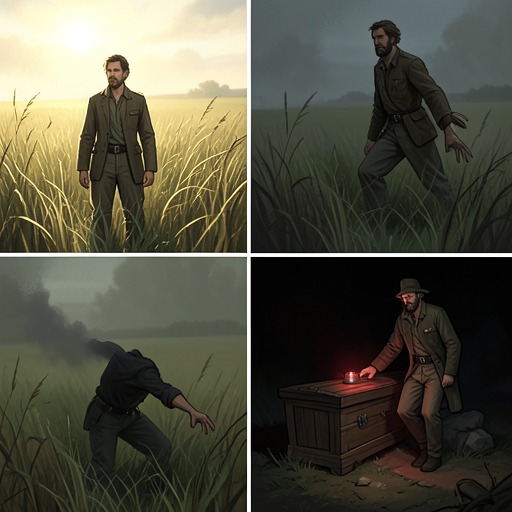
Vampirism reaches Louis when he has made himself almost indistinguishable from a man seeking death. After Paul’s death, Louis avoids the Pointe du Lac plantation, drinks constantly, wanders through the streets and cabarets of New Orleans, backs out of two duels from apathy, and wishes to be murdered without possessing the courage to kill himself. A vampire attacks him near his door, drains him almost to death, and leaves him to be found and taken home. The attack is therefore received by a man who has already abandoned ordinary investment in his future.
While Louis lies feverish and close to death, a priest interprets Paul’s visions through possession and the Devil, dismissing the possibility that Paul might have encountered sanctity or revelation. Louis’s fury becomes physical: he drives the priest from the house and nearly kills him. In retrospect, Louis identifies the priest’s contempt as a form of egotism, a refusal to believe that anything extraordinary could occur in ordinary human proximity. Vampirism enters this argument as the experience that destroys Louis’s own ego. When Lestat appears beside his bed, Louis sees a being whose gray eyes and inhuman hands make every previous certainty seem small. The vampire’s presence reduces Louis to nothing, but simultaneously opens the meaning of possibility; his past, guilt, vanity, and wish to die shrink into embers before the prospect of another form of existence.
Lestat’s offer is also materially motivated. He wants Pointe du Lac and needs a new arrangement in New Orleans because of his blind father, who must not discover that his son is a vampire. Louis’s transformation thus begins through a mixture of metaphysical wonder and worldly transaction. The promise of a life lasting until the end of the world is attached to a plantation, a family problem, and a practical transfer of property. Vampirism appears not as a purely sacred revelation but as an extraordinary condition entering the ordinary structures of inheritance, domestic obligation, and ownership.
The Process of Transformation
The change is presented as a sequence rather than a single miraculous instant. At Pointe du Lac, Lestat takes the overseer in his sleep and requires Louis to watch. Louis must witness the man’s struggle, prolonged dying, and final draining as proof of his commitment. This is the first decisive break with human life: Louis has feared his own death less than taking another person’s life, and Paul’s death has intensified his horror of mortality. Yet Lestat makes the overseer’s death part of the initiation itself. The body is then carried to the river road, stripped of its coat, robbed, and left with liquor staining its lips so that the death will appear to be an ordinary robbery. Louis is sickened not only by killing but by the deliberate manufacture of a false human explanation and by the knowledge that the overseer’s wife will suffer without learning what happened.
Back in New Orleans, Louis resists the coffin because he remembers a lifelong fear of enclosed spaces. The transformation exposes the difference between remembered human identity and present bodily reality: he discovers that he no longer feels the fear itself, only the memory of having once felt it. Lestat explains that the sensation resembles the phantom pain of a person who has lost a limb. Louis’s old body and its habits have become something absent yet still claimed by consciousness. Near dawn, he lies face-down on Lestat inside the coffin; his body tingles and itches, but he is not yet completely dead. When he awakens, the body is dead and is gradually cleansed of fluids and matter it no longer needs. Vampirism is consequently a literal death of the human body before the awakening of a new mode of life.
The coffin also marks the condition’s dependence on enclosed, nocturnal space. Louis must sleep through the day while the sun would destroy the blood Lestat has given him. Yet the coffin does not finally restore the fear it once represented. Instead, the newly transformed body reveals its altered freedom even while it submits to a new rule. The state abolishes some human vulnerabilities but replaces them with an absolute dependence on darkness, blood, and the rhythms of the vampire body.
Altered Body and New Perception
The first psychological consequence of bodily death is a change in Louis’s relation to Lestat. Before transformation, Lestat overwhelms him; he appears almost magical and possesses a spell-like authority. After Louis’s body dies, the distance between them narrows. Louis is still not Lestat’s equal, but he is infinitely closer to him, and the spell breaks. What had seemed like irresistible superiority becomes, from the new perspective, incessant chatter that is boring and disheartening. Vampirism therefore changes hierarchy as well as sensation: bodily alteration produces a new capacity to judge the being who created it.
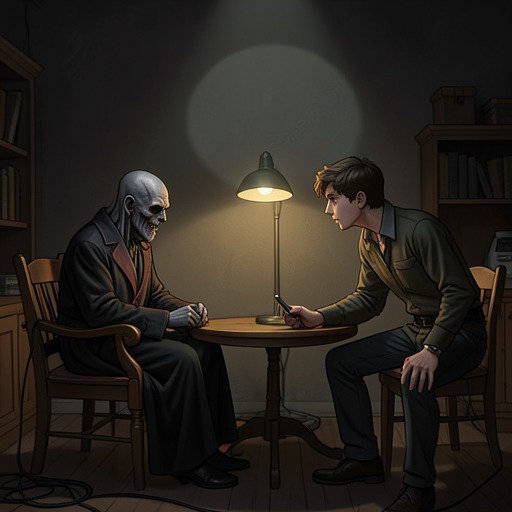
The transformation also grants speed and other powers that ordinary human perception cannot follow. Louis can move forward so quickly that the boy interviewing him mistakes the motion for an abnormally lengthened arm. In the Théâtre des Vampires, his attention is repeatedly drawn to bodies, blood, movement, and the boundary between natural and supernatural performance. His perception no longer occupies the same temporal scale as that of human observers; gestures that seem instantaneous to humans become deliberate actions to a vampire, while ordinary human movement appears slow and exposed.
This intensified perception does not make Louis indifferent. He insists that he never laughs at death, no matter how often he causes it. The new body supplies efficiency, speed, and predatory power, but it does not automatically erase the ethical memory of the human body. Vampirism thus creates a persistent disjunction: Louis can kill with supernatural ease while continuing to experience death as morally and emotionally significant.
Hunger, Death, and the Human World
Once transformed, Louis must kill. His first initiation has already shown him the overseer’s death as a prolonged human event, but later feeding becomes a recurring condition of survival. In New Orleans, he moves through streets, cabarets, balls, supper tables, carriages, and brothels, selecting victims among the city’s teeming population. He takes what he needs and leaves quickly, while the immense number of strangers around him soothes some of the melancholy that had dominated the dark nights at Pointe du Lac. The city becomes both habitat and supply: its noise, crowds, and constant movement allow him to exist among humans while remaining detached from their individual lives.
That detachment is not simple liberation. Louis contrasts the new strangers he hunts with the great love he once felt for Paul and Babette. Human beings become pulsing victims who seem to invite him into their rooms and social worlds, but his relation to them is governed by appetite rather than reciprocal recognition. Vampirism converts social abundance into predatory opportunity. The city’s liveliness offers relief from loneliness, yet the people who provide that relief are also the bodies on which his continued existence depends.
The condition is repeatedly confused with disease and epidemic. During Louis and Claudia’s voyage across the Atlantic, passengers suffer weakness, soreness of the throat, unexplained marks, reopened wounds, increasing sleep, and death. Burials take place at sea, and Louis avoids the passengers because he fears fever and does not want to share their rooms or stories. The ship’s mysterious “fever” resembles the effects of vampiric attack while remaining socially legible as an illness. In New Orleans, yellow fever and plague victims are piled in cemeteries, and Lestat teaches Claudia to distinguish mortal decay from the preserved bodies of vampires: human bodies succumb to death, while vampire bodies remain fresh and alive, though vampires must continue bringing death to live.
The same confusion governs the episode of Emily and the village cemetery. Morgan reports that villagers believe a plague of vampires is responsible for a dead woman clawing her way from the grave, and they prepare to stake, decapitate, and burn her corpse. Emily later disappears through a locked window and is found dead beneath peach trees, holding an empty cup. The villagers conclude that she has become a vampire and plan to desecrate her body, while Louis recognizes that she is not one. Vampirism here functions as an explanation imposed upon ambiguous death: medical fear, folklore, religious panic, and communal violence converge around bodies that cannot be securely classified.
Family, Creation, and the Theatre
Vampirism creates relationships through dependence as much as through affection. Claudia’s body dies and her senses awaken, and Louis initially understands his relation to her as protection. He gathers her into his coffin each morning and tries to keep her away from Lestat, who hints that he might starve or imprison her. Louis refuses to flee alone because Claudia is a child who requires care. Yet caring for her becomes a source of pleasure, and he gradually recognizes that he wants not merely to protect her but to speak with her and remain beside her.
Claudia’s condition exposes the contradiction of the child vampire. She appears quiet, beautiful, and absorbed in dolls, but she is also a ruthless killer with the instincts and demands of a child. Lestat teaches her that vampires must kill to live and cannot die, taking her through cemeteries where yellow-fever and plague victims lie in heaps. She watches mortal decay without visible fear, then kills with the same mute concentration with which she dresses and undresses dolls. Vampirism freezes the external body while intensifying the conflict between bodily age, mental development, appetite, and power.
Madeleine’s transformation makes the physical passage from mortality especially visible. As the blood takes hold, she becomes frightened by dark stains on her fingertips, weakens, wanders from mirror to mirror, and undergoes mortal death before awakening to immortality. Louis tells her that natural causes will no longer kill her and instructs her to hold his hands while the paralysis of the transition overtakes them. Her fear confirms that vampirism is not simply an improved form of life; it is an ordeal in which the new being must pass through the terror of losing the mortal body.
The Théâtre des Vampires turns vampirism into a public institution and a performance system. Armand gives Louis a card inviting him and Claudia to the theater, whose human audience enters believing it is attending a staged spectacle. Onstage, seven vampires enact Death, surround a mortal woman, and convert her killing into theatrical drama. The audience responds with gasps, laughter, sighs, and applause, treating actual predation as illusion. Louis, however, recognizes the blood, the vulnerability of the victim, and the vampire performers behind their masks. The theater makes the vampire’s hidden practice visible while using theatrical convention to conceal its reality.
After the performance, Armand leads Louis and Claudia beneath the theater into a subterranean ballroom painted with scenes of death and damnation, including the Triumph of Death and The Fall of the Angels. The descent transforms the theater from a place of spectacle into a concealed vampire world. Vampirism is therefore organized through layered spaces: the human lobby and auditorium provide camouflage, the stage provides ritualized killing, and the underground rooms provide a private community whose existence depends on controlling who sees and who understands what is being shown.
Meaning, Irreversibility, and Human Desire
Vampirism promises wonder but does not deliver rest. Louis’s last sunrise is remembered in exact physical stages: light pales behind the French windows, spreads through the lace curtains, reaches the trees, the floor, the sleeping figure of his sister, the pitcher, his hands, and finally his face. He says goodbye to the sunrise before leaving to become a vampire. The memory establishes the condition through an irrevocable temporal division. Human daylight becomes something he has possessed for the last time, and immortality begins with a farewell rather than a simple continuation.
Yet Louis later says that he does not really miss the sunrise because there are other things. The statement is neither complete renunciation nor simple regret. Vampirism replaces mortal continuity with an accumulation of altered experiences: heightened sight, speed, blood, nocturnal cities, supernatural companionship, and access to a world hidden from human knowledge. The loss remains real, but it is held beside wonder rather than allowed to cancel it.
The condition’s deepest contradiction emerges at the end of the interview. The boy hears Louis’s account as an adventure of passion, longing, love, and everlasting sensation, and asks to be made a vampire. Louis reacts with rage because the boy has heard the promise while failing to understand the cost: the deaths, despair, loss, and moral disfigurement that constitute the state. Louis finally bites him in an attempt to demonstrate its meaning rather than merely describe it. Vampirism thus remains resistant to explanation. It can be narrated through coffins, blood, corpses, fever, theater, and changed perception, but the decisive knowledge lies in bodily transformation itself. The human listener wants immortality as an escape from the limitations of human life; Louis knows that vampirism is instead an irreversible passage into a life whose freedoms are inseparable from hunger, death, isolation, and the permanent memory of what has been lost.