Varna
Interview with the VampireVarna is the port at which Louis and Claudia begin their passage into the rural Carpathians, turning a literary and historical longing for the Old World into a dangerous investigation of vampire tradition. It marks the point where their search for knowledge leaves the familiar world of New Orleans and enters a landscape in which the living dead are not merely stories but part of popular belief, social fear, and ritual violence.
Port of the Eastern European Quest
Varna is named as the place where Louis and Claudia will dock after travelling through the Mediterranean and proceed into the countryside of the Carpathians. Claudia chooses this route because she believes that vampires are especially prevalent in central and eastern Europe and that older creatures might explain their origins, their powers, and the conditions of their existence. Her plan is not simply a journey toward information: she longs for contact with her own kind, while Louis hopes that the search may answer why supernatural suffering exists and whether it can ever be ended.
The approach to Varna follows a movement away from the capitals and monuments of human civilization toward the Black Sea and the mountains beyond it. Louis imagines Europe through books, philosophy, revolution, and art, but the route to Varna promises a harsher knowledge. The Mediterranean has appeared to him as a black nocturnal expanse, a sea that reflects his separation from human myth; reaching the Black Sea therefore brings him closer to the darkness he believes may contain the truth about vampires.
Threshold into Rural Legend
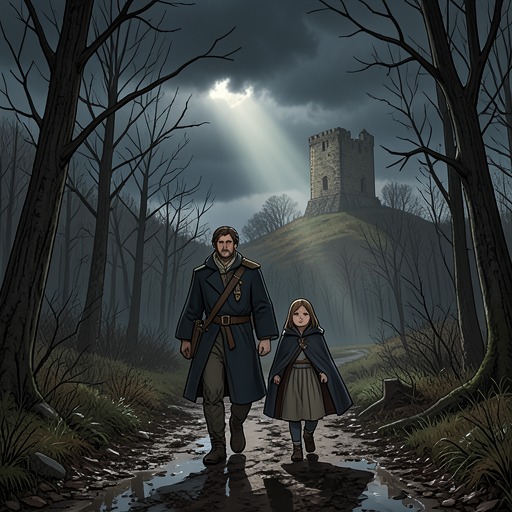
From Varna, Louis and Claudia travel alone by an extravagant black coach with leather seating, luxurious fittings, an ornately carved oak chest, and trunks filled with fine clothing. The opulence is Claudia’s doing: Louis has taught her the value of money, while she has inherited from Lestat a passion for spending it. Their wealth and elaborate carriage offer both protection and exposure as they pass through unfamiliar country, where the roads run through lonely villages, castles, ruins, and mountain landscapes.
Varna’s surrounding region sharply contrasts with New Orleans. In New Orleans, fever, plague, and crime provide ordinary explanations for death and can conceal the vampires’ killings within the city’s wider mortality. Around Varna and in the villages beyond it, peasants already believe that the dead walk and drink the blood of the living. They know the words vampire and devil, and Louis and Claudia must conceal their own killings lest they create the very rumors they are trying to investigate. The port thus opens onto a society in which supernatural belief is not exotic speculation but an active system of local knowledge and fear.
Encounters Beyond the Port
The journey from Varna leads Louis and Claudia through Transylvania, Hungary, Bulgaria, and other regions where vampire legends are widespread. In village inns, Louis hears peasants and travellers discuss familiar stories, sometimes through German or French. Their knowledge makes the travellers’ ostentation dangerous: Louis and Claudia must move quickly, keep their identities hidden, and avoid leaving evidence that could confirm local suspicions.
The search produces only a handful of encounters with creatures resembling the vampires of legend. These beings are generally mindless corpses, with wagging heads, decayed clothing, grave dirt, and no concealed wisdom or supernatural history to communicate. One female revenant, dead for only a few months, flees through a forest in a blood-stained burial gown, her fingers caked with earth and her eyes empty of anything except despair. Such encounters overturn Claudia’s hope that the older vampires of the region will provide a lost explanation for their condition.
The local tradition is also represented through the treatment of the dead. Accounts collected by Claudia describe vampires being burned, staked through the heart, decapitated, and otherwise destroyed by villagers who regard these acts as necessary protection. The rituals promise certainty and purification, but they do not yield the philosophical answers Louis seeks. Varna therefore functions as a gateway to an inherited mythology whose practices are concrete and violent while its supposed wisdom proves absent.
Failure of the Search
The evidence encountered after Varna deepens rather than resolves Louis’s uncertainty. He had feared that Lestat might have been the only vampire capable of conscious life, and the mindlessness of the eastern European revenants makes that fear more difficult to dismiss. Lestat’s absence becomes more oppressive during the journey: Louis repeatedly imagines his voice and face, while the empty nights of eastern Europe turn memory into a form of unwanted companionship.
Claudia responds more practically. She reads old accounts of eastern European vampires for hours, treats them almost as scripture, and continues to pursue a route toward the Carpathians. Louis, however, becomes increasingly divided between the desire for explanation and the knowledge that the creatures they find may have nothing to teach. Varna’s significance lies in this reversal: the port begins a quest intended to recover origins, but the road beyond it exposes the abyss between folklore and lived vampiric consciousness.