Bib's
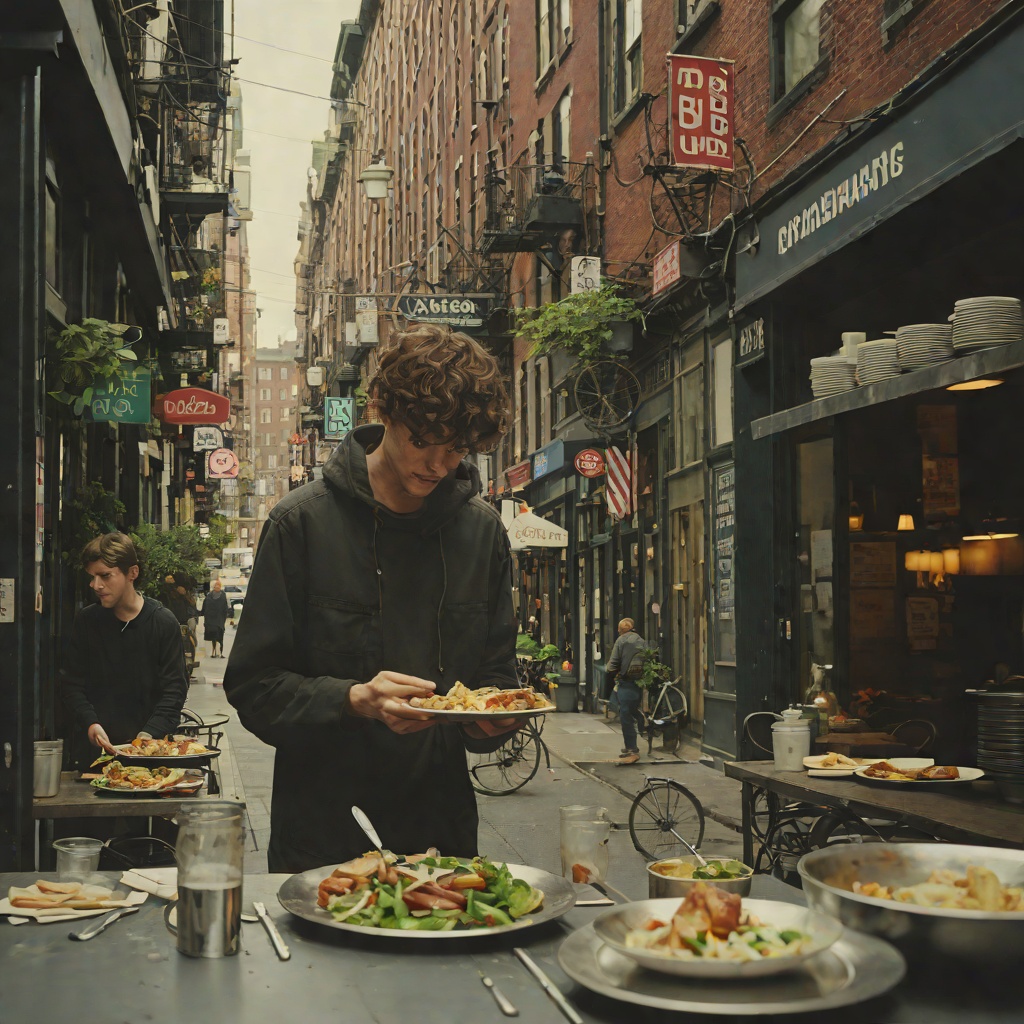
It Ends with UsBib's is the Boston restaurant opened by Atlas Corrigan, a two-time award-winning chef and United States Marine, whose name secretly stands for "Better In Boston" and serves as a public homage to Lily Bloom, the woman who had a huge impact on his life. The restaurant functions as the novel's central meeting place, the site of Lily and Atlas's reunion, and the symbolic bridge between their shared past and the life Atlas built after homelessness.
Identity and Origin
Bib's, located on Marketson in Boston, opened in April of the previous year and quickly became one of the highest rated restaurants in the city, according to TripAdvisor. The restaurant's acronym, Bib's, stands for "Better In Boston," a phrase that carries deep personal meaning for Atlas. When interviewed regarding his most recent award, the chef finally revealed the true history of the meaning behind the name, stating, "It's a long story. It was an homage to someone who had a huge impact on my life. Someone who meant a lot to me. She still means a lot to me." When asked if the girl was aware he named a restaurant after her, Chef Corrigan smiled knowingly and said, "Next question." The restaurant thus operates on two levels: publicly, it is a celebrated culinary establishment; privately, it is a monument to Lily, a declaration of enduring feeling that she discovers only through a newspaper article.
The restaurant's name also carries a subtle irony given Atlas's history. As a homeless teenager, Atlas was marginalized and stigmatized by his town, dismissed by Lily's classmate Katie as "a dirty, thieving homeless kid who was probably on drugs." His rise to become the owner of one of Boston's highest-rated restaurants represents a dramatic reversal of fortune, transforming the boy who had no running water into a celebrated chef. The name "Better In Boston" thus marks not only a geographical preference but a personal transformation, a claim that his life became better in the city where he rebuilt himself.
A Place of Reunion and Connection
Bib's serves as the setting for several pivotal encounters in the novel. Lily first mentions the restaurant when her mother wants to try a new place, texting Ryle that they are going to "A place called Bib's on Marketson." Ryle responds, "Is there room for one more?" — a question that signals his willingness to meet Lily's mother within days of their initial rooftop meeting, a rapid escalation from his stated disinterest in relationships. Later, when Ryle asks where they should take guests, he suggests "That place we went to that one time with your mom," and Lily makes reservations for six o'clock. Her reaction is telling: "I don't want to go back there. I didn't like it. Let's try something new." Her discomfort foreshadows the deeper significance of the restaurant, which she has not yet consciously registered.
The restaurant also becomes a site of warmth and generosity. When the waiter returns with a dessert cart, he announces, "The chef gives all expectant mothers dessert on the house. Congratulations." Marshall jokes, "Guess that's why it's called Bib's. Chef likes the babies," and Allysa declares, "This is my new favorite restaurant." The gesture reveals Atlas's character — a man who, despite his own history of deprivation, extends kindness to others. The detail that the chef personally provides free dessert to expectant mothers suggests a man attentive to the struggles of others, perhaps informed by his own experience of poverty and his awareness of Lily's pregnancy.
The Revelation of the Name
The most significant moment involving Bib's occurs when Ryle hands Lily a newspaper and asks her to read the last few paragraphs. The article announces that "The business with the highest number of votes should come as no surprise. The iconic Bib's on Marketson opened in April of last year, quickly becoming one of the highest rated restaurants in the city, according to TripAdvisor." As Lily reads on, she learns that "The owner, Atlas Corrigan, is a two-time award-winning chef and also a United States Marine. It's no secret what the acronym for his highly successful restaurant, Bib's, stands for: Better In Boston." Lily gasps, clenching her stomach to keep her emotions under control. She puts the newspaper on the counter and says, "I don't want to read anymore," her voice cracking. Ryle, now loud and angry, reads the final line about the chef's homage to the girl who still means a lot to him.
The scene is charged with dramatic irony and emotional violence. Ryle, who has just discovered the depth of Lily's connection to Atlas, forces her to confront the public evidence of that connection. The newspaper article transforms Bib's from a mere restaurant into a public declaration of Atlas's enduring love — a love that has been preserved and displayed for anyone to read. For Lily, the revelation is overwhelming, a reminder of the life she might have had and the man who never stopped thinking of her. For Ryle, it is a threat, the confirmation that his wife's past is not behind them.
Significance and Legacy
Bib's represents the culmination of Atlas's journey from homelessness to success. The boy who was once beaten by Andrew Bloom with a baseball bat, who was forced to flee town, who joined the Marines — that boy became a two-time award-winning chef and the owner of one of Boston's most iconic restaurants. The restaurant is thus a testament to his resilience and a refutation of the town's cruel judgment of him as a homeless teenager. It also embodies the novel's theme of class and social mobility: Atlas, who once had nothing, builds something of lasting value, while the wealth of characters like Ryle and Allysa is inherited or acquired through app sales.
The restaurant's name, "Better In Boston," also carries a deeper resonance with the novel's central concerns. It echoes the idea that people can change, that circumstances can improve, that a new place can offer a new life. For Atlas, Boston was the city where he escaped his past and built a future. For Lily, the restaurant becomes a symbol of the love she left behind and the possibility of reunion. When she later runs to Atlas for help after Ryle's assault, she finds safety in his home, which has an alarm system — a detail that underscores how far he has come from the abandoned house where he once lived. Bib's, like Atlas himself, stands as proof that the worst circumstances do not determine a person's fate.