Ellen Diaries
It Ends with UsThe Ellen Diaries are the private journal-letters that Lily Bloom addresses to talk-show host Ellen DeGeneres, a habit she begins as a young girl in 2003 and continues until she turns sixteen. More than a childhood keepsake, the diaries function as the novel's confessional backbone: they preserve Lily's first love for Atlas Corrigan, document her father's violence, and — years later — become the instrument of Ryle Kincaid's most brutal assault when he reads them without permission. The diaries ultimately trace Lily's re-authorship of her own story, from a girl who hides her pain in letters she never sends to a woman who breaks the cycle of abuse for her daughter.
Origin and Form
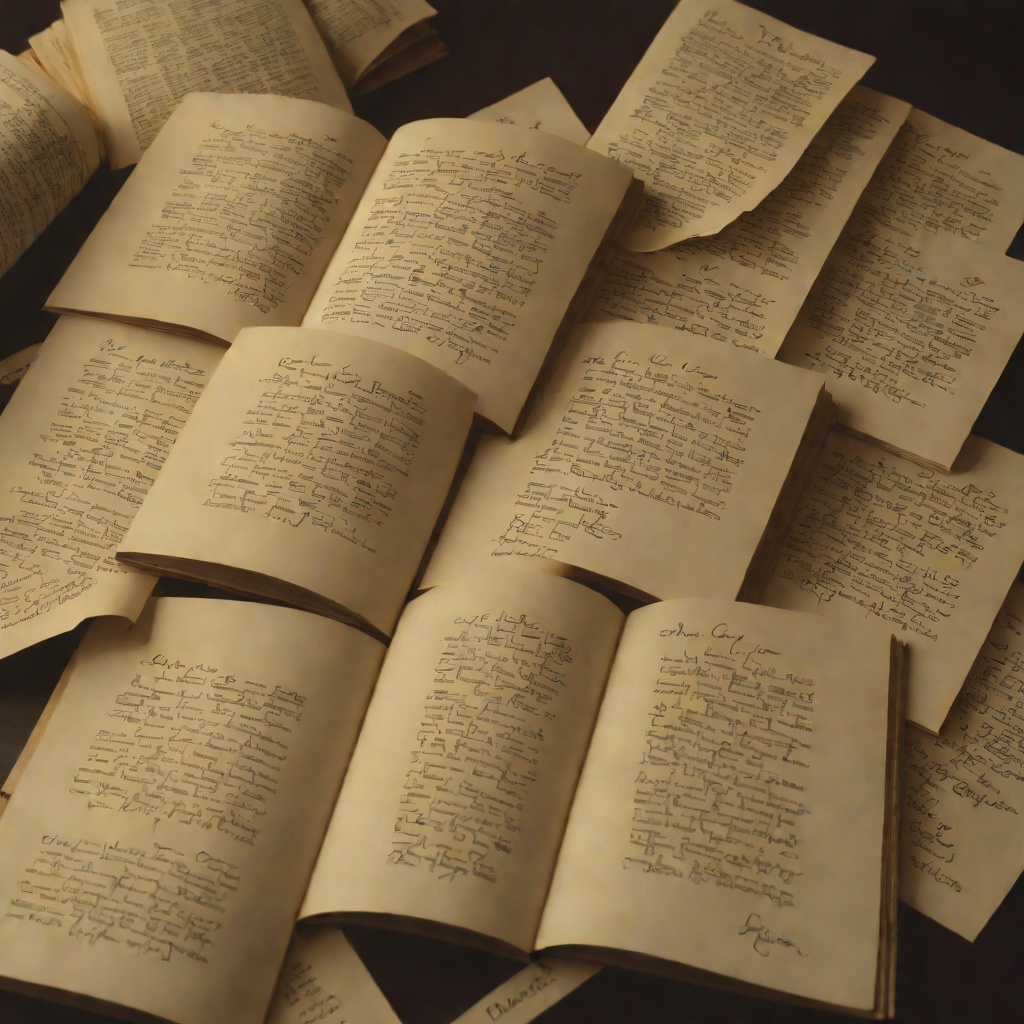
Lily begins writing to Ellen DeGeneres the first day the talk show airs in 2003, when she is just a little girl. She watches the show every day after school and becomes convinced that Ellen would love her if she got to know her. Rather than keep a conventional diary — which she considers cliché — Lily writes letters to Ellen regularly, addressing each entry "Dear Ellen" and composing them as one would write diary entries. She knows full well that the last thing Ellen DeGeneres probably wants is a random girl's journal entries, and she never actually sends any of them in, but she likes addressing the entries to her and continues the practice until she stops writing altogether at sixteen.
The diaries number eight or nine in total, though only three sit in the shoebox Lily opens as an adult. She fills six full journals before Atlas Corrigan ever enters her life, a fact she notes with some surprise given that there wasn't much in her life worth writing about before he appeared. Each entry is written in the second person, addressed to Ellen as a confidante, which gives the diaries the quality of an ongoing conversation with an imagined friend who only ever receives the worst of Lily's life.
The Diaries as Record of First Love and Family Violence
When Lily opens the shoebox after her father's death, she sorts through the journals until she finds the one from when she was fifteen, searching for the day she met Atlas. She had sworn she would never read these again, but with the passing of her father she has been thinking about her childhood a lot. She hopes that reading through the journals might somehow give her a little strength for forgiveness, though she fears she is running the risk of building up even more resentment instead.
The journals preserve the story of Atlas's homelessness and his move into the abandoned Burleson house, the night he was beaten by Andrew Bloom with a baseball bat, and the circumstances that drove him to leave for the Marines. They also record the violence inside Lily's own home — the garage where Andrew Bloom choked Jenny Bloom, the attempted rape, the beatings that Lily witnessed as a child. The diaries are thus a double record: they hold the tenderness of Lily's first love and the terror of her father's brutality, often in adjacent entries.
The Diaries as Weapon
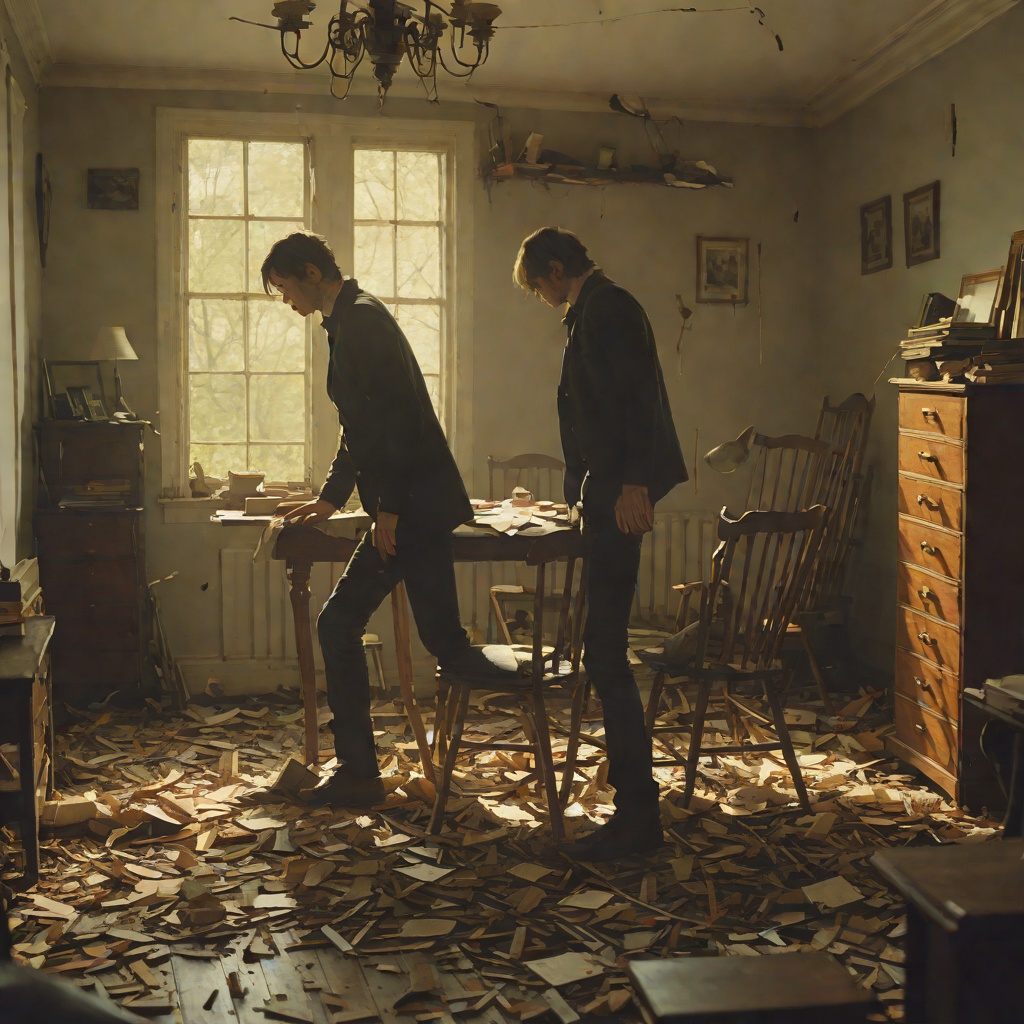
The diaries return to the narrative with devastating force when Ryle reads them without permission. After Lily discovers the bed littered with the contents of an empty moving box marked "Lily's stuff" — letters, journals, empty shoeboxes — she understands in a single horrifying instant that he has read the journal. The realization comes to her in fragments: "He read the journal. No. He. Read. The. Journal."
What follows is the novel's most violent assault. Ryle's arm comes around Lily's waist from behind; he slides a hand up her stomach and takes firm hold of one of her breasts while his other hand feathers her shoulder, moving the hair away from her neck. He slowly runs his finger over the heart tattoo on her collarbone — the tattoo she got in memory of Atlas — and a shudder runs over her whole body. His lips meet her skin right over the tattoo, and then he sinks his teeth into her so hard that she screams. The pain from his teeth piercing her collarbone rips through her shoulder and down her arm. She immediately starts crying, sobbing, pleading "Ryle, let me go. Please. Walk away," but his arms are cutting into hers as he holds her tightly from behind.
The diaries, which had been Lily's private sanctuary for recording her truest feelings, become the evidence Ryle uses against her. The heart tattoo — itself a permanent memorial of Atlas — becomes the target of his rage. The journals do not merely document Lily's past; they weaponize it.
The Diaries as Re-Authored Self
After the assault, Lily returns to the diaries in a new form. She writes to Ellen again for the first time since she was sixteen, opening with "Dear Ellen, Hi. It's me. Lily Bloom. Well . . . technically it's Lily Kincaid now." She acknowledges that she has been in a really bad place, more so than the last time she wrote, and apologizes for only writing when she needs to unload: "You tend to only get the shit end of my life, but that's what friends are for, right?"
In this final entry she invokes the "naked truth" ritual she and Ryle share — the agreement that one of them can say "naked truth" and then be forced to be brutally honest about what they are really thinking. She writes "naked truth" and tells Ellen to brace herself. The diaries, which began as a girl's letters to a television star, become the vehicle for Lily's most adult confession: the truth about her marriage, her husband's violence, and her own complicity in staying.
The re-authorship culminates in Lily's understanding of her mother's story. Jenny Bloom explains that with every incident her limit was pushed a little more — the first time her husband hit her he was immediately sorry and swore it would never happen again; the second time he was even more sorry; the third time it was more than a hit, it was a beating; and the fourth time, when it was only a slap, she felt relieved, thinking at least he didn't beat her this time. "Every incident chips away at your limit," Jenny tells Lily. "Every time you choose to stay, it makes the next time that much harder to leave."
Lily's mother also reveals what she knew about the eulogy: "The day you gave your father's eulogy? I know you didn't freeze up, Lily. You stood at that podium and refused to say a single good thing about that man. It was the proudest I have ever been of you. You were the only one in my life who ever stood up for me. You were strong when I was scared." She tells Lily to be that girl, brave and bold.
The Diaries and the Breaking of the Cycle
The diaries' final significance lies in what Lily does with the story they contain. Looking at her daughter, she makes a promise: "It stops here. With me and you. It ends with us." The phrase echoes the novel's title and marks the point where Lily's private written history becomes a public commitment to a different future. She will not allow her daughter to go through what she and her mother went through.
The epilogue shows Lily on Boylston Street, pushing a stroller and looking down at Emmy, who is kicking her feet and smiling, a very happy baby with a calm, addictive energy. When Atlas steps forward and pulls her hard against his chest, surrounded by busy streets, blasts of horns, and people brushing past, he presses a gentle kiss into her hair and says quietly, "Lily, I feel like my life is good enough for you now. So whenever you're ready . . ." Lily clenches his jacket in her hands and keeps her face pressed tight against his chest, suddenly feeling fifteen again, her neck and cheeks flushing from his words — but she is not fifteen.
The Ellen Diaries thus complete a full arc: they begin as a lonely girl's letters to a stranger, preserve the love and violence that shaped her, become the instrument of her worst trauma, and finally give way to a life lived openly, no longer needing the pages of a journal to hold what she cannot say aloud. The girl who wrote to Ellen because she was convinced Ellen would love her grows into a woman who can stand in the middle of a crowded street and let herself be loved for who she actually is.