“New Trixie”
It Must Be Love: A Mustang Prairie Romance“New Trixie” names Trixie Beaumont’s attempt to become more self-protective without becoming less alive. It begins as a response to the humiliation and uncertainty surrounding Jack Thorpe, but develops into a broader practice of emotional discipline, business ownership, and chosen self-presentation. The concept is decisive because it converts Trixie’s romantic disappointment into a working principle: she will learn from the past, look at what is actually happening, and make a life that does not depend on Jack’s ability to commit.
Definition and Origin
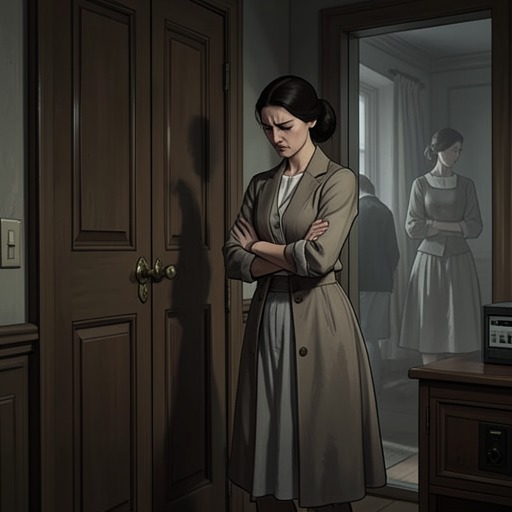
“New Trixie” emerges from Trixie’s recognition that renewed intimacy with Jack could revive an old pattern. She understands that she may fall for him while he continues to insist that he does not do commitment, leaving her exposed to another scene in which she is emotionally vulnerable and he controls the terms. Her refusal is therefore not a denial of desire but a boundary against repeating a known injury. She summarizes the principle by saying, “New Trixie learns from the past.”
The phrase carries an intentional tension. Trixie claims transformation, yet the narration shows that attraction has not disappeared. Her promise to be different is made precisely because Jack still matters. “New Trixie” is consequently less a finished identity than a recurring corrective: whenever longing threatens to overrule memory, she invokes the new version of herself and attempts to restore proportion.
Emotional Discipline and the Jack Thorpe Pattern
Trixie applies the concept most directly to her relationship with Jack. She fears that spending more time with him will make her fall for him, while his established resistance to commitment will leave her once again standing emotionally exposed. Her strategy is distance and skepticism. She avoids interpreting his renewed sexual interest as evidence of love, insisting that his improved mood may simply reflect regular sex rather than a deeper change.
Yet “New Trixie” does not produce emotional certainty. Trixie admits that she may be refusing to see what is genuinely in front of her, and she challenges herself to look at reality rather than assume she already understands it. This internal argument gives the concept its central ambiguity: self-protection can prevent self-deception, but it can also become another form of avoidance. Her tequila ritual with Sadie makes that contradiction visible. Trixie names avoidance as what she is doing, acknowledges that it works only temporarily, and still relies on it while she tries to decide what Jack’s behavior means.
Jack’s family situation intensifies the stakes. His oldest daughter, Abby Thorpe, has spent nearly a month pretending he does not exist, and Jack recognizes that her misery is connected to a conflict he might be able to repair. His mother also urges him to tell Trixie the truth about his failed marriage to Marissa Thorpe, warning that Trixie should not have to compete with the memory of a dead relationship. These pressures explain why Trixie’s caution is not merely personal suspicion: Jack remains entangled with grief, fatherhood, and fear of repeating his marriage, while Trixie refuses to let those complications erase the danger to her.
Work, Enterprise, and Material Independence
The new identity gains substance through Trixie’s clothing business. For months she has considered creating her own line, experimenting with names, sketching logos, and commissioning a graphic designer. The logos initially taunt her because the dream exists materially while she remains inactive. Her decision to walk from her lingerie shop to Mustang Prairie City Hall in a red polka-dot dress and red heels marks a shift from imagining the enterprise to seeking the approval required to make it real.
Her first line, Sexy Separates by Trixie, expresses the same independence that governs her emotional life. She imagines six to ten styles of panties, from g-strings to bikinis and French cuts, using silk, lace, and cotton, alongside several bra designs, including a convertible bra. A rainbow palette and mix-and-match structure reject the assumption that women must buy or wear matching sets. The line is built around choice: women can combine pieces according to their own tastes rather than conform to a single prescribed image.
Trixie approaches the business cautiously because it is her livelihood, career, and source of stability. After several consecutive profitable months, Under the Skirt Online officially opens, and she considers renting the adjoining space as both a warehouse and a workspace. She even anticipates hiring a part-time worker earlier than planned. The contrast with her parents’ itinerant, hobby-to-hobby way of living clarifies what she wants from “New Trixie”: not escape into novelty, but durable responsibility and control over the conditions of her life.
Her commitment to control continues when Jonquil Spring helps rank prospective seamstresses. Although Jonquil suggests reconsidering a manufacturer, Trixie refuses to surrender quality control while the line is new. She intends to consider manufacturing only after the brand is solid. The decision turns self-reinvention into an operating method: Trixie does not merely announce independence; she protects it through careful scaling, direct oversight, and deliberate risk management.
Clothing, Performance, and Public Confidence
Clothing serves as one of the concept’s most visible languages. For her dinner with Jack, Trixie chooses a white tank with a red bra beneath it, black leather pants, knee-high boots, and a leather jacket. She is nervous because the evening is technically a date even though she and Jack have already had sex, fought, and agreed not to repeat it. The outfit allows her to enter the encounter on her own terms, treating the night as something she deserves rather than as proof that the relationship has changed.
The public image of her business similarly combines sensuality with authorship. At the launch show in Dylan’s bar, Trixie watches Sadie and the other models present designs that are hers. A makeshift runway divides the bar, music by Sadie and Kiki Ramirez supplies the soundtrack, and gauzy fabric transforms the room into a playful bedroom. The new tagline, “Sexy and fun,” captures Trixie’s desired balance: lingerie can be erotic without becoming a surrender of agency.
The show’s details demonstrate how completely Trixie has moved from fantasy to production. Sadie models teal boy shorts with a matching Basque, then a white cheeky set with a matching bra and a silky duster, finished by cherry-red stilettos. Trixie recognizes the second appearance as the image that could launch the line. When the audience applauds and the cameras flash, she experiences satisfaction because the work has become public reality. The achievement is communal in its execution, but its authorship remains hers.
The concept also reaches beyond the businesswoman into Trixie’s care for Jonquil. She helps Jonquil build a more ordinary, comfortable life and chooses a first Christmas outfit for her: grey skinny jeans, an Einstein shirt, a red leather jacket, and black motorcycle boots. Trixie’s reassurance that the clothes are “perfect and totally you” shows that her ideal of reinvention is not conformity. Newness should reveal a person’s character rather than replace it.
Community, Recognition, and Limits
“New Trixie” is never entirely solitary. Sadie acts as both confidante and corrective, pressing Trixie to examine whether her defenses are hiding facts as well as protecting her. Eric’s role as interim mayor connects Trixie’s private ambition to Mustang Prairie’s civic structure, while Jonquil’s work in the workshop and the models’ participation in the launch turn the lingerie line into a network of shared labor.
At the same time, success does not automatically resolve loneliness. After the fashion show, Trixie knows the event is a success, yet she feels she has no one to share it with in the fullest sense. That contrast prevents “New Trixie” from becoming a simple triumph narrative. Financial independence, creative control, and public applause answer some of her needs, but they do not erase the desire for emotional recognition.
The concept therefore remains a discipline rather than a final state. Trixie can avoid Jack, question her assumptions, protect the quality of her brand, and make choices about her appearance and work. She cannot simply command herself not to want connection. Its lasting significance lies in that unresolved balance: “New Trixie” seeks a self who can desire freely without surrendering judgment, and who can accept intimacy only when intimacy does not require abandoning independence.