Distance for sanity
It Must Be Love: A Mustang Prairie RomanceDistance for sanity names Trixie Beaumont’s attempt to protect emotional clarity by limiting contact with Jack Thorpe. It is not indifference: she is strongly attracted to him, wants him, and has already experienced an intense kiss and a sexual relationship with him. Precisely because the connection feels powerful, she refuses to let desire carry her into another relationship that offers pleasure without the possibility of commitment. The concept therefore operates as a form of self-preservation, but also as a test of whether Jack can recognize what she actually needs.
Definition and Immediate Cause
Trixie’s boundary begins with her fear of becoming attached to another man who cannot give her emotional security. She tells Jack that she is in no position to fall for another Mr. Wrong, then clarifies that she is not suited to casual sex. Her concern is not simply that Jack wants her physically; it is that he may not genuinely like her or may be unable to offer a relationship beyond sexual chemistry. The distinction matters because Trixie does not reject intimacy itself. She rejects intimacy whose terms would leave her more exposed than Jack.
Their first kiss makes the conflict bodily and immediate. Trixie experiences it as overwhelming, but instead of treating its intensity as proof that they should continue, she stops the encounter and insists that the next man in her life must be with her for herself. Her resistance turns the kiss into a point of knowledge: attraction is real, yet attraction alone cannot establish trust, intention, or a future. Distance begins as the consequence of that recognition.
Negotiating the Boundary
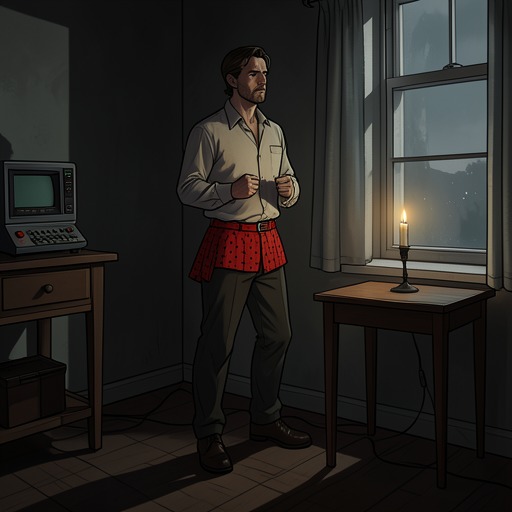
The separation becomes explicit when Jack confronts Trixie in the supply closet. Although the confined space and his physical presence intensify their desire, she tells him that they are neighbors and that both of them need to keep their distance. Her reasoning is grounded in what Jack has already said about himself: he has had one great love in Marissa Thorpe and does not want another. Trixie therefore treats his refusal to promise anything as meaningful rather than as a challenge she can overcome through patience or sexual closeness.
When Jack suggests that less distance would be better, Trixie steps back even though she misses his warmth. She does not accuse him of having done something wrong; instead, she identifies a difference in what they want. Her position becomes sharper when she explains that he is looking for fun and casual sex while she is not. She had initially believed they were aligned, but his unwillingness to make commitments has changed her understanding of the arrangement.
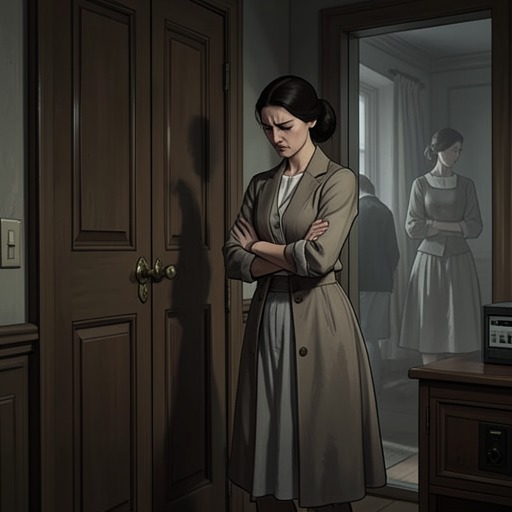
Trixie’s decisive distinction is between demanding a guaranteed future and allowing the possibility of one. She says that she is not necessarily looking for a promise, but she is looking for the possibility of a future. Jack’s uncertainty cannot satisfy that condition. When he responds that no one knows what will happen, Trixie answers that she does know what she wants: if he says he does not want that possibility, she believes him. She asks for distance for a while so that both of them can eventually return to normal, then walks away with her head held high. The boundary is painful, but it is chosen rather than imposed.
Distance as Repeated Practice
The concept does not end with the conversation. Trixie continues to avoid Jack at shared spaces, including a Thanksgiving gathering at his house. She arrives only ten minutes before the meal, claiming that she lost track of time, while Jack understands that she waited until the last possible moment to minimize contact with him. Even when he encounters Jonquil Spring and hears about Trixie through the girls, Trixie remains absent whenever he comes to collect them. Her avoidance converts distance from a single declaration into a repeated daily practice.
At the same time, the separation is difficult to maintain because Trixie’s life remains intertwined with Jack’s family and community. She is not able to erase him from her surroundings, and she does not stop thinking about him. Instead, she focuses on her business, on Jonquil, and on preserving her peace of mind. She tells herself that their sexual encounters are casual and that casual is enough for now, but the insistence reveals the effort required to sustain that interpretation. Distance protects her partly by limiting physical access and partly by preventing the relationship from seeming more defined than it is.
Jack’s family history deepens the pressure behind the boundary. His mother recognizes that Trixie has been competing with the memory of Marissa, a “ghost” that still shapes Jack’s emotional limits. Jack’s daughters are miserable when they are estranged from him, yet they treat Trixie with immediate familiarity, making her presence unusually significant within the family. This creates a painful contradiction: Trixie is close enough to belong in the family’s emotional orbit, but Jack’s unresolved grief and fear of another disastrous marriage make romantic closeness dangerous for her.
Independence Alongside Separation
Distance gives Trixie room to redirect energy into her own work. Before fully acting, she has spent months considering a clothing line, testing names, sketching logos, and hiring a graphic designer to develop them. The plans once taunted her because she had not acted on them; after the boundary with Jack, action becomes a way to make her future concrete rather than wait for him to define it.
Her first line, Sexy Separates by Trixie, grows from a practical and inclusive design idea. She imagines six to ten styles of panties, from g-strings to bikinis and French cuts, in silk, lace, and cotton, with a possible boy-cut option. A rainbow theme will accommodate vivid colors, while four bra styles, including a convertible bra, will allow women to mix and match rather than require traditional matching sets. The concept reflects Trixie’s broader understanding of control: she wants control over her emotional terms with Jack and over the quality and flexibility of the products bearing her name.
That independence is also material. Under the Skirt Online is officially open and has produced several consecutive months of profit. Trixie considers renting the neighboring space as a warehouse and workspace and even imagines hiring a part-time employee earlier than planned. When Jonquil evaluates seamstresses, Trixie refuses to use a manufacturer immediately because the new line requires her total control over quality. Her business becomes a stabilizing structure while romance remains uncertain.
Limits and Narrative Significance
Distance for sanity is not a permanent rejection of Jack. Trixie continues to care for him, and Jack recognizes that she is unlike Marissa: available without being clingy, attentive without being demanding, and capable of talking through the combustible chemistry between them. He likes her more deeply than he is prepared to admit, but he tries to measure the possibility of another relationship against the disaster of his marriage. His hesitation confirms Trixie’s judgment that continued closeness without shared aims would place the greater emotional risk on her.
The idea also exposes a pursuit-and-withdrawal pattern. Jack repeatedly seeks contact, while Trixie withdraws whenever contact threatens to turn casual intimacy into emotional dependence. Neither character is unaffected by the separation: Jack drinks whiskey with Dylan and Ty while discussing his problems, and Trixie experiences the ache of missing him even as she maintains the boundary. The distance therefore protects them from immediate escalation while preserving the unresolved attraction that keeps drawing them back together.
Its deepest significance lies in Trixie’s refusal to confuse self-denial with self-respect. She does not claim that desire is false, nor does she pretend that Jack has no importance. She recognizes the kiss, the sex, the tenderness, and the possibility of a future as separate questions. By choosing distance, she gives herself time to build a profitable lingerie business, sustain her connection with Jonquil, and remain emotionally intact while Jack confronts his attachment to Marissa’s memory and his fear of commitment. The boundary is thus both defensive and generative: it keeps Trixie from surrendering her needs, and it creates the space in which a more honest relationship might eventually become possible.