Fear of commitment
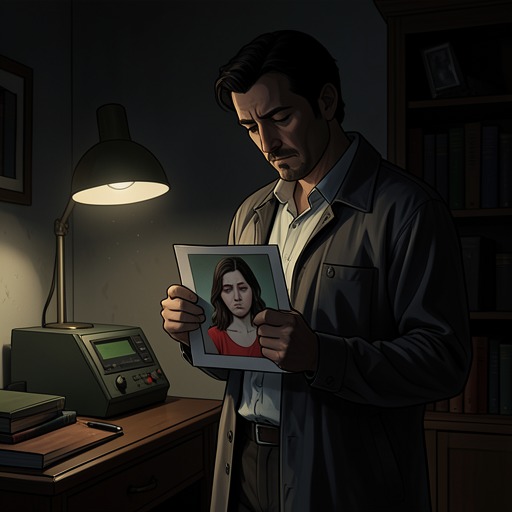
It Must Be Love: A Mustang Prairie RomanceFear of commitment is the defensive state governing Jack Thorpe’s early relationship with Trixie Beaumont. He wants her, pursues her, and cannot imagine replacing her with another woman, yet he insists that he cannot offer a relationship, marriage, or even the expectation of emotional permanence. The fear is not simple indifference: it is a conflict between desire for Trixie and terror of repeating the marriage that taught him to associate love with resentment, instability, and loss.
Origins in Marriage and Loss
Jack’s reluctance begins with his experience of marriage to Marissa Thorpe. When Dylan asks why he refuses a relationship with Trixie, Jack explains that his marriage was not as happy as everyone believed and that he is not eager to repeat it. He presents avoidance as a rational preference for calm, especially within the demanding life of a single father raising Abby Thorpe and Andie Thorpe. His refusal is therefore tied to domestic responsibility as much as to romance: commitment appears to promise another source of drama in a life already filled with obligations.
The history behind that refusal is more severe than Jack initially admits. He later tells Trixie that his art career changed the marriage because Marissa resented his success. Their relationship had deteriorated toward divorce, and they had been arguing when Marissa left after accusing him of failing to take care of the children. She died from an aneurysm behind the wheel before her car struck a tree, while the public continued to believe in the happier version of the marriage. Jack’s fear is thus sustained by grief, guilt, secrecy, and the unresolved bitterness of a relationship that ended before its conflicts could be settled. Because outsiders read his marriage as fortunate, they cannot understand why he rejects the institution that seems to have worked for him.
The Pursuit-and-Withdrawal Pattern
Jack’s behavior with Trixie repeatedly contradicts his stated rules. His friends warn him against pursuing anything casual with her, but he stops at her house on the way home and asks her out anyway. The warning matters because it identifies the danger clearly: Trixie does not want an arrangement with no future, while Jack claims to have nothing else to offer. Even after acknowledging that mismatch, he continues toward her because their kisses have awakened a desire he cannot redirect to anyone else.
After they spend the night together, Jack tries to restore distance by telling Trixie that the encounter was wonderful but that he cannot make promises because his life is too full and chaotic. His declaration freezes her, and she turns away to greet Abby and Andie rather than expose the hurt. The scene makes his fear visible as a push-pull pattern: physical intimacy brings him closer, while the possibility that intimacy might acquire emotional consequences sends him back behind explicit limits.
Jack’s own language turns those limits into an absolute identity. When Ty asks whether his involvement with Trixie is merely sex or love, Jack says it is not love and insists that he does not do love anymore. His statement sounds decisive, but the surrounding behavior makes it defensive rather than descriptive. He claims that everything has always been casual even though he cannot stay away from Trixie, cannot consider another woman, and reacts intensely when she withdraws. The denial protects him from the future he fears while leaving him bound to the one person he says he will not need.
Trixie as the Test of Avoidance
Trixie understands the terms of the arrangement before Jack is willing to confront them. She tells Sadie that she and Jack have hooked up several times, that he remains in love with his wife, and that he does not want anything serious. She refuses to compete with a ghost and insists that she must retain the option of a serious future, even if she is not presently seeking marriage. Her position exposes the moral cost of Jack’s fear: casual intimacy is not neutral when one person hopes the relationship might become lasting and the other has already decided that commitment is impossible.
Jack’s mother, Nina Thorpe, gives the conflict its clearest diagnosis. She recalls that Trixie once kept her distance while Jack was with Marissa, appearing like a ghost who watched from afar. Nina tells Jack that Trixie may need to know the truth because competing with a ghost is difficult. Jack initially treats his history as a reason he cannot try again, but Nina argues that chasing Trixie while knowing they want different things will hurt them both. Her intervention forces him to recognize that he is not merely defending himself from commitment; he is actively pursuing someone whose desires he may be unable to meet. Left alone, Jack admits that he has been chasing Trixie hard despite knowing she wants a partner with the potential for forever, and calls himself an idiot for doing so.
The same pattern reappears during Thanksgiving. Jack gathers a full house with his parents, Sadie, Dylan, Luna, Mr. Scanlan, Jonquil Spring, Abby, and Andie, but Trixie arrives only ten minutes before the meal. Jack interprets her lateness as deliberate avoidance, especially because he has continued seeing Jonquil and hearing about Trixie through the girls while Trixie remains absent whenever he comes to collect them. Her withdrawal reverses the usual arrangement: once Jack’s fear makes him emotionally unavailable, Trixie creates distance to protect herself from further entanglement.
The Buried Truth and the Turn Toward Commitment
Jack’s fear begins to change only when concealment becomes more painful than confession. At his art opening, he searches for Trixie and briefly wonders whether her absence means she is like Marissa, unwilling to support him. Dylan helps him realize that the mistake was his: he had forgotten to invite her. The discovery devastates him because it reveals that his suspicion of abandonment was not evidence about Trixie but an old wound projected onto her. He stands before one painting unable to enjoy the success of the exhibition because her absence has become more important than the triumph itself.
That realization leads him to reconsider what love means. Jack had assumed that the only love he knew was the immature, damaging love of his marriage, so he failed to recognize the relationship with Trixie when it felt comfortable, thrilling, playful, and sexually alive rather than tense and destructive. His fear had depended on treating all commitment as repetition. By separating Trixie from Marissa and admitting the failure in his own perception, he can imagine commitment without pretending that the past did not happen.
When Jack tells Trixie that he loves her, the declaration directly reverses his earlier insistence that he no longer does love. He explains that he was slow to understand his feelings rather than incapable of having them. The admission does not erase the damage caused by his evasions, and Trixie remains skeptical rather than instantly reassured. That hesitation is important: Jack’s transformation must be tested against the consequences of his former fear, not accepted merely because he has finally spoken.
Narrative Significance
As a romantic obstacle, Jack’s fear of commitment converts private grief into a recurring relational structure. Marissa’s memory functions as an unseen rival, while Jack’s single fatherhood gives his avoidance an apparently responsible justification. Yet the narrative repeatedly shows that refusal does not produce peace. It produces secrecy, mixed signals, pursuit followed by withdrawal, and the risk of making Trixie absorb wounds that originated in his marriage.
The state also shapes the romance’s movement from casual sex toward emotional honesty. Jack’s actions undermine his own prohibition long before his understanding catches up with them: he asks Trixie out despite warnings, cannot want another woman, seeks her at his exhibition, and finally acknowledges love. The decisive change is not that the past disappears, but that he stops using it as proof that the future must be identical. Fear of commitment therefore marks both Jack’s central limitation and the condition that makes his eventual confession meaningful: he must choose intimacy while fully aware of the loss, resentment, and responsibility he once used to reject it.