Found family and community
It Must Be Love: A Mustang Prairie RomanceFound family and community is one of the central organizing concepts of the Mustang Prairie narrative: belonging is built less by formal kinship than by repeated acts of welcome, labor, protection, and recognition. The community gives Trixie Beaumont a place from which to rebuild her life, offers Jack Thorpe’s daughters relationships beyond their immediate household, helps Dylan exchange urban isolation for local purpose, and transforms private creative projects into collective occasions. Yet this network is not merely comforting. Because its members see one another closely, friends can intervene in romantic conflicts, challenge harmful behavior, preserve the memory of the dead, and insist that care carries responsibilities.
Community as a Place of Return
Mustang Prairie becomes a home through ordinary gestures rather than grand declarations. Dylan’s return illustrates the process most directly. After leaving at fifteen and pursuing a distinguished career away from town, he comes back as the full-time owner and occasional bartender of The Lounge. The town welcomes him with visits, congratulations, and even thanks for putting Jebediah Wainwright behind bars. He remembers being cheered on the football field and valued because he did not wish to follow his father’s professional path. Fresh-baked casseroles from neighbors, including Shirl’s tuna, broccoli, and cheddar version, embody a form of hospitality that is personal, practical, and impossible to reduce to ceremony.
For Dylan, this reception changes the meaning of his past. In the city he had moved through the dark and grimy underbelly of urban life; in Mustang Prairie he can walk at night without reaching for a gun that is no longer at his waist. His police habits remain—he still reminds Sadie to lock her doors and carry mace—but the community allows him to imagine a second beginning. The town is therefore not simply a backdrop for reunion. It is a social environment capable of returning a person to a more ordinary sense of self.
Trixie’s own return follows a related pattern. After the strain of her marriage and the instability of her relationship with Jack, she re-enters the town through work, friendship, and creative activity. A walk along Fourth Street and the smaller streets of Artist’s Row lets her rediscover the place as a landscape of art and memory; her mother had once sold paintings, jewelry, and sculptures there. The galleries calm her because they reconnect her to creativity without requiring her to resolve her romantic pain first. Community, in this form, supplies a setting in which identity can be recovered incrementally.
Care Across Family Boundaries
The concept is especially visible in the relationship between Trixie, Jonquil Spring, and Jack’s daughters. Trixie is determined to give Jonquil a semi-normal life after Jonquil leaves the commune and becomes more comfortable in her new surroundings. When Jonquil shows Trixie her outfit—a pair of gray skinny jeans, an Einstein shirt, a red leather jacket, and black motorcycle boots—Trixie’s pleasure comes from seeing her sister emerge from her shell. Their shared brilliance does not isolate them from the world; instead, Trixie tries to help Jonquil inhabit it with confidence.
Trixie’s care for Abby Thorpe and Andie Thorpe similarly exceeds casual friendliness. Abby finds a photograph of her mother in the basement and asks for a hat like Marissa Thorpe’s, explaining that Jack will not let her come to Trixie’s store. Trixie promises to help, while still telling Abby to clear the project with her father. The boundary matters: her support does not erase Jack’s parental authority, but it gives Abby a trusted adult who can help her approach a painful family memory through making something with her hands.
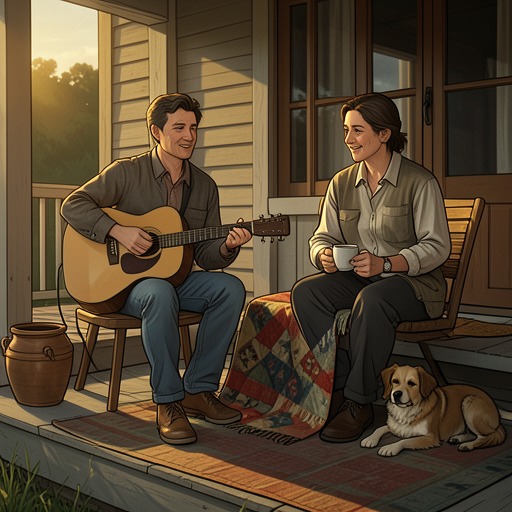
The finished hat becomes part of the family’s visual memory. Trixie photographs Abby and Andie on the porch, after noticing Marissa’s face in the photograph and recognizing the resemblance between the handmade hat and the one associated with their mother. Later, Abby tells Jack that Trixie gives them pretty things, smells good, and talks to them like they are older children rather than babies. More importantly, Trixie has given Abby good memories of Marissa. In this exchange, found family does not replace biological family; it helps biological family remember and communicate. Trixie’s creative care becomes a bridge between the girls and their deceased mother.
Jack’s resistance shows why such belonging is complicated. He has spent much of a month refusing to let Abby come to Trixie’s shop, arguing that a store filled with sexy lingerie is no place for a girl her age. Abby responds by withdrawing, stomping upstairs, and communicating only her basic needs. Jack recognizes that she is miserable and that he has the power to repair the situation, but his protective boundary has become emotional isolation. The larger network eventually corrects that isolation: Andie tells him to apologize to Trixie, observes that he holds Trixie’s hand when he thinks nobody can see, and insists that the girls like her. The children become active interpreters of the adult relationship rather than passive recipients of its consequences.
Shared Work and Material Reciprocity
Mustang Prairie’s communal bonds are repeatedly built through organized work. Trixie’s knitting and sewing classes begin in a smaller room, but the online sign-up fills the available places and forces the class into a larger, better-lit room with improved chairs. The change records more than popularity. It shows local interest becoming a resource that expands what Trixie can offer, while scraps of yarn in every imaginable weight and color make the classroom a material image of plurality held together by shared practice.
Those classes connect directly to Eric’s costume drive. Instead of spending a fixed budget on a limited number of finished costumes that would leave some children without help, Eric proposes buying fabric and accessories so the town can make wings, wands, capes, tiaras, and other costume pieces together. Trixie is excited by the plan because it joins her skills to a public need. The community’s generosity is thus organized rather than abstract: money becomes supplies, supplies become labor, and labor becomes inclusion for children who might otherwise be left out.
The costume drive expands this model. Trixie rises before ten in the morning to prepare two large rooms reserved by Eric. Eight sewing tables are set aside for use with the high school drama department, a semicircle of chairs accommodates knitting and hand sewing, and long tables form a Glitter Station beside the snack table. The arrangement makes room for different ages and abilities, turning the event into a practical social architecture. Half the town is expected to pass through, including seniors who can attend because the food and celebration begin early. Exhausted after a demanding week and too much wine the night before, Trixie still understands the day as worthwhile because the town is making Halloween possible for Mustang Prairie’s less fortunate children.
The same communal labor supports Trixie’s fashion business. At the launch of Sexy Separates by Trixie, Sadie and the other models wear Trixie’s designs on a makeshift runway dividing Dylan’s bar. Sadie’s music and Kiki Ramirez’s songs provide the soundtrack, while lighting, gauze, applause, and the models’ confidence turn the bar into a shared bedroom-like space. Trixie has created the line, but the launch succeeds through a network of performers, musicians, venue owners, friends, and witnesses. The applause confirms a public achievement, even as Trixie feels the private absence of the person with whom she most wants to share it.
Friendship, Accountability, and Conflict
Found family is not synonymous with unconditional approval. Sadie remains close to Trixie even after falling in love, unlike friends from Trixie’s past who abandoned her when romance took precedence. Their friendship is sustained by continued invitations and shared time, including dinners and gatherings where Trixie is expected to participate rather than retreat into solitude. Sadie’s role is affectionate but also corrective: she treats Trixie’s emotional life as something worth defending.
That protective loyalty becomes explicit when Jack asks his friends for support after realizing he wants to speak with Trixie. Shellie questions why he wants contact if he still does not want the same things Trixie wants. Sadie is harsher, accusing him of disregarding Trixie’s feelings and using her because he knew her old crush made refusal difficult. She also questions whether he wants Trixie only because Trixie has stopped wanting him. The community therefore functions as an ethical tribunal. Its intimacy gives it the authority to confront Jack, and its loyalty to Trixie prevents his late awakening from being treated as automatically redemptive.
Jack finally states that he realized he loved Trixie at his art opening. The disclosure is enabled by the group’s pressure, but it does not erase the harm that preceded it. This is a crucial feature of the concept: communal belonging makes emotional truth more possible, yet it also preserves memory of callousness. Friends do not merely reunite lovers; they make reconciliation answerable to the person who was hurt.
Shirl and Sadie provide a smaller, comic version of the same reciprocal structure. Sadie thanks Shirl, embraces her, and playfully sends her toward the dining room to collect phone numbers, while Shirl threatens to replace Sadie’s biscuits with creamed spinach. Sadie then asks Shirl to save her a pecan pie. The exchange combines teasing, food, labor, and affection. Community here is not sentimental purity but a practiced fluency in giving, joking, bargaining, and returning.
Memory, Inclusion, and Narrative Significance
Thanksgiving reveals how far this network has expanded around Jack’s household. For the first time since his daughters were babies, Jack has a full house: his parents remain in town, Sadie and Dylan bring side dishes, Luna brings a ham while holding Mr. Scanlan’s hand, and Jonquil arrives early with Abby and Andie to learn the family’s traditions. Trixie comes only ten minutes before the meal, claiming to have lost track of time, but her late arrival exposes the emotional tension beneath the gathering. She has been avoiding Jack even while remaining connected through Jonquil and the girls. The communal table can hold her presence, but it cannot make the unresolved relationship disappear.
The Christmas sequence makes inclusion more intimate. Andie tells Jack that apologizing is what he must do if he has hurt Trixie, while Abby explains that the girls like Trixie because she treats them as capable people and has helped preserve memories of their mother. Their intervention redraws the boundaries of Jack’s household. Trixie is not presented as a substitute mother, nor as an outsider whose involvement must be hidden; she is someone whose care has already become part of the girls’ understanding of family.
Objects carry this process of incorporation. Abby’s photograph and hat connect Trixie’s craft to Marissa’s remembered image. Jack’s gift of the original Blue Skies, Trixie’s favorite painting, transforms art into a declaration of attention and feeling. Trixie receives it in tears because the gift intensifies rather than resolves her love. The painting therefore holds both the promise and the difficulty of belonging: it is an intimate recognition, but it also makes emotional distance harder to maintain.
The concept finally gathers the book’s separate strands—return, friendship, parenting, creative work, memory, and romantic accountability—into one social vision. Mustang Prairie offers belonging through repeated participation: welcoming a former resident home, making costumes for children, teaching skills in a larger room, photographing a girl in her mother’s hat, staging a fashion show in a bar, sharing holiday food, and telling a wounded friend what the truth requires. Its found family is not a fantasy that eliminates grief or conflict. It is a structure strong enough to carry both, allowing people to become connected through what they make, remember, challenge, and choose to do for one another.