Grief and healing
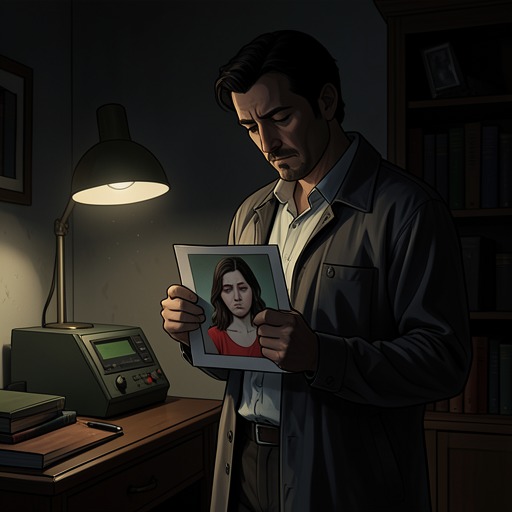
It Must Be Love: A Mustang Prairie RomanceGrief and healing names one of the novel’s governing processes: characters carry loss through their bodies, families, work, and romantic decisions until they can tell a fuller truth about what happened. Marissa Thorpe’s death leaves Jack Thorpe convinced that love and marriage end in betrayal, while Trixie Beaumont must mourn a long-held hope of belonging with him. Against those forms of emotional paralysis, the novel places concrete acts of care, artistic recognition, entrepreneurial self-definition, and a new life in Mustang Prairie. Healing therefore means neither erasing the dead nor denying injury; it means refusing to let the past dictate every future relationship.
The Wound of Marissa Thorpe’s Death
Jack Thorpe’s grief is complicated by the public story of his marriage and the private story he has kept hidden. He tells Trixie that he and Marissa were once deeply in love, but that their relationship changed after his art career succeeded. Marissa resented that Jack received the attention, praise, and press even while she enjoyed the money and parties his success brought. The conflict became so severe that they were close to divorce when she died.
The circumstances of Marissa’s death intensify Jack’s guilt and confusion. They had been arguing before she left, and she had accused him of needing to take care of the children for once. She suffered an aneurysm behind the wheel and died before her car struck a tree, but outsiders interpret the death through the simpler and more flattering story that the couple had been happy and that Jack was fortunate to have had such a marriage. Jack cannot accept that version. It turns his bereavement into a form of isolation: everyone expects gratitude for a marriage he remembers as damaged, and no one understands why the loss has made him afraid of marriage rather than eager to recreate it.
The dead remain active in the family’s emotional structure. Jack’s mother tells him that Trixie had once stayed close enough to see and hear him while he was with Marissa, then withdrew like a ghost when the relationship hurt her. She argues that Trixie needs to know the truth because competing with a ghost is impossible. Marissa is therefore not merely a remembered wife; she is the standard against which Trixie is silently measured and the unspoken presence that blocks Jack’s ability to recognize a different kind of love.
Truth-Telling as Emotional Treatment
Jack initially tries to protect both himself and Trixie through silence. After their first sexual encounter, he says that the night was wonderful but that he cannot make promises because his life is already too full and chaotic. Trixie hears the limit beneath the attraction. She understands that he remains emotionally attached to Marissa and does not want a serious relationship, yet she refuses to accept a connection that offers pleasure without the possibility of a future. Her grief begins before any formal breakup: she is mourning the realization that desire alone cannot make Jack available.
The decisive change comes when Jack explains the marriage instead of allowing Trixie to interpret his withdrawal as a judgment of her. He admits that his earlier words were not really about Trixie, then describes Marissa’s jealousy, the fights over his career, and the marriage’s approach to divorce. He also acknowledges that withholding this history from Trixie was wrong. The disclosure does not instantly remove pain, but it replaces a misleading public narrative with shared knowledge. Trixie responds with understanding rather than an attempt to rescue him, and that restraint matters: witnessing grief becomes more healing than forcing consolation.
The family participates in this movement toward honesty. Andie Thorpe tells Jack that apologizing is what boys should do when they hurt girls’ feelings, then directly urges him to apologize to Trixie because she and Abby Thorpe know he likes her. The child’s intervention turns a private romantic conflict into a question of responsibility. Jack’s emotional recovery consequently requires more than recognizing his own suffering; it requires admitting the harm his evasions have caused another person.
Trixie Beaumont’s Letting Go
Trixie’s grief is the grief of an unfulfilled attachment, but the novel gives it the weight of a genuine loss. She has carried her crush on Jack longer than any relationship she has had, and she has repeatedly tried to convince herself that she is finished with it. Her assertion that she is done crushing on him contains its own qualification: one day, she will mean it. The gap between declaration and feeling shows healing as a gradual process rather than a clean decision.
After recognizing that Jack cannot presently offer the kind of relationship she might want, Trixie tells Sadie that the two of them have hooked up only a few times, that Jack is still in love with his wife, and that he does not want anything serious. She refuses to compete with a ghost or waste time in a relationship with no hope of a future. Her independence is not presented as emotional numbness. She still wants the option of something serious, but she knows that she does not need a man merely for sexual satisfaction. Setting that boundary is an act of self-preservation and a rejection of the belief that intimacy must be accepted on whatever terms another person offers.
Her most explicit act of mourning occurs when she tells Blythe Danforth the entire story of her relationship with Jack over several strong drinks of tequila. On the walk back to Under the Skirt, she allows her tears to fall without turning them into a dramatic breakdown. She mourns the death of a hope that had promised something better than either her marriage to Preston or her involvement with Jack. She also releases the patience of waiting for that hope to arrive. The movement is painful but purposeful: having nothing else to do, she chooses to move forward.
Care, Bodies, and Recovery
The novel repeatedly translates emotional concern into practical attention to the body. When Trixie steps on a nail, blood runs from her foot and her pale face and tears reveal more pain than her insistence that she is fine. Jack checks her ankle, carries her to his car, gives her a candy bar, arranges for Sadie to collect the girls, and takes Trixie to the hospital. There she receives a tetanus shot, antibiotics, and a bandage; the doctor diagnoses a mild sprain and instructs her to stay off the foot for the rest of the week.
This injury is not equivalent to the novel’s larger grief, but it provides a concrete model for care. Trixie’s body contradicts her self-sufficient performance, while Jack’s intervention makes responsibility visible before he is capable of emotional commitment. The doctor’s instructions, repeated directly to Jack because Trixie may not listen to him, also create a comic but meaningful division of labor: healing requires limits, patience, and another person willing to enforce them.
Jack’s recovery is likewise inseparable from creative work. At his art exhibition, he realizes that the painting of Trixie is the work he most wants her to see. Looking at the oil portrait, he recognizes that he wants and needs her and that his refusal to show her the painting was an act of foolishness. His art registers an emotional truth before his conscious understanding catches up. The portrait preserves Trixie not as a substitute for Marissa but as evidence that Jack’s capacity for attachment has changed.
Creative and Communal Forms of Renewal
Trixie’s healing also takes material form in her business. For months she has considered creating a clothing line, testing names, sketching logo ideas, and contacting a graphic designer. The ideas have begun to torment her because they make her inaction visible. Her decision to act transforms private frustration into a future she can build. In a red polka-dot dress and red heels, she walks from her apartment above the lingerie shop across the street to City Hall to seek the approval required for her plans.
The resulting brand, Sexy Separates by Trixie, expresses recovery through choice and multiplicity. She imagines six to ten kinds of panties, ranging from g-strings to bikini, French cut, and possibly boy-cut styles, using silk, lace, and cotton. A rainbow palette accommodates vibrant colors, while four bra styles, including a convertible bra, allow women to mix and match. Trixie’s own love of coordinated lingerie does not become a rule for everyone; Sadie’s habit of combining different colors becomes evidence that women can define pleasure and style for themselves. The line turns the language of intimacy into a language of agency.
Her economic planning gives that emotional recovery a durable structure. Under the Skirt Online is officially open, the shop has produced several consecutive months of profit, and Trixie considers renting the neighboring space as both warehouse and studio. She may even hire a part-time worker earlier than planned. Yet she remains cautious because the business is her livelihood, career, and stability. Against parents who moved from hobby to hobby, religion to religion, and place to place, she chooses obligation and responsibility. Healing is thus not only letting go of Jack; it is constructing a stable identity that does not depend on another person’s readiness to love.
Dylan offers a parallel version of renewal. After leaving police work and the city, he returns to Mustang Prairie and becomes a full-time bar owner and occasional bartender. Away from sirens and urban violence, he walks at night and no longer reaches for a gun when a patron enters the bar. He still reminds Sadie to lock her doors and carry mace several times a day, showing that recovery does not erase habit. Nevertheless, he sees Mustang Prairie as a chance to begin again, promising himself that darkness can fade into gray and eventually into white. The peaceful town, its welcome, and its ordinary acts of neighborliness give him a setting in which he can feel like a person rather than someone moving through violence.
Love After Loss
The novel ultimately treats healing as compatible with renewed love, not as a demand to remain loyal to suffering. Jack first believes that the only love he has known was immature and that the excitement of his relationship with Trixie therefore cannot be love. Later, once he understands what he feels, he tells Trixie plainly that he loves her and attributes his delay to being slow to recognize it. His declaration matters because it follows confession: he does not reach a new relationship by pretending Marissa’s marriage never existed, but by integrating its failures into a more honest account of his life.
Trixie remains skeptical, and that skepticism protects the seriousness of the moment. Hope appears, but she is unwilling to believe Jack without evidence because his earlier hesitation caused real harm. The relationship’s movement toward healing therefore depends on emotional honesty, apology, and sustained choice rather than on attraction alone. Jack’s love for Trixie does not cancel his grief for Marissa; it demonstrates that the heart can hold past loss and present attachment without reducing either to a lie.
As a concept, grief and healing connects the novel’s romances, families, injuries, careers, and community life. Marissa’s death exposes the danger of idealized memory; Trixie’s tears make self-abandonment impossible; Jack’s confession breaks the silence that has governed his family; the portrait and lingerie line convert feeling into creative practice; and Dylan’s return shows that a damaged past need not remain a permanent identity. Recovery arrives through repeated, imperfect acts of telling the truth, caring for the body, accepting responsibility, and making room for a future that does not resemble the life that was lost.