Jack Thorpe–Marissa Thorpe marriage
It Must Be Love: A Mustang Prairie RomanceJack Thorpe–Marissa Thorpe marriage is the absent but governing relationship at the center of Jack Thorpe’s emotional life. Marissa Thorpe’s death leaves behind not a simple memory of a loving marriage, but a contested family story: the town remembers her as kind, beautiful, and universally beloved, while Jack remembers a relationship damaged by jealousy, conflict, and an approaching divorce. That gap between public idealization and private truth becomes the central burden Jack must finally disclose before he can imagine a future with Trixie Beaumont.
Public Memory and Private History
Marissa Thorpe is remembered throughout Mustang Prairie as kind, beautiful, and popular. Abby Thorpe is repeatedly told that she resembles her mother, and people respond to Abby less as an individual than as a living continuation of Marissa’s image. Abby describes this experience as being treated like a ghost, while Trixie Beaumont tries to separate resemblance from identity by telling her that the deeper inheritance is Marissa’s ability to draw people toward her. In this way, Marissa remains present through community memory, family resemblance, photographs, and the stories others tell about her.
Trixie’s own history complicates that public admiration. Marissa was the woman who took the first boy Trixie had ever loved, although Trixie does not present this old wound as an accusation when Abby asks whether she knew her mother. The marriage therefore links two layers of memory: Marissa as the beloved woman Mustang Prairie mourns, and Marissa as the figure associated with Trixie’s childhood heartbreak. Trixie’s feelings toward the marriage are consequently shaped by both grief and displacement, because she is drawn toward Jack while standing in the emotional space once occupied by his wife.
Marriage Under the Pressure of Success
Jack and Marissa initially loved each other intensely. Jack later explains that the relationship changed after his painting career became successful. His paintings had made him wealthy and famous at a remarkably young age, but Marissa grew jealous of the attention, admiration, and press surrounding him. She valued the money and parties associated with his career, yet resented that Jack was the person receiving recognition. The success that might have secured their family instead became a source of tension, turning professional achievement into a domestic wedge.
Jack’s account does not reduce the marriage to a single villain. He remembers the pain of being resented for the work that defined him, but he also recognizes that the marriage had deteriorated badly. By the time of Marissa’s death, they were close to divorce. Their final argument concerned childcare and Marissa’s accusation that Jack needed to take care of the children for once, a remark that exposed how bitterly they had come to measure parental labor against one another. The marriage’s collapse was therefore connected not only to celebrity and jealousy but also to the daily pressures of parenting and the unequal emotional meanings attached to work.
Death, Grief, and the Family Story
Marissa died while driving after that argument. Jack reveals that she suffered an aneurysm behind the wheel and died before the car struck a tree. Because the accident followed a visible marital conflict, the community assumed a simpler and more comforting story: that Jack and Marissa had been happily married until a sudden accident ended their life together. Jack calls this public version a lie, not because Marissa’s death was unimportant, but because it erases the painful condition of the marriage at the time she died.
The hidden truth intensifies Jack’s grief rather than relieving it. After Marissa’s death, his greatest fear becomes losing his daughters, Abby and Andie Thorpe. He has carried that fear since bringing them home from the hospital, and widowhood makes it worse. When Abby disappears, Jack is unable to share the confidence of Ty and Shirl that she will be found safe; the event activates the terror he has lived with since Marissa died. His grief is therefore expressed through vigilance, overprotection, and a determination to keep his daughters safe, even when those protective impulses create new conflicts.
Jack also describes the girls’ grief as immense and palpable. When his painting returns after a year of creative paralysis, he tells Trixie that his difficulty was not only the loss of the love of his life but the pain of watching his daughters suffer. His artistic block becomes part of the family’s bereavement: he cannot easily return to the work that once made him successful while his children remain surrounded by the absence of their mother.
Marissa’s Continuing Presence
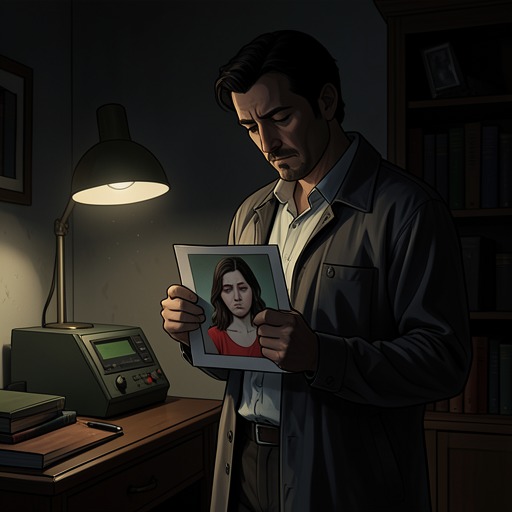
Marissa’s presence is preserved through objects and domestic rituals. Abby finds a photograph of her mother in the basement and asks Trixie to help make a hat like Marissa’s. Later, Trixie photographs Abby and Andie wearing the finished hats beside a visible image of Marissa, carefully placing the children within a visual inheritance rather than leaving them alone inside it. Abby keeps one of the photographs beside Marissa’s photograph, giving it a place of honor and creating a new memory connected to her mother.
This act of remembrance changes the meaning of Trixie’s presence in the family. Trixie does not replace Marissa; she helps Abby approach her mother through making, dressing, photographing, and remembering. Abby specifically tells Jack that Trixie has given her good memories of Marissa. That statement matters because it reframes Trixie from a threat to the dead woman’s place into someone capable of protecting and extending the family’s memory.
Jack’s gift to Trixie performs a related act of emotional preservation. He gives her the original of Blue Skies, her favorite painting. The gift reveals that his connection to Trixie has entered the same imaginative and artistic territory that once belonged to his established identity as Marissa’s husband and a celebrated painter. Yet the painting also exposes the danger of memory: Trixie fears that receiving such an intimate object will strengthen her love for Jack just when she is trying to suppress it.
From Ghost to Truth
Jack initially treats Marissa’s memory as an insurmountable barrier. He tells Trixie that he cannot make promises because his life is already full and chaotic, and he repeatedly insists that he does not want another relationship resembling his marriage. He has avoided dating since Marissa’s death, first because he grieved, then because he cared for the girls, and finally because he had built a life in which no woman seemed worth the disruption. Trixie is the first woman to awaken his interest, but that awakening frightens him because it threatens the emotional arrangement he has maintained since becoming a widower.
The family recognizes the situation before Jack is willing to name it. Abby tells him that he should apologize to Trixie for hurting her feelings, while Andie Thorpe points out that he holds Trixie’s hand when he thinks no one can see. The girls explain why Trixie matters to them: she makes beautiful things, speaks to them as capable children rather than babies, and has connected them to meaningful memories of Marissa. Their intervention turns private attraction into a family question, forcing Jack to consider whether protecting Marissa’s memory requires rejecting new love.
Jack’s mother also challenges his interpretation of the past. She tells him that Trixie and Jack were terrible at hiding their tension, anger, and resentment, and suggests that Trixie deserves the truth about the marriage. Her point is not that Jack should erase Marissa or deny the failed relationship. It is that Trixie cannot fairly compete with an idealized ghost. Jack must distinguish loyalty to Marissa’s memory from loyalty to a false version of the marriage.
When Jack finally tells Trixie that he and Marissa had been close to divorce, he gives her the knowledge required to understand his fear. He admits that he had not wanted her to know, but now sees that withholding the truth was wrong. This disclosure integrates the contradictory parts of Marissa’s place in his life: she was once the love of his life, the mother of his children, and the center of a marriage that had become deeply unhappy. Only after acknowledging all three facts can Jack stop treating the past as an unquestionable ideal.
Narrative Significance
The marriage functions as both backstory and emotional antagonist. Marissa never needs to appear in the present to shape Jack’s choices, because the town’s admiration, the children’s resemblance to her, the photographs in the house, and Jack’s own guilt keep her active in the family system. Her memory creates a triangle involving Jack, Trixie, and the dead wife, while Abby and Andie repeatedly mediate the conflict by expressing their attachment to Trixie and their continuing love for their mother.
The relationship’s final significance lies in Jack’s reinterpretation of love. He eventually tells Trixie that the love he had known before was immature: it had been comfortable and thrilling, fun and sexy, but he had failed to recognize what he now felt. He says that he loves Trixie, while acknowledging that he was slow to understand his feelings. This does not invalidate his love for Marissa; it distinguishes the earlier marriage from the relationship he is choosing now. The failed marriage remains a source of grief and caution, but it no longer has to dictate the shape of Jack’s future. Through truth, memory, and the children’s acceptance, Marissa’s ghost is transformed from an obstacle into part of the history Jack and Trixie must honestly carry together.