Trixie Beaumont and Jonquil Spring
It Must Be Love: A Mustang Prairie RomanceTrixie Beaumont and Jonquil Spring’s sisterhood transforms an accidental blood connection into an active, chosen bond. Jonquil arrives in Trixie’s life as an intellectually advanced but socially isolated eleven-year-old who has left the commune because she no longer belongs there. Trixie, herself still rebuilding a life after divorce and emotional upheaval, nevertheless recognizes that Jonquil needs more than genealogical confirmation: she needs a home, ordinary social experience, and someone willing to remain present. Their relationship therefore becomes one of the book’s clearest enactments of found family, joining shared ancestry to deliberate care.
Discovery and Recognition
Jonquil first appears at Trixie’s shop after traveling to Mustang Prairie alone. She identifies Trixie by her former name, Beatrice Robinson, and states that they share the same parents, Peri and Toro Moon. Trixie is startled because she had not known that she had a half-sister, while Jonquil treats the discovery as a matter that can be established through research and calculation. Her formal manner, large black-rimmed glasses, and precise explanation of her conception within the commune immediately mark her as both a child and someone accustomed to speaking like an adult.
The encounter becomes concrete rather than merely declarative when Trixie closes the shop, takes Jonquil by the hand, and leads her out to get food. Jonquil explains that she came to town for the Farmer’s Market, brought her luggage, walked two and a half kilometers to the bus station, and spent five days traveling to Mustang Prairie. Trixie’s shock turns into alarm: Jonquil may be unusually capable, but she is still a child who has undertaken a dangerous journey alone. Trixie’s decision to question how Jonquil arrived, rather than simply accepting the girl’s competence as proof that she can manage without help, establishes the protective instinct that will define their relationship.
Leaving the Commune
Jonquil does not present her departure as an adventure. She says that she needed to leave because she did not fit into the commune anymore and lacked what she calls normal socialization skills. Her request is practical and exact: she wants immersion in ordinary life and asks to live with Trixie until she begins college a year later. The request forces Trixie to measure the gap between being Jonquil’s newly discovered sister and becoming responsible for her daily well-being.
Trixie initially doubts her own fitness for the role. She is still learning how to make sound decisions in her own life, and Jonquil’s intelligence makes the responsibility more intimidating rather than less. Yet Jonquil’s sadness changes the balance. Trixie tells her that she may stay, that there is enough room, and that she will not be sent to live on campus while still too young. The offer is not presented as an automatic duty imposed by DNA; it is a conscious choice to provide the stability Jonquil cannot find at home.
Jonquil tries to make the arrangement reciprocal, explaining that she can clean, cook, and contribute through her expertise with computers. Trixie rejects the idea that Jonquil must earn her keep, though she makes clear that living together will involve helping out. She tells Jonquil that they are sisters and admits that she had always wanted a sister with whom she could share secrets, clothes, and conversations about anything, even things that seemed lame or stupid. In that confession, Trixie gives the relationship an emotional history it did not previously possess: the sisters cannot recover a shared childhood, but they can begin creating the intimacy Trixie imagined and Jonquil needs.
Making Sisterhood Ordinary
Once Jonquil is accepted into Trixie Beaumont’s household, their relationship develops through repeated acts of ordinary inclusion rather than through the revelation of shared parentage alone. Trixie gives Jonquil a sister gift and explains that it is her way of saying thank you and expressing happiness that Jonquil found her. The gift matters because Jonquil still needs reassurance that her arrival has not created an obligation Trixie secretly resents. When Jonquil asks whether Trixie is truly glad to have her, Trixie answers without qualification that she has always wanted a sister and considers Jonquil a remarkably cool child. The exchange turns biological discovery into emotional recognition: Jonquil is not merely being accommodated but welcomed.
Trixie also tries to translate the relationship into experiences Jonquil has been denied. Jonquil grew up among adults on the commune and had unusual openness about sex, but she did not possess the everyday social preparation Trixie associates with first love, first sexual experience, heartbreak, contracts, and grocery shopping. Trixie understands that leaving the commune at sixteen forced her to learn such milestones through struggle, and she wants Jonquil to face them with guidance rather than isolation. Her promise to teach Jonquil is therefore both practical and autobiographical. It acknowledges that Trixie cannot offer a conventional upbringing, while asserting that her own hard-won knowledge can still become a form of care.
The domestic bond is reinforced through family gatherings. Jonquil joins Abby Thorpe and Andie Thorpe at Jack Thorpe’s Thanksgiving preparations, eager to observe traditions associated with the holiday, and her presence contributes to Jack’s sense that the house is full again after years in which his daughters were little more than babies. Trixie’s connection with Jonquil consequently links her to the Thorpe family even when Trixie herself tries to avoid Jack. Jonquil can move between households, carry information about Trixie, and participate in the routines of Mustang Prairie, creating a bridge between Trixie’s newly established home and the wider community.
That bridge also changes the emotional geometry around Jack and Trixie. While Trixie avoids spending time with Jack after their dinner and sexual history become difficult to manage, Jack continues seeing Jonquil when his daughters are home from school and hears about Trixie through them. Jonquil is therefore not a passive witness to the adults’ unresolved attraction; her presence keeps their lives connected during a period of withdrawal. At the same time, the Thorpe daughters recognize that Jack’s feelings for Trixie remain active. Andie urges him to apologize for hurting Trixie’s feelings and tells him that she and Abby know he likes her. Through the children’s observations, Jonquil and Trixie’s sisterhood becomes part of the family system surrounding Jack’s conflict rather than an isolated subplot.
Trixie’s care is visible in the way she supports Jonquil’s movement toward self-presentation. She helps her choose an outfit consisting of grey skinny jeans, an Einstein T-shirt, a red leather jacket, and black motorcycle boots, then affirms that the combination is perfect and entirely her. The moment is small but consequential: Trixie does not ask Jonquil to erase her intelligence or eccentricity in order to become socially acceptable. She helps her make those qualities legible within a style that feels chosen. Jonquil’s gradual comfort in her new surroundings is presented as a shared achievement, with Trixie determined to give her sister the semi-normal life both of them have wanted despite inheriting brilliance and growing up outside conventional family structures.
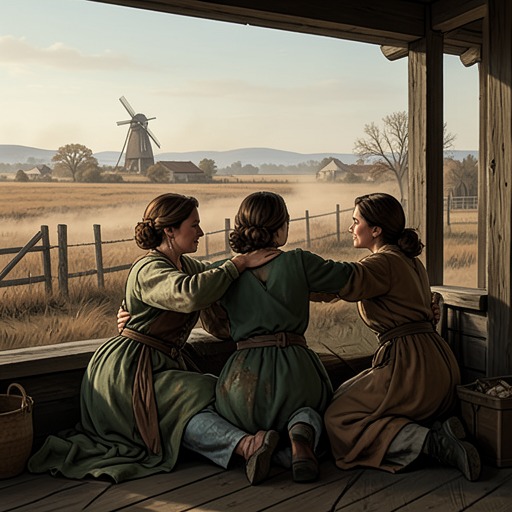
Their bond reaches its clearest emotional expression when Jonquil throws herself into Trixie’s lap and says that, despite everything else, they at least have each other. Trixie responds that Jonquil is the best thing to happen to her all year. She places this sisterhood beside her new lingerie line as one of the two bright spots remaining after the collapse of her marriage and her relationship with Jack. The statement does not diminish the business achievement; instead, it reveals that professional independence and intimate belonging now sustain her together. Jonquil gives Trixie a relationship that is not organized around romantic uncertainty, while Trixie gives Jonquil the reliable attachment and social world she left the commune to find.
Sisterhood Within a Wider Family
Jonquil Spring’s arrival also alters the meaning of family beyond Trixie Beaumont’s household. When she introduces herself to Jack Thorpe as Trixie’s officially half-sister, Trixie immediately corrects the implication that the relationship is somehow lesser: there is no such thing as half family. That insistence becomes important in a town where kinship is continually made through care, shared meals, friendship, and practical participation. Jonquil is not kept at the edge of Mustang Prairie life as a newcomer from the commune. She is drawn into Thanksgiving preparations with Abby Thorpe and Andie Thorpe, learns the household’s traditions, and helps create the full house Jack has not experienced since his daughters were babies. Her presence gives the holiday a sense of renewal while also placing Trixie’s new family bond inside the Thorpes’ established domestic network.
The relationship’s significance is sharpened by contrast with the silences and evasions surrounding Jack Thorpe’s marriage to Marissa Thorpe. Jack’s mother recognizes that Trixie has long been forced to compete with the memory of a dead woman, while Jack believes that his disastrous marriage has made another commitment impossible. Trixie’s sisterhood with Jonquil offers a different model of intimacy: it does not depend on concealment, romantic competition, or an attempt to replace someone absent. Jonquil’s directness and Trixie’s willingness to answer it make the bond a corrective to the adults’ habit of retreat. Even while Trixie avoids Jack, Jonquil remains connected to his family, and the children’s exchanges help keep information, affection, and concern moving between the households. In that sense, the sisters become part of the wider network through which Mustang Prairie absorbs disruption and turns separate lives into a functioning community.
A Chosen Future
The sisterhood between Trixie Beaumont and Jonquil Spring finally matters not because it repairs the past, but because it gives both women a future they can actively shape. Jonquil’s arrival exposes the limits of biological family when family is treated as an unattended fact: she knows who her parents are, yet she has been left without the social belonging and everyday guidance she needs. Trixie answers by converting knowledge into responsibility. She offers a place to live, instruction in ordinary life, shared domestic work, and the emotional assurance that Jonquil is wanted for herself rather than merely tolerated because of their common parents. In return, Jonquil becomes a source of steadiness for Trixie at a moment when romantic attachment has brought uncertainty and pain. Their relationship joins two forms of rebuilding: Jonquil learns how to inhabit a world beyond the commune, while Trixie discovers that caring for another person can be an expression of competence rather than evidence of inadequacy.
That reciprocity is especially visible after Trixie’s relationship with Jack Thorpe breaks down. Her lingerie line gives her creative and professional momentum, but Jonquil supplies the intimate connection that success alone cannot provide. When Jonquil embraces her and declares that, despite everything else, they have each other, Trixie recognizes the bond as the best thing to happen to her all year. The recognition is decisive because it places sisterhood alongside work as a durable source of identity, rather than treating it as a consolation prize for romantic disappointment. Trixie’s home becomes a place where Jonquil can experiment with clothes, social habits, and independence without surrendering the intelligence and difference that define her. The outfit built around Einstein, a red leather jacket, and motorcycle boots embodies that balance: Trixie helps Jonquil become more socially legible while affirming that becoming ordinary does not require becoming someone else.
Their relationship also enlarges the book’s idea of a family. Trixie’s insistence that there is no such thing as half family rejects a hierarchy in which shared DNA determines the value of a bond. The sisters’ connection is biological in origin but chosen in practice, sustained through food, gifts, instruction, clothing, holidays, and repeated acts of welcome. Jonquil’s participation in the Thorpes’ Thanksgiving household extends that chosen bond into Mustang Prairie’s broader network of care, while her continued movement between Trixie and Jack Thorpe’s families keeps affection and information circulating when the adults withdraw from one another. The result is not a simple replacement for the families either sister left behind. It is a new arrangement in which ancestry, community, and deliberate care reinforce one another. Trixie and Jonquil therefore stand as a compact expression of the narrative’s larger claim: belonging becomes real when someone makes room, stays present, and treats another person’s need for home as a shared responsibility.