Trixie’s Post-Divorce Independence
It Must Be Love: A Mustang Prairie RomanceTrixie’s Post-Divorce Independence is the decisive rebuilding project at the center of Trixie Beaumont’s life after her short, failed marriage to Preston. It is not merely a change in relationship status: it is her refusal to surrender her ambitions, income, labor, or emotional judgment to another person again. In Mustang Prairie, she turns an inherited sense of being on her own into a deliberate form of authorship, establishing a lingerie business while confronting the fear that intimacy might once more become a route back to dependence.
Definition and Starting Conditions
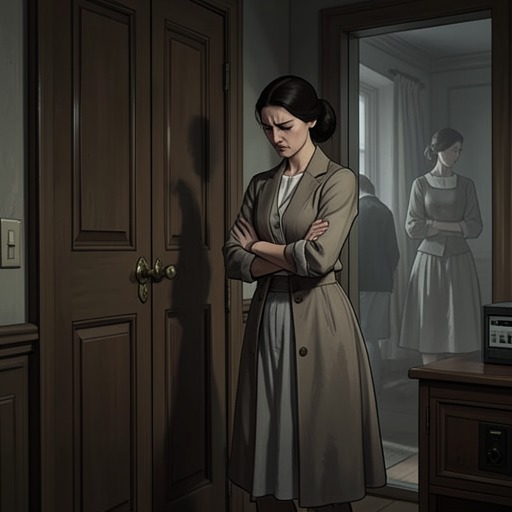
Trixie’s independence begins with the collapse of the life she had built around Preston. She had left design school to help him advance his career, hosting parties and dinners for employers and business associates while performing the role of an agreeable wife. Preston’s sophistication, charm, handsome appearance, and wealth had helped obscure how completely her own future had been placed on hold. By the time she understood the cost, the marriage had already become a doomed arrangement, and she left with a large check and a married name rather than a continuing place in his world.
Her return to Mustang Prairie is therefore described as the end of a bad marriage and the beginning of a new start. Because she has signed an agreement and cashed the check, she cannot discuss every detail of the separation, but the practical result is clear: she no longer has a husband to please, in-laws to satisfy, or a prominent family directing her choices. Her parents are also absent, traveling through South America in a new recreational vehicle and liable to return at any point from the next day to eight years later. Trixie may wish for their support, but she cannot organize her recovery around receiving it.
The emotional condition of this new life is stark. She has no parents nearby, no domineering husband with a concealed cruel streak, and no family structure pressuring her to become someone else. She is on her own again, yet the repetition carries a different meaning: solitude is no longer only abandonment or lack of support. It becomes the space in which she can decide what she wants without asking permission.
Economic and Creative Reconstruction
Trixie’s first concrete act of independence is to make her lingerie shop the foundation for a larger design career. During the quietest part of the day, when the store is empty and she can work among the garments, she imagines the shelves holding designs made for women in sexy cuts and vibrant colors. Mustang Prairie offers both a market and a source of creative inspiration. Her plan is not an abstract wish; she intends to design, create, and sell clothing under her own direction.
For months she has treated the dream as something almost tangible. She experiments with possible brand names, sketches logo ideas, and contacts a graphic designer to develop them. The finished logos become a source of pressure because they make her inaction visible. The turning point comes when she dresses deliberately in a red polka-dot dress, red heels, a sweater, and a black beaded handbag, then walks from the apartment above her shop to Mustang Prairie City Hall to seek the approval required for her next step. The scene makes independence administrative as well as inspirational: Trixie must negotiate permissions, plans, and institutions herself.
Her first line takes shape as Sexy Separates by Trixie. She envisions six to ten styles of panties, ranging from g-strings to bikini and French-cut designs, using silk, lace, and cotton, with a possible boy-cut option. She pairs these with four bra styles, including a convertible bra, and builds the collection around a rainbow palette that allows customers to mix and match. The design philosophy rejects the assumption that every woman wants traditional matching sets. Trixie’s business grows from her own taste, but it is shaped to accommodate varied preferences and forms of self-expression.
The enterprise becomes more stable when Under the Skirt Online officially opens and the shop produces several consecutive months of profit. She considers renting the neighboring space as both a warehouse and a workshop and begins imagining the eventual need for a part-time employee. Even at the moment of excitement, she insists on caution. The business is her livelihood, career, and stability, so she refuses to treat growth as permission for recklessness. That practical discipline contrasts with the instability associated with her parents, who provided materially but moved from hobby to hobby, interest to interest, and religion to religion without offering the settled structure Trixie wanted.
Labor, Control, and Brand Building
Independence is sustained by work rather than by a single declaration. When an injury leaves Trixie exhausted and in pain, she cannot refold or steam the merchandise, but she remains at the counter, preparing the digital register and handling customers while using the quieter hours to sketch. The store continues to function because she adapts her labor to her physical limits instead of abandoning the enterprise. Her injury exposes the vulnerability of a one-person operation, yet it also shows how closely the business is tied to her capacity to design, sell, manage, and endure.
As the line develops, Trixie creates a concealed opening into the neighboring space and prepares to expand her working area. She has hired Derek Hayes as a contractor, although he cannot begin until Black Friday, so she temporarily hangs a curtain to hide the unfinished construction. The improvised barrier marks a transition from shopkeeping to production: behind the retail display, she is making room for a workshop and a more substantial business.
When Jonquil Spring helps rank prospective seamstresses, Trixie refuses to move immediately to an outside manufacturer. Because the line is new, she wants total control over quality and will consider contracting production only after the brand is solid. This decision gives her independence a material dimension. She is not simply claiming ownership of a creative idea; she is retaining authority over how that idea becomes a physical product, how workers are selected, and when the enterprise is ready to scale.
The launch at Dylan’s bar confirms the connection between creative labor and public identity. Models, including Sadie and Kiki, walk a makeshift runway through the venue while the music, lighting, gauzy fabric, and lingerie transform the bar into a theatrical bedroom. Sadie appears in teal boy shorts and a matching basque, later in white lingerie with a silky duster, silver buttons, and cherry-red stilettos. Trixie recognizes the image that could launch the line, watches cameras flash, and joins the models in congratulations. The show is a success, and the brand becomes publicly real; however, the achievement also carries a private absence. She has accomplished the launch but feels that she has no one with whom to share it fully.
Independence and Intimacy
Trixie’s divorce has not made her incapable of desire, but it has made her suspicious of any arrangement that might reproduce the old hierarchy. Her attraction to Jack Thorpe is therefore inseparable from her fear of repeating her marriage. She tells him that she is in no position to fall for another Mr. Wrong, explaining that she does not know whether he likes her or merely wants sex. She recognizes that a casual sexual arrangement would not suit her, even though the attraction between them is unmistakable.
Jack answers that he does like her and that the more time he spends with her, the more he wants to be with her. Trixie is moved but remains cautious. Her concern is not that she lacks romantic feeling; it is that feeling might once again persuade her to make another person’s life more important than her own. Her post-divorce independence thus creates a boundary around romance: affection may enter her life, but it cannot be allowed to absorb her identity or dictate her ambitions.
Jack’s family intensifies this conflict. Abby Thorpe has spent much of a month ignoring her father, and Jack knows that Trixie’s lingerie shop is not a place he considers suitable for a girl Abby’s age. His irritation is also bound up with his attraction to Trixie and with the possibility that his daughters have accepted her unusually quickly after Marissa Thorpe’s death. Jack’s mother identifies the unresolved tension between Trixie, Jack, and the memory of Marissa, telling him that Trixie may be forced to compete with a ghost. Trixie’s independence therefore develops within a complicated emotional field: she must protect herself not only from a former husband but also from becoming subordinate to another family’s grief.
Trixie repeatedly uses distance as a form of self-preservation. After Thanksgiving, she arrives at Jack’s house only ten minutes before the meal and then avoids spending time with him, despite the growing connection between their households. Her withdrawal is not evidence that the relationship means nothing; it is evidence that she is trying to keep control of its meaning. Jack’s daughter Andie Thorpe later tells him to apologize to Trixie, showing how the family’s children recognize the emotional bond even when the adults hesitate to name it.
Change and Significance
Trixie’s central vow is that she will not set aside her dreams again. She once postponed fashion design for Preston’s career, but in her post-divorce life she decides that even falling in love again will not justify making a man’s life more important than hers. The statement changes the meaning of romance in her story. Love is no longer measured by self-erasure, and marriage is no longer treated as the unquestioned destination of female fulfillment.
Her independence also changes through collaboration. Jonquil’s arrival brings practical help, energy, and companionship to the workshop, while the seamstresses turn Trixie’s solitary enterprise into an organized workplace. Sadie’s modeling gives the collection a public face, and the runway show converts private sketches and retail stock into a recognizable brand. These connections do not negate independence; they allow it to become community-based rather than isolated. Trixie retains authorship while learning to direct shared labor.
By the following winter, her employees are completing orders through the next week while she works on new Valentine’s Day designs. The black-and-pink bustier on her sketchpad represents a business that has moved beyond survival and into continuing creation. Her work has become part of the ordinary rhythm of the shop, yet it still gives her energy and makes the mundane responsibilities of ownership bearable. The divorce is no longer the event around which her identity turns. It is the condition from which she built a life organized around choice, creative labor, financial responsibility, and a guarded but still living capacity for love.