Widowhood
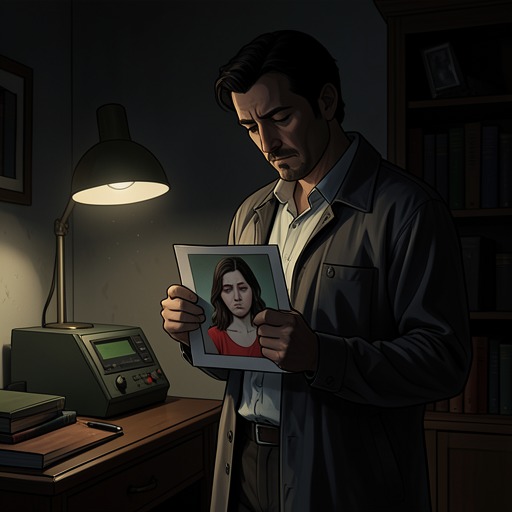
It Must Be Love: A Mustang Prairie RomanceWidowhood is the defining emotional and domestic condition of Jack Thorpe after Marissa Thorpe’s death. It governs his parenting, his resistance to intimacy, and his understanding of the marriage he lost. At first, widowhood appears as an obligation to preserve the family he and Marissa created; later, it becomes a story he must finally tell truthfully before he can accept love with Trixie Beaumont.
Identity and Domestic Background
Jack’s fear of widowhood is inseparable from fatherhood. After Marissa’s death, the possibility of losing either Abby Thorpe or Andie Thorpe becomes his deepest fear, a fear made immediate when Abby disappears and he waits at the diner while Ty and Dylan search for her. Shirl and Ty insist that Abby will be found, but Jack cannot share their certainty. His gratitude is therefore restrained: he drinks his coffee and hopes that his daughter is safe and unharmed rather than allowing himself confidence he cannot feel.
The loss has also made Jack responsible for rebuilding ordinary family life. When Andie arrives at the diner in her Little Buzzers uniform, carrying the visual reminder that she is still too young for the Bees, Jack gathers his six-year-old daughter into his arms. Her golden curls and hazel eyes remind him of Marissa every day, so even affectionate contact with his living child carries the presence of the dead mother. Widowhood is thus not an isolated private grief; it is continually renewed through parenting, resemblance, memory, and the fear that the girls may be taken from him as well.
Grief, Avoidance, and the Public Marriage
Jack tells Andie that he has not dated since Marissa died because he first grieved, then devoted himself to caring for the girls and helping them adjust, and finally moved without finding time for anything else. The explanation sounds inadequate even to him, but it also reveals that his celibacy was not simply a gesture of loyalty. He had not been interested in another woman until Trixie. His priorities, rather than a conscious vow, kept him inside widowhood.
The condition becomes more complicated when Abby refuses to speak normally to him after he objects to her spending time in Trixie’s lingerie shop. She communicates only her basic needs in a cool, detached manner that reminds Jack of Marissa. He recognizes that his daughter is miserable and that he could repair the immediate conflict, yet he holds stubbornly to the boundary he has imposed. His household had felt more normal in Mustang Prairie than it had for years, with the girls lively and apparently well adjusted, but the near-perfect surface contains unresolved grief and control. The family looks restored while Jack remains emotionally suspended.
Jack’s mother identifies the deeper problem: Trixie is not merely entering a new relationship but competing with a ghost. Jack has treated his marriage as an idealized whole and assumed that avoiding another marriage is the only safe response to what happened. His mother challenges that assumption by distinguishing his parents’ long marriage from his own troubled one. She recalls that Jack and Marissa were once deeply in love, but that Marissa later resented his artistic success. Her intervention turns widowhood from a simple moral identity into a contested interpretation of the past.
The Hidden History of Marissa’s Death
Jack eventually explains to Trixie that the marriage everyone believed was happy had deteriorated after his art career succeeded. Marissa welcomed the money and parties but resented the attention, admiration, and press directed toward him. Their conflict was not an invented tragedy imposed from outside; it had been developing inside the marriage while the couple maintained the appearance of success.
The concealed history culminates in Jack’s admission that he and Marissa had been close to divorce when she died. They had argued before she left, and her words about Jack needing to take care of the children had sharpened his bitterness. She suffered an aneurysm behind the wheel and died before the car struck a tree. Because the death followed an argument, outsiders continued to believe the simpler, more flattering version of the marriage: that Jack had been fortunate in love and then suffered an unforeseeable loss. Jack’s widowhood is therefore also a burden of misrecognition. Other people mourn the marriage they thought he had, while he mourns both the woman he loved and the relationship that had become painful.
Telling Trixie this history changes the emotional meaning of his silence. He admits that he had not wanted her to know any of it, but now understands that withholding it was wrong. The confession does not erase Marissa or reduce her to an antagonist. Instead, it allows Jack to hold contradictory truths together: Marissa was once his beloved partner, their marriage became tense and resentful, and her death prevented either reconciliation or divorce from completing its course.
Widowhood in the Family System
The girls mediate Jack’s grief and his future. Abby preserves her mother’s memory through a photograph found in the basement, asking Trixie to help make a hat like Marissa’s. Trixie agrees to help but tells Abby to clear the project with Jack, respecting the father’s authority even while responding to the child’s need for connection. When Trixie photographs Abby and Andie wearing the finished hats, she notices Marissa’s face in the picture and places the girls on the porch, where Jack unexpectedly catches Trixie and steadies her by the waist. The scene binds memory, care, and new intimacy together without making Trixie a replacement for Marissa.
Abby’s printed photograph receives a place of honor beside Marissa’s photograph. This arrangement shows how the family’s memory is being expanded rather than overwritten: Trixie’s care becomes part of the girls’ lived history, while Marissa remains visibly present. The children also press Jack toward emotional honesty. At Christmas, Andie tells him that apologizing is what boys should do when they hurt girls’ feelings, then directly urges him to apologize to Trixie because she and Abby know he likes her. The family’s youngest members become witnesses to the emotional stalemate and agents of its repair.
Holiday scenes provide a counterpoint to Jack’s isolation. Thanksgiving brings a full house: Jack’s parents, Sadie and Dylan, Luna and Mr. Scanlan, Jonquil Spring, Abby, Andie, and eventually Trixie. Christmas becomes the first since Marissa’s death in which the girls are smiling and absorbed in decorating the tree, baking cookies, and preparing for the family dinner. Trixie’s presence in the cookie-making and the girls’ renewed joy do not cancel widowhood; they demonstrate that family continuity can include change.
From Emotional Suspension to Recognition
Trixie’s presence exposes how thoroughly widowhood has occupied Jack’s inner life. After an almost kiss, he cannot stop thinking about her body, scent, and the way she treats his daughters with firmness and encouragement. His attraction interrupts his creative work: he cannot see the chandelier he is building because he can see only Trixie. The intensity frightens him partly because it feels like a violation of the emotional order he has maintained since Marissa’s death.
When Jack tells Trixie that their night together was wonderful but that he cannot make promises because his life is full and chaotic, he reproduces the protective distance created by grief. Trixie understands the implication and later tells Sadie that they have hooked up only a few times, that Jack is still in love with his wife, and that he wants nothing serious. She refuses to compete with a ghost or invest in a futureless arrangement. Her boundary forces widowhood into a relational conflict: Jack’s unresolved mourning no longer affects only him, because it determines what Trixie is permitted to hope for.
Jack also recognizes a parallel between his own departure from the city and Trixie’s search for a life of her choosing. He explains that he tried to maintain the life he and Marissa had shared with the girls for a year, even though parts of it made him miserable, before admitting that remaining inside it was driving him crazy. His move becomes an act of survival rather than betrayal. In a quiet exchange about belonging, he and Trixie acknowledge that both have had to leave inherited arrangements in order to build chosen lives.
The final movement is recognition. Jack comes to understand that the love he knew before was immature, while his relationship with Trixie feels comfortable, thrilling, playful, and sexual in a way he had not recognized as love. When Trixie asks whether he loves her, he answers plainly that he does. His admission does not deny his marriage or diminish Marissa’s death. It marks the end of the belief that widowhood requires him to remain faithful to an idealized past by refusing every possible future.
Narrative Significance
Widowhood functions as both a state of grief and a structure of delayed knowledge. Jack’s mourning is expressed through fear, guarded parenting, avoidance, creative interruption, and the repeated presence of Marissa in the girls’ faces and family photographs. Yet the narrative also shows that grief can become distorted when a bereaved person preserves the public version of a relationship instead of speaking about its private damage.
The movement out of widowhood is not a clean replacement of one woman by another. It is an act of truthful reclassification. Jack must distinguish memory from obligation, love from marital myth, and continued care for his daughters from permanent self-denial. By telling Trixie what happened before Marissa’s death and acknowledging his love for Trixie, he turns the dead marriage from an unspoken ghost into a known history. That act makes room for a living family future without pretending that the loss has ended.