Creative self-expression
It Must Be Love: A Mustang Prairie RomanceCreative self-expression is one of the book’s central ways of turning inner change into public form. It is not limited to recognized art: it includes painting, lingerie design, clothing, music, and game development. Across these practices, characters use color, materials, style, and craft to claim ambition, communicate feeling, test new identities, and build lives that are less dictated by earlier pain or by other people’s expectations.
Definition and Forms
Creative self-expression operates through both artistic production and deliberate presentation. Trixie Beaumont designs sexy underthings for women of different ages and body types, while her own clothes turn fashion into an extension of personality. At one point, she appears in a white tank with a red bra beneath it, black leather pants, knee-high boots, and a black leather jacket, an outfit that reflects the confident, provocative image associated with her work. Her style is not merely decorative: it accompanies her decision to treat an evening with Jack Thorpe as a pleasure she has earned through hard work, even while the date leaves her nervous.
The same principle appears in smaller acts of self-fashioning. Jonquil Spring chooses grey skinny jeans, an Einstein shirt, a red leather jacket, and black motorcycle boots, assembling an outfit that Trixie recognizes as both “perfect” and entirely her own. The clothes become a manageable way for Jonquil to inhabit a semi-normal life while she grows more comfortable in her new surroundings. Trixie’s support matters because it treats Jonquil’s presentation not as a disguise imposed from outside, but as a creative choice through which Jonquil can decide how she wants to appear.
Trixie Beaumont’s Design Practice
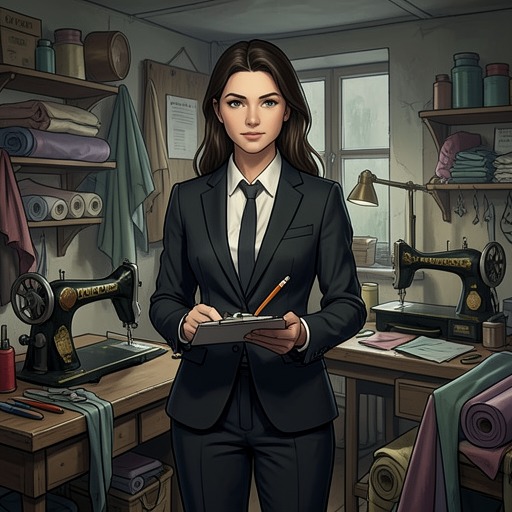
Trixie’s creative work develops alongside the practical demands of running a lingerie shop. After her seamstresses leave for the weekend, she studies a sketchpad and begins designing pieces for Valentine’s Day. The new design work energizes her, making the routine responsibilities of ownership more bearable. She sketches a black-and-pink bustier intended to be sexy and fun while remaining wearable for women of all ages, connecting commercial production with a broader idea of pleasure and inclusion.
Her enthusiasm is checked by discipline rather than extinguished by it. Trixie reminds herself to pace her work so that she does not overextend herself or damage what she has built. She therefore moves between imaginative creation and inspection of the shop’s orders, checking the garments before they are steamed and shipped. Creative self-expression in her case is not a romantic escape from labor; it is a business, a craft, and a self-directed future that requires both inspiration and careful management.
Trixie’s relationship to clothing also exposes the tension between self-expression and the gaze of others. Ty teasingly asks what is new in the world of sexy underthings, and Trixie answers with confidence rather than retreat. At a later gathering, her rainbow hair, roller skates, vintage baseball jersey, and striking legs draw Jack’s attention so intensely that his jealousy surfaces when she steadies herself on Ty’s shoulder. The scene shows fashion functioning simultaneously as Trixie’s chosen language and as an object of social and erotic interpretation. Her appearance gives her agency, but it also reveals how quickly that agency becomes entangled with other people’s desire.
Art, Memory, and Emotional Recognition
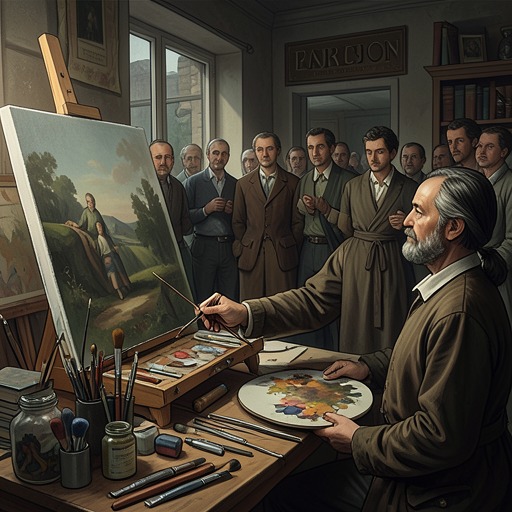
Jack’s painting gives creative self-expression a more intimate and revealing form. In a gallery on Artist’s Row, Trixie encounters a local exhibition of his work and sees how his colors and brushstrokes convey layers of emotion. The paintings affect her partly because of her long-standing feelings for Jack, but the work also possesses an independent force: it communicates a passion she recognizes before she can fully explain it. Art allows the emotional complexity surrounding Jack, Marissa Thorpe, loss, and desire to appear without being reduced to direct confession.
The decisive painting is a large oil portrait of Trixie. Jack has rendered her in a moment of laughter, with her head thrown back, bare shoulders, multicolored hair, and tears now running down her face as she recognizes the memory. The painting preserves a moment in which she felt warm and certain that everything was right with the world. Trixie asks to buy it anonymously because she wants to possess the image while preventing Jack from knowing that she has claimed it. Her response shows art’s double power: it can make a private feeling tangible, yet it can also expose the intimacy that the viewer hopes to keep concealed.
For Jack, the portrait becomes evidence of a truth he has resisted. Looking at the image, he recognizes that his newest series is defined by the vibrant colors of Trixie’s rainbow hair and that the gallery is filled with signs of her influence. He has tried to distinguish his attachment to Trixie from the consuming love he once experienced with Marissa, describing their connection to himself as easy and uncomplicated. The paintings contradict that explanation. His work has already recorded an obsession that his conscious judgment refuses to name, turning creative production into a form of involuntary disclosure.
Ambition Beyond Established Roles
Pepper’s planned video game extends the concept into technological and collaborative creation. She has mapped out most of the game’s idea and understands her own strengths as a designer, especially her eye for color and detail and her ability to bring a concept to life. What she lacks is a programmer, so she attends a gaming convention in New Orleans to meet developers, designers, programmers, and players who might help make the project possible.
The convention is therefore both a professional search and a test of resolve. Pepper finds the environment intimidating and admits that fear more cautiously than she feels it, but she continues walking through it because she has decided to devote the summer to her own game. When she explains this renewed interest, she frames it as a break from spending too much time doing what she thought was right while ignoring what she wanted. Creative ambition becomes an act of self-correction: the game is not simply a product she hopes to release, but a concrete declaration that her own desires deserve sustained effort.
The book also places this ambition beside less settled creative labor. Sadie spends three days a week selling lingerie at Under the Skirt, five nights serving drinks for Dylan, sometimes sings, and works on her music whenever she returns home. Several deadlines approach, yet she has not completed a song. Her life is still crowded with paid work and unfinished projects, but the act of continuing to write marks a movement away from the chaos and trouble she once accepted as normal. Creative self-expression does not guarantee immediate completion or success; it gives Sadie a future-oriented practice through which she can begin to forget the past and imagine stability.
Significance
Taken together, these examples present creativity as a form of agency that remains open-ended. Trixie’s sketches may become Valentine’s designs, Jonquil’s clothes help her experiment with belonging, Pepper’s game requires her to seek collaborators, Sadie’s music persists despite unfinished songs, and Jack’s paintings reveal feelings he cannot yet articulate. The works do not all have the same status or outcome, but each allows a character to externalize something that would otherwise remain private. Creative self-expression thus connects sensual style, commercial craft, emotional memory, and professional ambition: it is the means by which characters make an inner life visible and begin to take responsibility for the shape of the life that follows.
Ambition Beyond Established Roles
Pepper’s planned video game extends creative self-expression into technological and collaborative creation. She has mapped out most of the game’s concept and understands her strengths as a designer, particularly her eye for color and detail and her ability to bring an idea to life. What she lacks is a programmer, so she attends a gaming convention in New Orleans, where developers, designers, programmers, and players gather, hoping to find someone who can help turn her design into a finished work. The convention is therefore both a practical search for a collaborator and a test of resolve. Pepper finds the environment intimidating and admits her fear cautiously, but she continues because she has decided to devote the summer to her own game. In describing the project, she presents it as a deliberate refusal to keep doing what she believes is right while ignoring what she wants. Creative ambition becomes an act of self-correction: the game is not merely a product she hopes to release, but a concrete declaration that her own desires deserve sustained effort.
Creative Work as Emotional Disclosure
Jack Thorpe’s painting gives creative self-expression its most intimate and involuntary form. In a gallery on Artist’s Row, Trixie Beaumont encounters a local exhibition of his work and recognizes how his colors and brushstrokes convey layered emotion. The paintings move her partly because of her long-standing feelings for Jack, but their force also exceeds her romantic response: they communicate a passion she can perceive before she can fully explain it, allowing the emotional complications surrounding Jack, Marissa Thorpe, loss, and desire to take shape without direct confession.
The decisive work is a large oil portrait of Trixie. Jack has captured her in laughter, head thrown back, bare shoulders exposed, and multicolored hair arranged in a vivid symmetry. The image preserves a moment when she felt warm and certain that everything was right with the world; recognizing it, she cries. Trixie asks to buy the painting anonymously because she wants to possess this version of herself while preventing Jack from knowing that she has claimed it. The portrait therefore makes a private feeling tangible while preserving the secrecy surrounding it.
For Jack, the painting becomes evidence of a truth he has resisted. Looking at the image, he realizes that the vibrant colors defining his newest series are all connected to Trixie, with her rainbow hair recurring throughout the gallery. He has tried to distinguish his attachment to her from the consuming love he once experienced with Marissa, treating his connection with Trixie as easy and uncomplicated. His artwork contradicts that explanation. The paintings have already recorded an intensity his conscious judgment refuses to name, turning creative production into a form of emotional disclosure before he is ready to acknowledge what it means.