Jack's painting of Trixie
It Must Be Love: A Mustang Prairie RomanceJack's painting of Trixie is a large oil portrait whose importance extends far beyond its status as an artwork. Showing Trixie in the middle of a full-bodied laugh, the painting preserves a moment of unguarded happiness while exposing what Jack Thorpe has been unable to admit about his attachment to her. Its exhibition, anonymous sale, and eventual revelation create a material arc from distance and secrecy to mutual recognition: Trixie wants the image because it makes her feel seen, while Jack gradually understands that the painting records the fact that his newest art has been shaped by her presence.
Appearance and Subject
The painting is described as a very large oil work, closer to a snapshot than a formal, posed portrait. Jack has painted Trixie with her head thrown back, the long column of her neck exposed, and the symmetry of her multicolored hair clearly visible. Her shoulders are bare, and she is caught laughing rather than performing for the viewer. The image makes her look beautiful, but its power comes from the remembered feeling attached to the expression: Trixie's laughter had made her feel warm and had told her, in that moment, that everything was right with the world.
The portrait therefore captures more than Trixie's physical appearance. It fixes a fleeting emotional state in oil, preserving the ease, vitality, and warmth that distinguish her from the grief and guardedness surrounding Jack's life after Marissa Thorpe's death. Trixie reacts to the painting through tears, an indication that the image reaches both her long-standing interest in Jack's art and her deeper desire to be recognized as someone worthy of sustained attention. The painting's subject is Trixie, but its emotional content is the possibility of happiness that Jack associates with her.
Exhibition and Anonymous Purchase
Trixie encounters the portrait at an art opening after Blythe Danforth asks whether she knows the woman in the painting. Once she realizes that the subject is herself, Trixie immediately wants to buy it. She does not want Jack to know, however, and specifically requests that the purchase be made anonymously. Her decision combines possession with concealment: she must have the portrait, yet she is unwilling to expose the depth of feeling that makes the image so necessary to her.
Blythe agrees to arrange the purchase on the condition that Trixie tell her the story behind it, a conversation expected to require several cocktails. The transaction gives Trixie control over an image that Jack created from his own perspective. She can preserve the portrait privately without forcing a direct confrontation with the artist or revealing that the work has become personally indispensable to her.
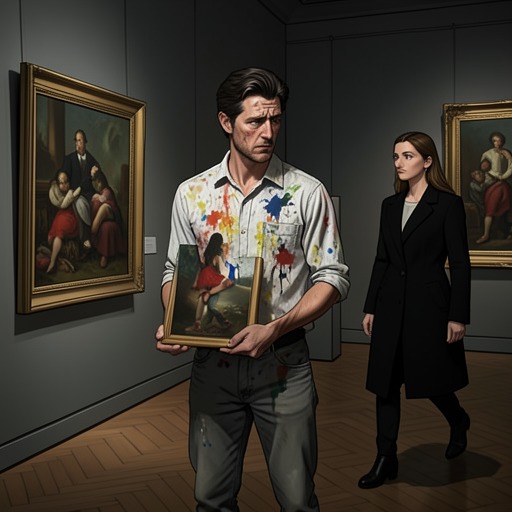
At the same exhibition, Jack learns that the portrait has already been sold. Another visitor calls it stunning and offers to pay double for it, but Blythe explains that the buyer has requested anonymity and paid the asking price. Jack is surprised by the sale and cannot shake his disappointment. He asks whether there is any way to thank the buyer because the work is one of his favorites, then presses Blythe for information even after she warns that disclosure could void the sale. His insistence reveals that the painting has become emotionally distinct from the rest of the exhibition: he does not merely want to know who purchased a successful work; he wants Trixie to see the image.
Jack's Recognition Through Art
Jack's response to the portrait marks a turning point in his understanding of his relationship with Trixie. While standing before the painting, he recognizes that he wants her to see it and realizes that he misses her welcome, her greeting, and the joy that used to light her eyes when she saw him. The portrait becomes a substitute for her absence, carrying her face through a gallery where she is not present and making that absence impossible for him to ignore.
The work also exposes the pattern of Jack's recent artistic production. When he looks around the gallery, he sees that the rich, vibrant colors defining his newest series are all connected to Trixie. Her rainbow hair appears throughout the collection, making her influence visible even though he had not consciously acknowledged it. The painting thus functions as evidence against Jack's earlier claim that their connection was merely easy, uncomplicated, and physical. His art has already registered a deeper attachment before his conscious understanding catches up.
Jack compares this feeling with the consuming love he once experienced with Marissa. He initially resists calling his feelings for Trixie love because the relationship does not resemble the obsessive hunger of his marriage. Yet the portrait forces a different recognition. Looking at Trixie's painted laughter, he understands that his attachment is also all-consuming, though unfamiliar in form. The image makes his emotional error legible: he has mistaken difference from his first love for absence of love.
Family Witness and Romantic Meaning
The portrait also enters Jack's family world. During the exhibition, Jack's parents stop before it with Abby Thorpe and Andie Thorpe, and his mother becomes tearful at the sight. Jack tells her that her reaction means everything to him, while privately admitting that he had wanted Trixie to see the painting before it was sold. His regret is immediate and specific: he should have shown Trixie the work when she asked, but his own evasiveness prevented him from doing so.
In that moment Jack moves from aesthetic admiration to emotional accountability. He concludes that he is an idiot, does not deserve Trixie, and nevertheless wants and needs her. The painting helps him name qualities he loves in her: her vibrant smile, sultry laugh, pinup clothing, ambition, and kindness toward other people. It also links his private desire to the family structure he is trying to protect. The image of Trixie is not isolated from the girls' lives; it becomes part of the household's emotional field, alongside Jack's memories of Marissa and his daughters' growing awareness of his attachment.
This family context clarifies why the portrait carries such unusual weight. Jack's mother recognizes its beauty without needing the entire romantic explanation, while Andie later tells Jack that apologizing is what he must do if he has hurt Trixie's feelings. The painting does not by itself resolve the conflict between Jack and Trixie, but it helps make that conflict visible to the family and gives Jack a concrete object through which his concealed feelings can be interpreted.
Revelation and Resolution
The portrait's concealed ownership is finally revealed when Trixie tells Jack, simply, that she bought it. He asks whether she saw it, and she answers that it was so gorgeous she had to have it. Her confession reverses the earlier secrecy. What began as Trixie's anonymous attempt to keep the painting without exposing herself becomes an open admission of how deeply the image affected her.
Jack responds by kissing her as snow falls around them. The kiss turns the painting from a record of unspoken feeling into a shared declaration. Trixie's purchase shows that she has claimed the image of herself that Jack created; Jack's response shows that he now accepts the intimacy embedded in that act. He imagines a future in which they will love and support each other while watching the girls grow up, and he tells Trixie that he had to have her just as she had to have the painting.
The object therefore completes a movement from artistic inspiration to relational recognition. Jack first paints Trixie without fully understanding what she means to him. Trixie then acquires the portrait while concealing her emotional investment. Jack discovers that the painting and the surrounding series have been shaped by his love, and Trixie ultimately discloses her ownership. By the time the portrait is acknowledged between them, it no longer represents only Jack's view of Trixie: it stands for the reciprocal desire, vulnerability, and second chance that allow their relationship to move forward.