Trixie begins developing her lingerie line
It Must Be Love: A Mustang Prairie RomanceTrixie begins developing her lingerie line when a private, repeatedly postponed ambition becomes an organized professional undertaking. What starts with names, logos, sketches, and a desire to create attractive clothing becomes a business built around mix-and-match design, careful quality control, online sales, hired labor, and a public fashion show. The line gives Trixie more than a new source of income: it becomes the practical form of her refusal to put another person’s life ahead of her own.
From Deferred Dream to Business Plan
For months, Trixie had considered creating a clothing line without taking the final step. She experimented with possible names, sketched logo ideas, and even contacted a graphic designer to turn those concepts into finished images. Instead of encouraging her, the completed logos began to taunt her because they represented a dream she had made visible but still had not acted upon. The turning point came when she recognized that delay was no longer caution but inaction.
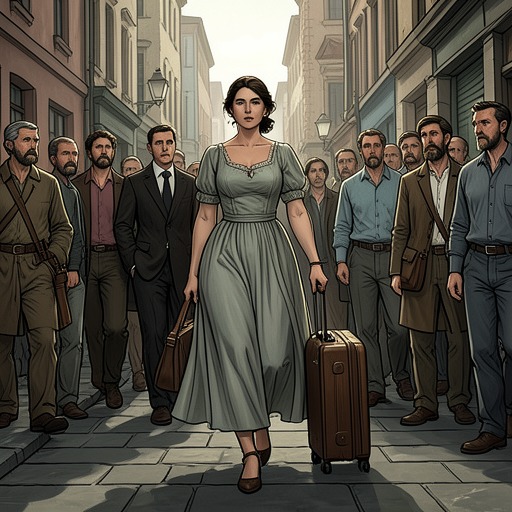
That decision was shaped by her history. Trixie’s parents had been generous and loving, but their lives moved from hobby to hobby, interest to interest, religion to religion, and finally to Oregon and a commune. She had spent part of her childhood in Mustang Prairie, cried through the family’s departure, and later lived at the commune until leaving for college at sixteen. She had never entirely fitted into that environment, although she valued its kindness and the time she spent working in its gardens. Against that unstable background, she defined her own business in terms of safety, responsibility, livelihood, and stability.
The same resolve governed her personal life. Trixie still did not fully understand why she had once put her life on hold for other people, but she knew she would not repeat the pattern. Even if she fell in love again, she would not allow a man’s life to become more important than hers. With no husband to please, no parents to explain herself to, and no further distractions she was willing to accept, she chose to begin the line under the name Slinky Things.
Design, Branding, and Market Position
The first line developed from Trixie’s knowledge of lingerie and her attention to the different ways women actually dressed. While folding panties for a new display table, she worked out a collection of six to ten panty styles, ranging from g-strings to bikinis and French cuts, in silk, lace, and cotton. She also considered a boy-cut option. A rainbow theme would accommodate vivid colors, while four bra styles, including a convertible bra, would allow customers to combine pieces according to personal taste rather than purchase only predetermined matching sets.
This mix-and-match principle became the central identity of the brand. Trixie personally enjoyed coordinated sets with garter belts and thigh-high stockings, but she noticed that Sadie often mismatched lingerie simply because she liked the way different colors looked together in a drawer. The line therefore treated choice as part of its appeal. Its sensuality was not limited to one prescribed presentation of femininity; it made room for experimentation, color, and individual preference.
Trixie told Sadie that the first line would be Sensual Separates, composed of sexy lace and silk pieces that could be mixed and matched, even according to something as specific as a customer’s favorite team colors. She also developed a logo that Sadie found fun, flirtatious, and sexy. A basic website was already in place, with plans for refinement and online ordering once the line was ready. Trixie imagined a special online area, perhaps called Trixie’s Corner, extending the shop’s personal identity into the digital business.
Her existing store, Under the Skirt Online, provided the first commercial foundation. After several consecutive months of profit, it was officially open for business, and Trixie could imagine renting the neighboring space as a warehouse that might also serve as her design workspace. If growth continued, she might hire a part-time worker earlier than projected in her business plan. The opportunity was promising, but she remained conscious that the shop was her livelihood and career, not merely an attractive experiment.
Labor, Control, and Expansion
The early stages of the line exposed the difference between imagining a brand and sustaining one. When a foot injury left Trixie exhausted and unable to move normally, she still opened the shop, abandoning refolding and steaming while continuing to give instructions and operate the digital register. The quiet first half of the day became an opportunity to work on her sketches, even as she recognized how useful a part-time employee would be. Design was therefore inseparable from retail labor, physical endurance, inventory management, and sales.
Trixie later expanded the operation into the space next door. The opening between the shop and the new area was initially covered by a curtain because the contractor, Derek Hayes, could not begin the permanent work until Black Friday. The improvised arrangement nevertheless revealed the business changing shape: the lingerie shop was no longer only a place where Trixie sold existing garments, but the beginning of a workshop and production base.
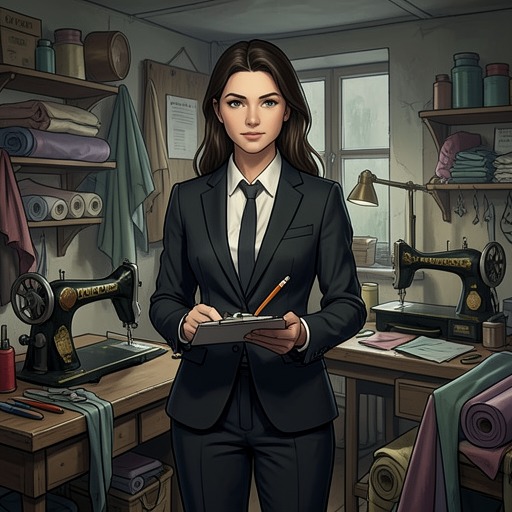
When she and Jonquil interviewed seamstresses, Jonquil suggested that some candidates were unsuitable and urged Trixie to reconsider using a manufacturer. Trixie rejected that option for the early life of the line because she wanted complete control over quality. She would consider contracting production after the brand became solid, but at that stage direct oversight mattered more than rapid scale. The decision established a clear priority: growth could wait, while the reputation of the new line could not.
The production process eventually involved three seamstresses, whose completed orders were left hanging on the rack at the end of a workweek. Trixie locked the shop after they departed and returned to her sketchpad, already developing new designs for Valentine’s Day. The arrival of paid help did not end her labor; it shifted her from doing every task alone toward coordinating design, production, inventory, and future promotion.
The Public Launch
The line moved from private planning to public identity at a fashion show held in Dylan’s bar. The bar was transformed by a makeshift runway running through the center, music from Sadie and Kiki, colored lighting, and gauzy fabric that made the room resemble a single enormous bedroom. The setting preserved the line’s intended combination of sensuality and playfulness, while the event gave Trixie a public test of whether the designs could command attention beyond her own shop.
Sadie and the other models wore the garments as Trixie watched from behind the staging area. Sadie opened in lacy teal boy shorts and a matching Basque, then later appeared in white cheeky underwear with a matching bra and a silky duster fastened with silver buttons. Cherry-red stilettos completed the second look, which Trixie identified as the image most likely to launch the line. Cameras flashed as Sadie smiled and the audience applauded, converting the clothing from sketches and stock into a visible brand.
Trixie walked onto the runway with the models after the show. The moment passed in flashing lights, smiling faces, and wolf whistles that she suspected came from Ty and Dylan. She felt satisfied because the line was officially launched and the show had succeeded. Yet the triumph contained an unresolved loneliness: she had achieved the milestone without having anyone, in the fullest sense, to share it with.
Meaning Within Trixie’s Independence
The lingerie line is the material expression of Trixie’s “new” independence. It allows her to use sexuality without surrendering control of it, making garments associated with erotic display into products of her own design, labor, and commercial judgment. Jack recognizes that her entrepreneurial spirit is part of what makes her attractive, but the narrative gives the achievement a significance beyond his approval. Her work establishes her as more than a beautiful face or desirable body: she is a determined designer who chooses an objective and builds the structures needed to pursue it.
The line also reorganizes Trixie’s relationships with the people around her. Sadie contributes friendship, modeling, music, and promotional visibility; Jonquil participates in the practical work of interviewing seamstresses and becomes part of the workshop’s daily life; the seamstresses turn Trixie’s designs into orders ready for customers. Even the shop’s flirtatious encounters, such as Ty’s jokes about sexy underthings, place the business within the social fabric of Mustang Prairie. The enterprise is independently owned, but it is not socially isolated.
By the time orders are being completed through the following week and Trixie is sketching Valentine’s designs, the line has become an ongoing business rather than a single dream or launch event. Its development joins personal recovery to economic agency: Trixie claims stability through her own work, protects quality by retaining control, and builds a future in which romance may exist without displacing her ambitions. The successful show proves that the dream can enter the world, while the continued sketching afterward shows that its real achievement lies not in one triumphant night but in the durable life she creates beyond it.