
A Survivor Learns to Name Harm
Jacob's LadderYasha’s changing understanding of abuse traces a movement from denial and shame toward boundaries, self-compassion, and recovery.
increasing Bearing strength in each event
 decreasing
Bearing strength in each eventdecreasingThe Familiar Pattern

The Familiar Pattern
Violence mistaken for intimacy
Yasha recognizes that he has stayed with Sander despite repeated warning signs. He later describes his attraction to violence as something familiar, shaped by childhood experience.
A pattern hidden by competence
Military training and physical strength have helped Yasha believe he can protect himself. That confidence obscures the emotional reasons he tolerates danger.
A Body Unable to Fight
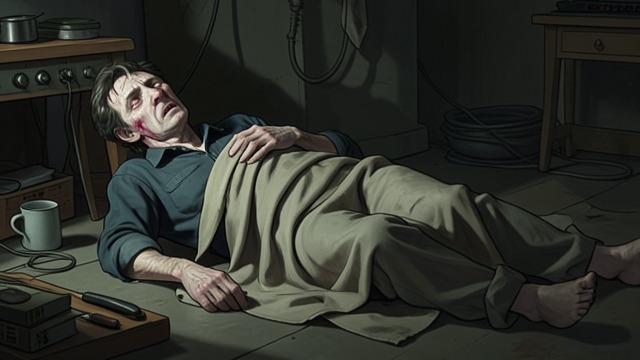
A Body Unable to Fight
Strength fails under illness
Yasha’s fever and weakness keep him from stopping Sander. His usual defensive instincts cannot prevent the beating from escalating.
Dissociation as survival
He experiences numbness and drifts toward memories of childhood violence. His body’s response makes clear that surviving abuse is not simply a matter of being physically capable.
The Group He Rejects

The Group He Rejects
Refusing the victim label
At a meeting of Stop Partnership in Violence, Yasha says he does not belong there and leaves. His denial reflects shame and a belief that his circumstances make his case different.
A survivor answers him
Mary Catherine follows and challenges the idea that acknowledging harm means surrendering agency. Her words make it possible for Yasha to reconsider without forcing him to disclose more than he is ready to share.
Recognition Through Others

Recognition Through Others
A community makes room
The women at Miss Independence Pies initially challenge Yasha’s assumptions about survivors, then accept him as he begins to speak more honestly. Their different experiences show that strength does not prevent abuse.
Practical solidarity
Working together gives Yasha contact with people who do not define him by the assault. Their support is neither a cure nor a substitute for his own decisions, but it reduces isolation.
Self-Respect as Practice

Self-Respect as Practice
A difficult parallel
Daniel tells Yasha that accepting secrecy from JT risks repeating the self-erasure that kept him with Sander. Yasha hears the warning even though he is not ready to abandon his feelings.
A new boundary becomes possible
The book’s closing movement pairs romance with a clearer demand for respect. Yasha must not confuse being wanted privately with being valued fully.
Before the opening crisis
The opening day, during Sander’s assault
Several days after arriving in St. Nacho’s
During Yasha’s early mornings at the bakery
After Daniel confronts Yasha about the motel visits
