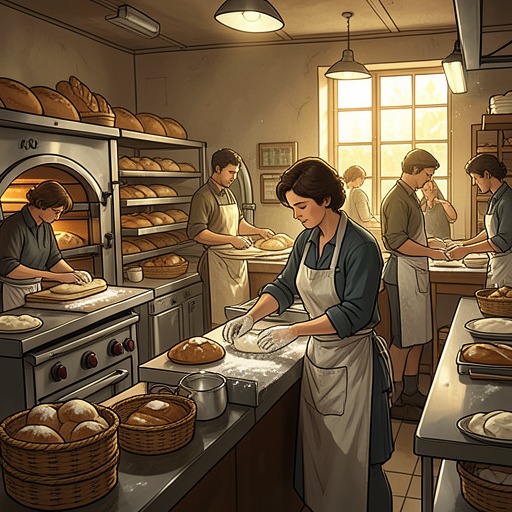
Mary Catherine invites Yasha to help launch her café
Jacob's LadderMary Catherine’s invitation to Yasha to stay in St. Nacho’s and help launch her café transforms a practical planning conversation into a possibility for a shared future. She wants a pastry chef who can give the place class and credibility; he does not commit to staying, but promises to consider it, and the idea takes hold more firmly than he expects.
From Playful Guessing to a Plan
The conversation begins with Mary Catherine reopening her eyes, which shimmer but look hopeful. Yasha teases her by guessing that she wants to decorate with pink flamingos, then clowns. She rejects both suggestions with a laugh and a playful push before describing the store she imagines. Their exchange makes room for her to move from tentative hope to specifying what she wants.
They respond to that vision together: they make a few drawings, write down ideas, and discuss the menu. The plan is deliberately modest at first. They consider starting with a short list of things done well, then expanding later. The sequence matters: the café is not only a dream to admire but a project whose first decisions can be worked out collaboratively.
A Café Imagined Through Pictures
Yasha asks whether Mary Catherine has ever been to France. She has not; her idea of French cafés comes from pictures. When he asks whether she wants a French café in St. Nacho’s, the proposal takes shape as a local place modeled on an image she has encountered at a distance. Her lack of firsthand experience does not stop her from imagining the atmosphere she wants, while the question brings that aspiration into direct contact with the town where she hopes to build it.
The contrast between an imagined French café and the practical discussion of drawings, a short menu, and gradual expansion gives the plan two scales. It has an aesthetic ambition, but it is also something they can begin small and develop over time. The conversation does not establish that the café opens or settle its final design; it records the early work of making an idea concrete.
The Invitation and Its Stakes
Mary Catherine then admits that she wishes she could persuade Yasha to stay and share the venture with her. The wish surprises him, although he recognizes that it should not have. She explains the specific role she hopes he will fill: she needs a pastry chef to lend the place class and credibility. Her invitation is therefore both personal and practical. She is asking him to remain, but she is also naming a contribution that connects his skills to the café’s prospects.
Yasha does not answer with a promise to stay. He agrees only to think about it. That distinction keeps the scene’s outcome open: Mary Catherine has made her hope plain, while his response leaves the decision with him. Her smile trembles as she offers her hand; he takes it and sees hope in her eyes. The gesture gives the proposal an emotional weight beyond the work they have discussed, without turning his consideration into a settled commitment.
A Possibility Takes Root
The invitation changes how Yasha regards the idea. He reflects that it had suddenly seemed less ridiculous, then describes it taking root in his heart and sprouting wings in his head. The paired images register a shift from something he might have dismissed to something with both emotional hold and imaginative momentum. They do not confirm that he will stay or that the café will succeed; they show that Mary Catherine’s proposal has become plausible enough for him to picture a future within it.
As a turning point in their conversation, the scene joins a concrete plan to an unresolved choice. Drawings, menu ideas, and the intention to start small give the café practical outlines; Mary Catherine’s request makes Yasha’s presence part of the vision. His promise to consider it is modest, but the closing image makes clear that the possibility has already begun to grow.