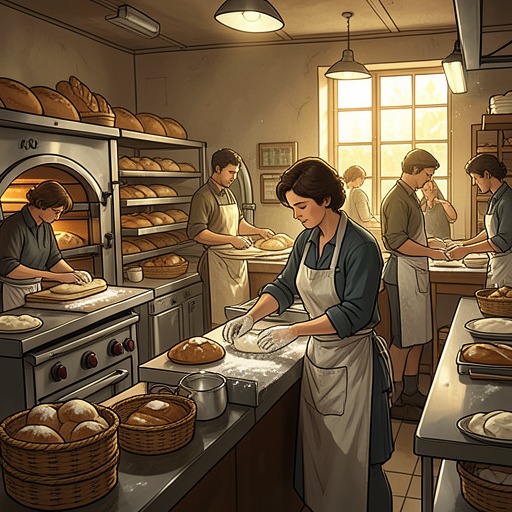
Miss Independence Pies Develops Savory Pies
Jacob's LadderMiss Independence Pies Develops Savory Pies marks a shift from recipe exploration to a small, testable restaurant offering: Mary Catherine and Yasha experiment with empanada dough and fillings, then prepare twelve frozen pies for Candace to take to existing customers. The episode makes product development concrete—not as a finished expansion, but as a sequence of choices about texture, flavor, baking, and delivery.
From dough trials to a menu
Mary Catherine and Yasha begin by comparing empanada doughs made with different flours and fats. Their immediate standard is practical and sensory: they continue experimenting until they find a texture they both like. The passage presents the dough as something to be worked out through trial rather than assumed from a recipe, making the crust itself part of the product design.
The range of possible fillings is broad. The recipes under consideration include Cuban spicy beef picadillo with green olives, Chilean beef with raisins, chicken and cheese, and sweet combinations built around fresh or dried fruit. These are possibilities, not a claim that every filling becomes part of the initial offering. The distinction matters: the work moves from a plentiful field of recipes toward a narrower set that can be made and presented to restaurant clients.
Four initial fillings
Mary Catherine starts with four versions: two beef empanadas, one savory and one sweet; a chicken filling with green chilies and soft cheese; and a fourth that Yasha invents on the fly. That last filling combines chunks of roasted sweet potato with brown sugar and spices, with a little chili to give it a final note of heat. Its mixture of sweetness and spice sets it apart from the more conventional beef and chicken options described alongside it.
The sweet-potato version quickly becomes a favorite among the women working on the project. That response gives the improvised recipe a place in the first batch, but the passage does not present popularity as proof of lasting commercial success. Instead, it records an immediate preference during development. The four types are made up in batches so they can be shown to Mary Catherine’s restaurant clients, turning the group’s initial tasting and recipe work into a trial beyond the bakery.
Testing the practical details
Once the fillings and doughs are in play, the collaborators experiment with baking times and temperatures. This extends the development process beyond flavor: the pies also need to be prepared in a form that can be baked consistently. The account does not specify the final settings or report a formal result, but it shows that baking conditions are part of the work rather than an afterthought.
The day’s pace is conveyed through the accumulation of tasks: comparing dough, settling on fillings, making batches, and testing heat and timing. The narrator observes that the day flies by. That quick passage of time gives the work a productive rhythm without suggesting that every question has been settled; the scene records a working process, not a definitive product launch.
Frozen samples and delivery
For the customer trial, the group prepares three of each of the four types, twelve empanadas altogether. They place them uncooked on foil-covered baking sheets and freeze them. The pies are therefore not delivered ready to eat: Candace plans to take a tray of the new offerings to each of her current customers so that the empanadas can be baked on site.
This arrangement links the kitchen experiment to the shop’s existing restaurant relationships. The sample trays let customers assess the offerings after baking, while the frozen, uncooked format makes on-site preparation part of the proposed trial. After the baking experiments, the collaborators load the van at noon and set out to make deliveries. The event closes at that point, with the pies prepared and the outreach beginning; the text does not yet establish how the customers respond or which offerings become regular menu items.