The intergenerational cycle of violence
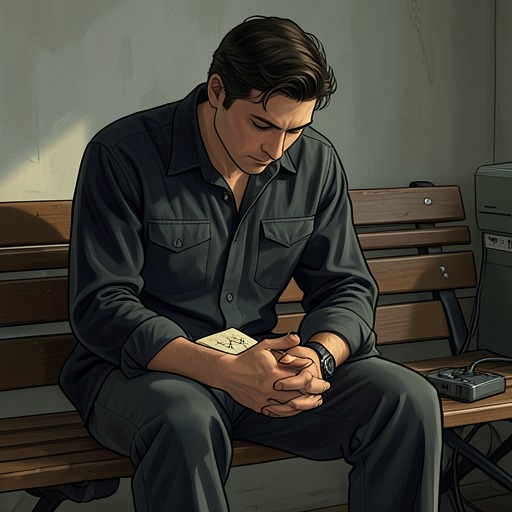
Jacob's LadderThe intergenerational cycle of violence in St. Nacho’s 3: Jacob’s Ladder emerges not as a simple inheritance but as a pattern learned through exposure, carried into adult intimacy, and potentially interrupted. Jacob’s account connects his childhood understanding of his parents’ relationship with his attraction to a violent partner, while Muse recalls how she once mistook retaliation for a way to stop abuse. Her mother’s eventual decision to leave offers a different response to the pattern.
Family Patterns and Learned Expectations
Jacob remembers growing up wondering whether his mother stayed with his father because she was unusually optimistic. As an adult, he rejects that explanation as inadequate, describing the situation she endured in severe terms while insisting that he will not blame her for remaining. His response matters: he recognizes the harm without turning his mother’s choices into an accusation. The recollection suggests how a child can absorb a model of intimacy in which staying through damaging behavior becomes something to puzzle over, even when the reasons are not clear.
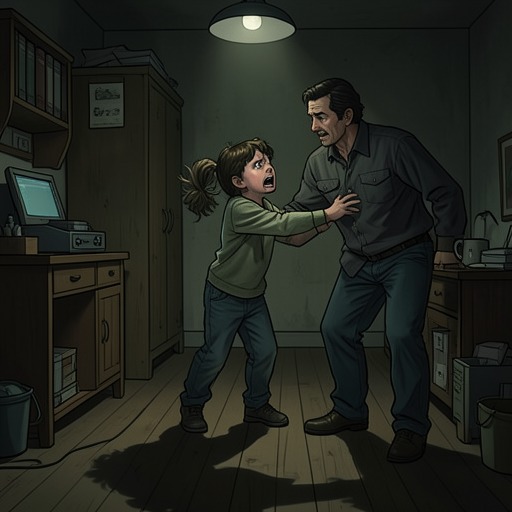
Jacob also identifies familiarity as part of his own attraction to violence. When he tells Phil that he is drawn to it because it feels familiar, he makes an unsettling connection between early experience and adult desire. The disclosure does not mean that his childhood mechanically determined whom he would love, or that attraction excuses a partner’s actions. Instead, it reveals how a known pattern can feel recognizable even when it becomes dangerous. Jacob had already realized that Sander was unfaithful and had postponed confronting the problem partly because Sander was usually discreet. That accommodation ends when Sander grabs Jacob by the shoulder, turns him around, and grips his neck hard enough to shake him. Later, Sander kicks him in the ribs. Jacob’s combat training in Krav Maga had supported his belief that he could protect himself; the assault exposes the limits of that confidence in this moment.
Muse supplies a second account of violence learned inside a family. As a child, she heard her parents screaming at each other and imagined that her mother should hit her father back, believing that a show of resistance would stop him. Her childhood theory turns violence into both the problem and its imagined solution. But Muse says she did not act on that idea. When she came home with a black eye from a boyfriend, her mother packed their belongings and moved them out of her father’s house; her parents later divorced. The episode offers a concrete interruption of the pattern: rather than answering violence with violence, Muse’s mother responds to her daughter’s injury by leaving the household. Set beside Jacob’s admission that abuse can feel familiar, Muse’s memory makes the cycle visible while showing that its repetition is not inevitable.
Seeking Help and the Limits of Inheritance
The cycle is not shown as something Jacob can simply recognize and then leave behind. At the bus, hurt and still facing a difficult climb up the steps, he tells Phil that he is going to get help. He limps toward the vehicle, moving more slowly than he needs to because he knows the steps will hurt. The choice is small and practical, not a sudden cure: even while pain shapes his next movement, he turns toward assistance rather than treating self-reliance as proof that he can manage alone.
Jacob also directs care outward. He tells Phil to go home to Hannah and look after her, judging that she needs Phil more than he does. The exchange complicates any simple division between a wounded person who can only receive help and a friend who can only provide it. Jacob is injured and seeking assistance, yet he remains attentive to another person’s needs. Against a family history in which harm has shaped what intimacy feels familiar, this ordinary act of mutual care offers a different pattern without claiming that one conversation erases what came before.
Other memories make clear that family history remains emotionally unfinished. Jacob recalls a different time and ocean: his grandfather Zeyde borrowed a car from a man at the appliance store where he worked and drove Jacob to Sandy Hook in New Jersey. Elsewhere, Jacob remembers the disappearance of a household’s belongings—clothes, equipment, photographs, records, tools, letters, and paperwork—and says that neither he nor Daniel ever forgave themselves. The account does not reduce every family wound to a single cause, or resolve the brothers’ guilt. Instead, it places the violence Jacob recognizes in adulthood within a wider inheritance of memories and losses whose consequences persist even when their full meaning is difficult to settle.
Intensity and Familiarity
Muse’s account adds a quieter link between inherited models of conflict and adult attraction. She says that in high school she dated a boy in what she describes as a dark, passionate relationship, and that she is drawn to that kind of intensity. Jacob initially teases her, then recognizes that the subject may strike close to home. The exchange does not establish that Muse’s teenage relationship was abusive; rather, it shows how a familiar emotional register can persist as a preference, even when its origins lie amid painful family experience. Alongside Jacob’s recognition that violence feels familiar to him, Muse’s reflection broadens the pattern beyond the repetition of physical acts: what is carried forward can also be an expectation of how charged intimacy feels.
Witnessing and the Possibility of Interruption
Jacob’s movement toward help leads beyond the immediate aftermath of Sander’s violence. In a later chapter, he sits with coffee among women gathered in a small circle of chairs, all silent and clenched; he admits he does not know how he got there. The scene does not make their experiences identical, but it places Jacob’s private recognition of familiar violence in a room where others are also holding pain in silence. The shift from limping toward a bus to sitting within a circle gives his decision to seek help a further, modest consequence: the inherited pattern is no longer only something he identifies in his own attraction and family memories, but something he brings into a setting of shared witnessing.