Diana Rivers
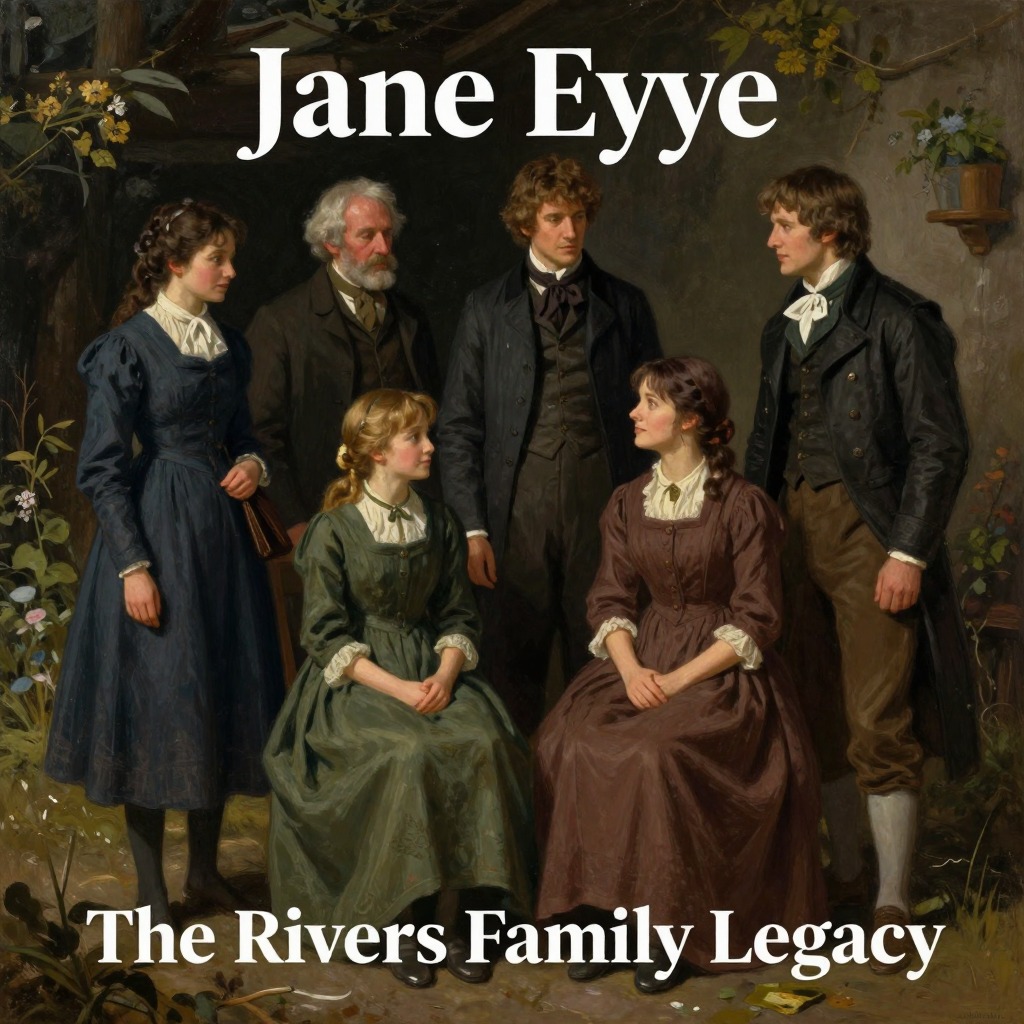
Jane EyreDiana Rivers is one of the three siblings who take the starving and homeless Jane Eyre into their home, Moor House, and she becomes the closest of Jane's newly discovered relatives. Possessing a combination of intellectual brilliance, physical vigor, and warm-hearted spontaneity, Diana is the more dominant and expressive of the two Rivers sisters. Her immediate and unreserved kindness toward Jane, her fierce loyalty to her family, and her eventual happy marriage form a crucial counterpoint to the more austere and demanding love offered by her brother, St. John. Diana represents the possibility of a love that is both principled and passionately affectionate, a model of sisterhood and friendship that Jane had never known before.
Identity and Introduction
Diana Rivers is introduced to the reader through the window of Moor House, where Jane, peering in from the rainy night, sees her sitting by a peat fire, reading a German book with her sister Mary. Jane immediately notes the distinction and cultivation in her face, describing her as having a "remarkable countenance, instinct both with power and goodness." Diana is the more physically striking of the two sisters, with darker hair that falls in thick curls, and a voice that Jane compares to "the cooing of a dove." She is also the more assertive: she takes charge of Jane's care, ordering her to eat, leading her into the parlor, and speaking with a natural authority that Jane finds both pleasing and easy to yield to. Hannah, the old family servant, confirms that Diana takes after her father in appearance, while Mary resembles their mother, who was "book-learned." The sisters are deeply united, having "never fell out nor threaped," and their bond is a source of strength and comfort.
Life at Moor House and Relationship with Jane
During the weeks Jane spends recovering at Moor House, Diana becomes her closest companion and teacher. She offers to teach Jane German, a task that suits her instructive nature and delights Jane as a pupil. Their natures "dovetailed," producing a mutual affection of the strongest kind. Diana is physically superior to Jane—handsome, vigorous, and full of animal spirits—and her vivacity and fluency in conversation often leave Jane content to sit at her feet and listen. When Jane reveals her artistic skill, Diana and Mary immediately put their pencils and color-boxes at her service. Diana is also the one who, with characteristic directness, questions Jane about her relationship with St. John, correctly guessing that he has proposed marriage and expressing horror at the idea of Jane going to India as his wife. She calls the plan "madness" and insists that Jane would not live three months in such a climate. Her protective love is fierce and practical.
The Discovery of Kinship and the Inheritance
When St. John reveals that Jane is their cousin and that she has inherited twenty thousand pounds, Diana is initially struck silent. But Jane's immediate impulse is to share the fortune equally among the four cousins, and Diana, after some resistance, eventually accepts the justice of the division. The discovery transforms their relationship from one of charity to one of true kinship. When Diana and Mary return to Moor House for Christmas, Jane has prepared the house for them, and Diana's delight at the renovations and decorations is ungrudging and warm. She throws her arms around St. John's neck upon arrival, and the evening is filled with joyful conversation. Diana's presence brings life and laughter to the old house, and she is the one who, in a frolicsome mood, pushes Jane toward St. John and insists he kiss her, inadvertently setting in motion a moment of awkward intimacy.
Change and Ending
Diana's story concludes with a happy marriage. She marries a captain in the navy, a gallant officer and a good man named Captain Fitzjames. The marriage is one of mutual love, and Diana and her husband visit Jane and Rochester annually, just as Jane and Rochester visit them. Diana's life, unlike her brother's solitary and self-sacrificing mission, is one of domestic fulfillment and shared affection. She remains a constant and loving presence in Jane's life, a sister in fact as well as in spirit, and her happiness is part of the "perfect concord" that crowns Jane's own story.
Thematic Significance
Diana Rivers embodies the ideal of a love that is both intellectually stimulating and emotionally warm. She is the antithesis of her brother St. John's cold, principled devotion, and she provides Jane with a model of relationship based on equality, mutual respect, and genuine affection. Her spontaneous kindness to a stranger, her fierce loyalty to her family, and her ultimate happiness in a marriage of love rather than duty all reinforce the novel's central themes: that true connection is based on the heart as well as the mind, and that independence and love are not mutually exclusive. Diana is proof that a woman can be both strong and tender, both learned and loving, and that such a woman can find a partner who values her for all that she is.