Eliza Reed
Jane EyreEliza Reed, the elder daughter of Mrs. Reed of Gateshead Hall, stands as a figure of rigid self-discipline, emotional coldness, and methodical ambition, a stark contrast to the passionate and rebellious Jane Eyre. From childhood, she is defined by a calculating nature and a marked propensity for order and control, traits that only intensify as she matures, leading her to reject the frivolous world of her sister Georgiana and to carve out a life of austere religious devotion and financial independence. Her story, though a minor thread in the larger narrative, offers a powerful counterpoint to Jane's own journey, illustrating a path of survival and self-determination built not on love or connection, but on the ironclad rule of routine and the pursuit of personal security.
Identity and Early Character
As a child at Gateshead, Eliza is described as headstrong and selfish, yet she is respected by her mother and the household in a way that the orphaned Jane Eyre never is. She is not a bully like her brother John Reed, but she is complicit in the family's systematic exclusion of Jane, and it is Eliza who, with a single remark, reveals Jane's hiding place in the window-seat to John, setting off the violent confrontation that ends with Jane being locked in the red-room. Her early character is marked by a turn for traffic and a marked propensity for saving; she is fond of feeding her poultry and, even more so, of selling the eggs to the housekeeper and hoarding the money. She drives hard bargains with the gardener over flower-roots and seeds, and she lends her savings to her mother at a usurious rate of interest—fifty or sixty per cent.—keeping her accounts in a little book with anxious accuracy. This childhood avarice and love of order foreshadow the adult she will become.
Life and Plot Trajectory
Years later, when Jane returns to Gateshead to see the dying Mrs. Reed, she finds Eliza transformed into a tall, thin young woman with a sallow face and severe mien, her appearance augmented by the extreme plainness of a straight-skirted, black, stuff dress and a nun-like ornament of a string of ebony beads and a crucifix. She is a rigid formalist in matters of religion, attending church thrice every Sunday and as often on weekdays as there are prayers, no matter the weather. Her life is a model of clockwork regularity: she divides her time into regular portions, each hour having its allotted task. She studies a little book—the Common Prayer Book—three times a day, stitches with gold thread the border of a square crimson cloth for an altar, devotes two hours to her diary, two to working in the kitchen-garden, and one to the regulation of her accounts. She seems to want no company, no conversation, and is happy in her way, annoyed only by any incident that forces her to vary her routine. She tells Jane that her brother John's conduct and the threatened ruin of the family have been a source of profound affliction, but she has settled her mind and formed her resolution: her own fortune she has taken care to secure.
Relationships and Conflict
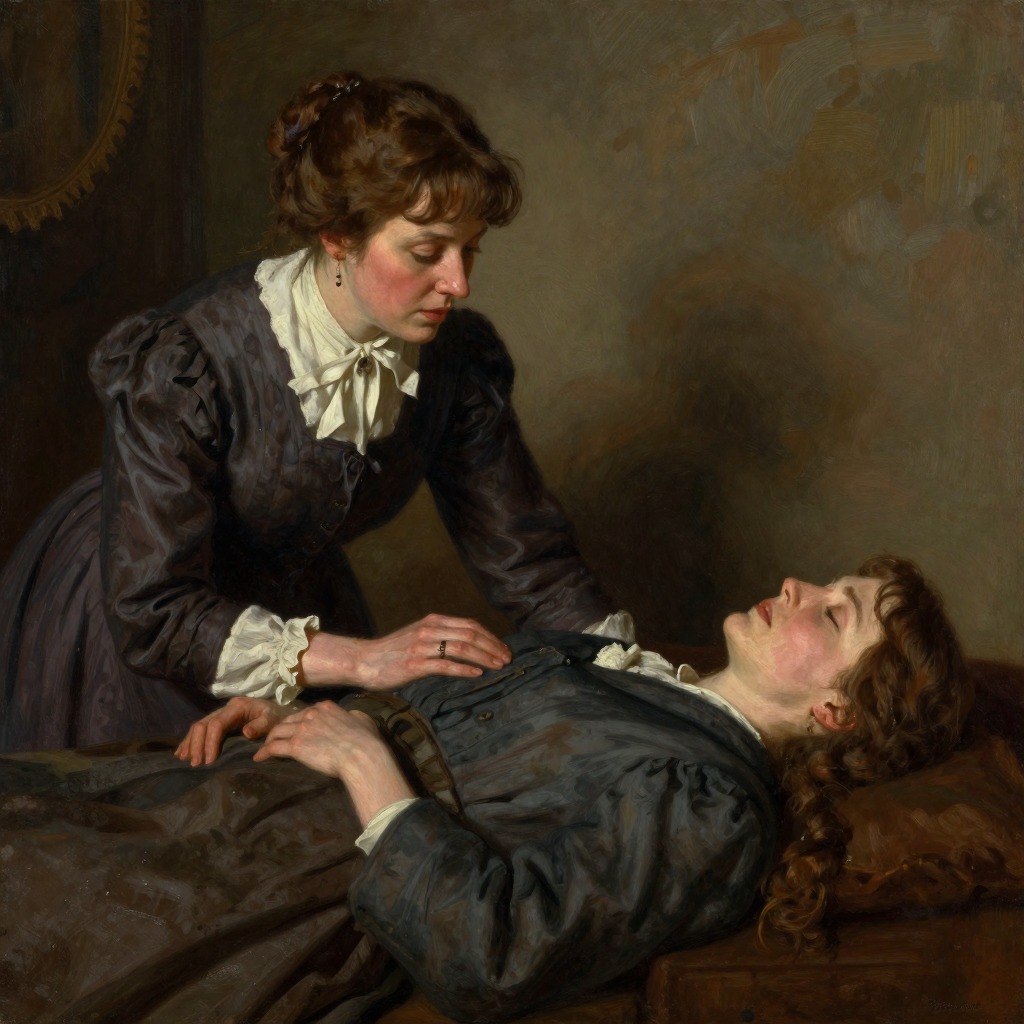
Eliza's relationship with her sister Georgiana is one of open contempt and mutual antipathy. She delivers a blistering tirade against Georgiana, calling her a more vain and absurd animal than was ever allowed to cumber the earth, and declaring that after their mother's death she will wash her hands of her, parting as separate as if they had never known each other. She accuses Georgiana of being selfish, heartless, and of having ruined her prospects by acting as a spy and informer in a matter concerning a Lord Edwin Vere. For her part, Eliza is cold, impassable, and assiduously industrious, showing no feeling for her sister's distress. When their mother dies, Eliza surveys the corpse calmly, remarking that with her constitution she should have lived to a good old age, and that her life was shortened by trouble. She sheds not a single tear. Her relationship with Jane is one of distant formality; she addresses her as "Miss Eyre" and, after the funeral, thanks her for her valuable services and discreet conduct, acknowledging that there is a difference between living with someone like Jane and with Georgiana.
Change and Ending
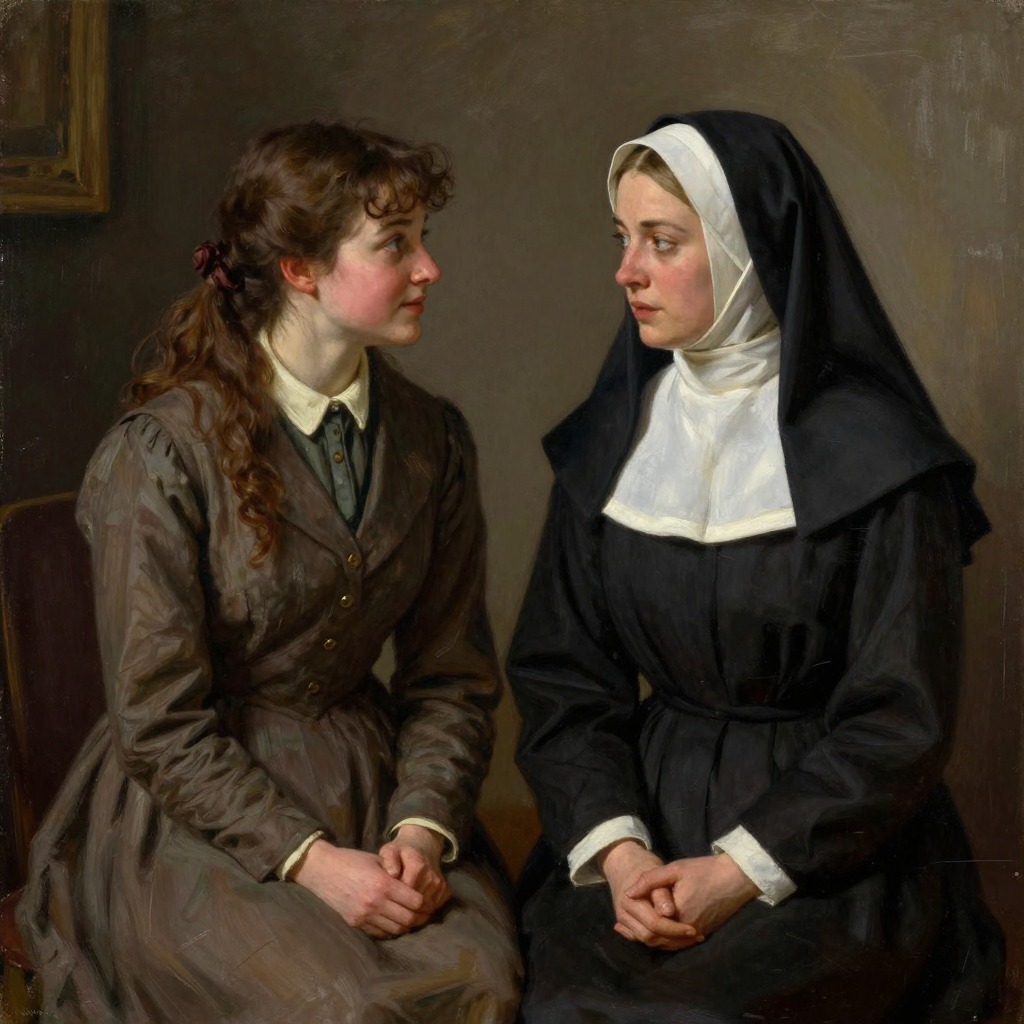
Eliza's final resolution is to leave England for the Continent. She tells Jane she will take up her abode in a religious house near Lisle—a nunnery—where she will be quiet and unmolested, devoting herself to the examination of Roman Catholic dogmas. Jane reflects that the vocation will fit her to a hair. The narrative later confirms that Eliza actually took the veil and became the superior of the convent she entered, which she endowed with her fortune. This ending is the logical culmination of her character: a life of rigid order, financial prudence, and emotional detachment, finding its ultimate expression in the absolute structure and seclusion of a convent, a world away from the passionate entanglements and moral struggles that define Jane Eyre's own path.
Narrative Role and Thematic Significance
Eliza Reed serves as a foil to both Jane Eyre and her own sister Georgiana. Where Jane is passionate, principled, and seeks love and connection, Eliza is cold, calculating, and self-sufficient. Where Georgiana is frivolous, vain, and dependent on the admiration of others, Eliza is austere, self-contained, and fiercely independent. She embodies a path of survival through rigid self-control and the rejection of all emotional vulnerability. Her story illustrates a form of female independence achieved not through love or moral struggle, but through the systematic suppression of feeling and the embrace of a life governed by rule and ritual. She is a testament to the novel's exploration of the many different ways a woman in the nineteenth century might navigate a world that offers her few choices, even if her chosen path is one of emotional and spiritual barrenness.