Ferndean Manor
Jane EyreFerndean Manor is the final, secluded dwelling in Jane Eyre, a building of considerable antiquity but no architectural pretensions, buried deep in a heavy wood. It is the place to which Edward Fairfax Rochester retreats after the catastrophic fire at Thornfield Hall, and where Jane Eyre finds him again—blind, crippled, and humbled—and where they are at last married. The manor functions as the novel's ultimate symbolic space: a site of penitence, physical ruin, and redemptive love, standing in stark contrast to the grandeur of Thornfield, the institutional coldness of Lowood, and the intellectual severity of Moor House.
Location and Description
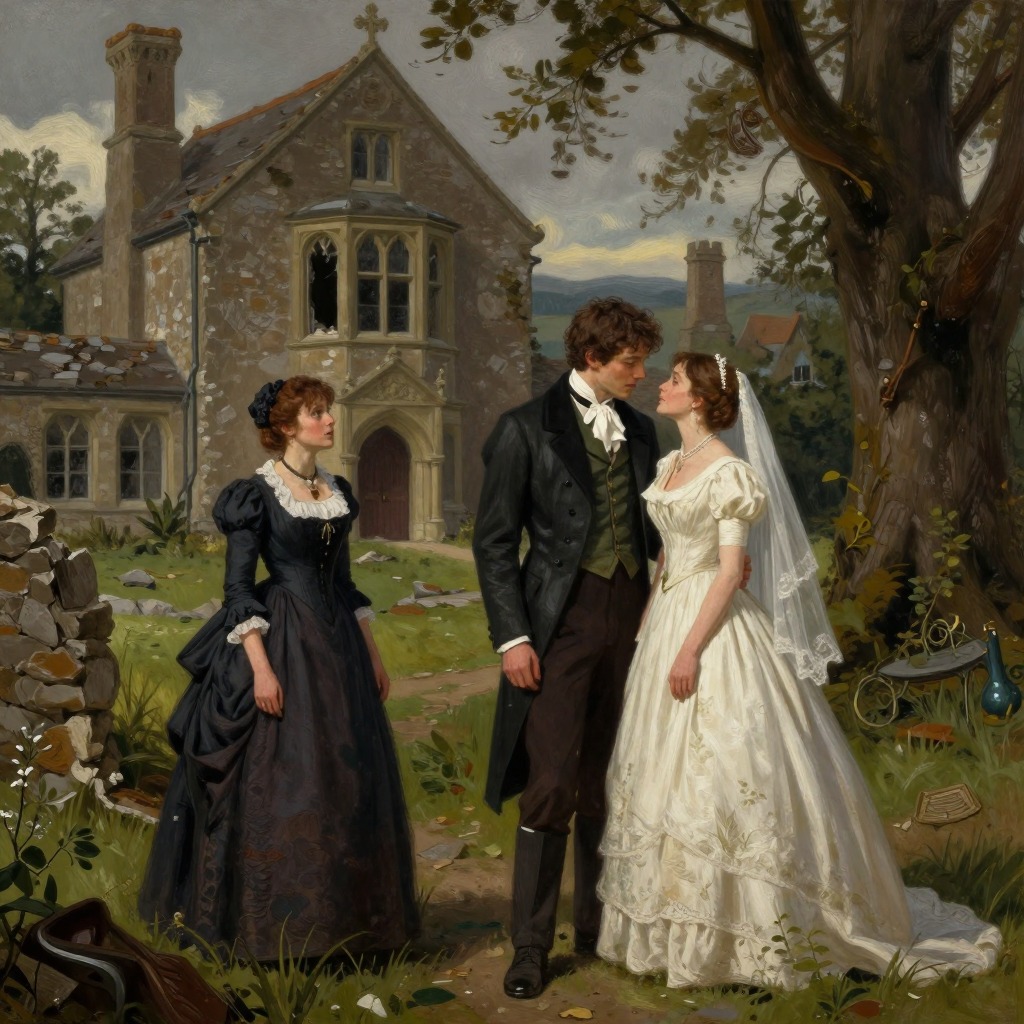
Ferndean Manor is described as a building of moderate size, with two pointed gables in its front, narrow latticed windows, and a front door reached by a single step. It is set in a semicircular clearing within a dense wood so thick and dark that the house is scarcely distinguishable from the trees even at close range; its walls are dank and green with decay. There are no flowers or garden beds—only a broad gravel walk girdling a grass plot, all framed by the forest. The site is ineligible and insalubrious, and the house had long remained uninhabited and unfurnished except for two or three rooms fitted up for the squire when he went there to shoot. The whole place is described by the host of the Rochester Arms as "quite a desolate spot." When Jane arrives on a cold, rainy evening, she finds it as still as a church on a weekday, with only the pattering rain on the forest leaves breaking the silence.
Rochester's Retreat and Suffering
After the fire at Thornfield, in which Bertha Mason died and Rochester was gravely injured, he withdrew to Ferndean Manor with only the old servants John and his wife Mary to attend him. He refused all other company, broke off acquaintance with the gentry, and shut himself up like a hermit. The manor became the setting for his most profound physical and spiritual suffering: he emerged from the ruins blind, with one hand amputated and his face scarred by fire. In the grounds of Ferndean, he is seen groping his way slowly, his once-daring stride gone, his right hand stretched out to touch vacancy. He stands mute and motionless in the rain, his uncovered head exposed, a sightless Samson whose caged-eagle ferocity has been extinguished by cruelty and loss. It is here that he confesses to Jane that he has been forced to pass through the valley of the shadow of death, and that he has begun to experience remorse, repentance, and the wish for reconcilement with his Maker.
Reunion and Marriage
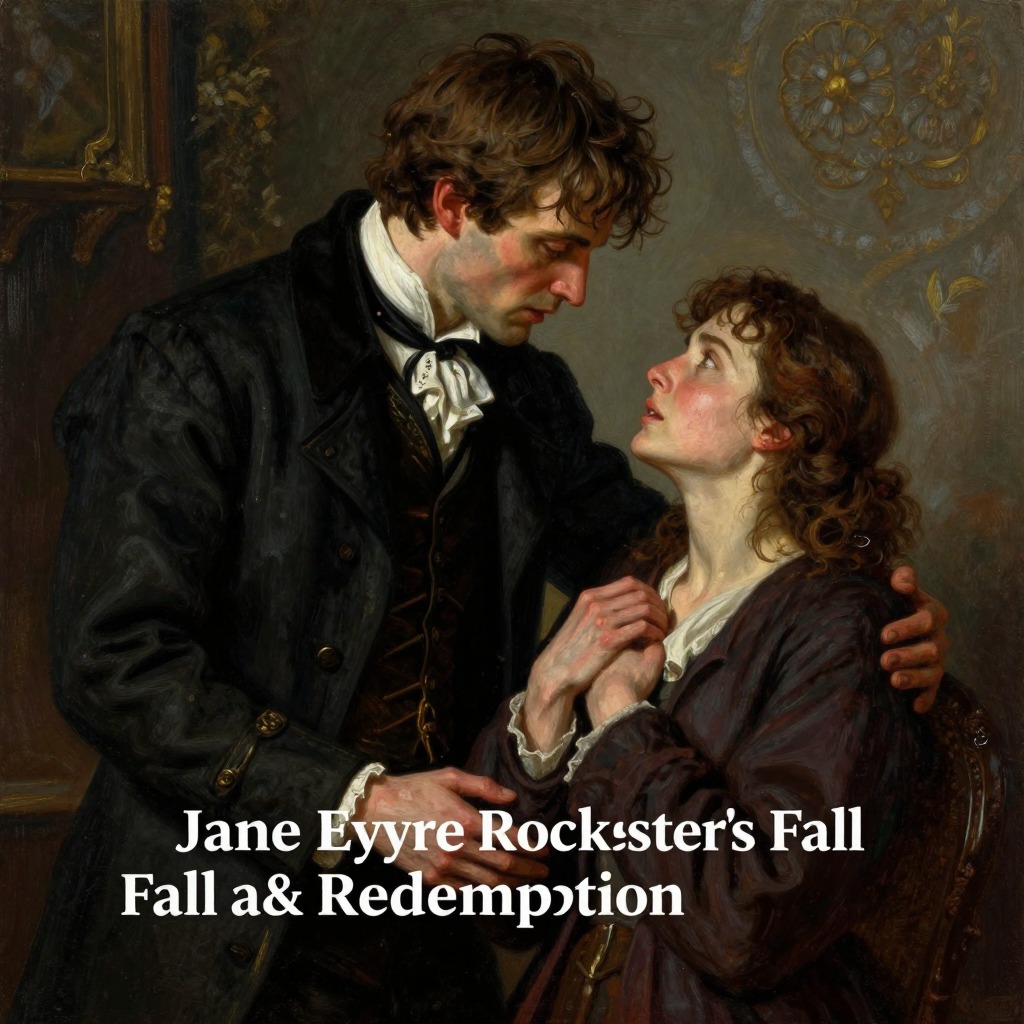
Ferndean Manor is the setting for the novel's climactic reunion. Jane arrives at dusk, having traveled thirty miles from Thornfield, and finds Rochester standing on the step, stretching out his hand to feel whether it rains. She watches him unseen before revealing herself. Their reunion takes place in the gloomy parlour, where a neglected handful of fire burns low and Pilot, the old dog, lies coiled up on one side. Jane carries in the tray with water and candles, and Rochester, recognizing her voice and touch, experiences a moment of near-incredulous joy. The manor, which had been a place of desolation and despair, becomes the site of their quiet wedding—a ceremony attended only by the parson and clerk. After the marriage, Jane goes into the kitchen and tells Mary and John what has happened, and the household settles into a new life.
Symbolic Significance
Ferndean Manor embodies the novel's themes of ruin, penitence, and redemption. Unlike Thornfield, which was a place of hidden secrets and violent passion, Ferndean is open in its decay—its walls are visibly crumbling, its wood is dark and encroaching, and its isolation is absolute. It is a place where Rochester, stripped of his pride and physical strength, must learn humility and dependence. Jane's role as his "prop and guide"—leading him through the wood, reading to him, being his eyes and hands—is enacted in this setting. The manor's deep burial in the forest also echoes the novel's recurring imagery of enclosure and liberation: it is a prison of solitude for Rochester before Jane's arrival, and a sanctuary of mutual love afterward. The chestnut tree at Thornfield, split by lightning, finds its counterpart in Rochester himself, who says, "I am no better than the old lightning-struck chestnut-tree in Thornfield orchard." Ferndean, then, is the ground where that ruined tree is allowed to put forth new growth, sheltered by the love that has survived separation, fire, and blindness.