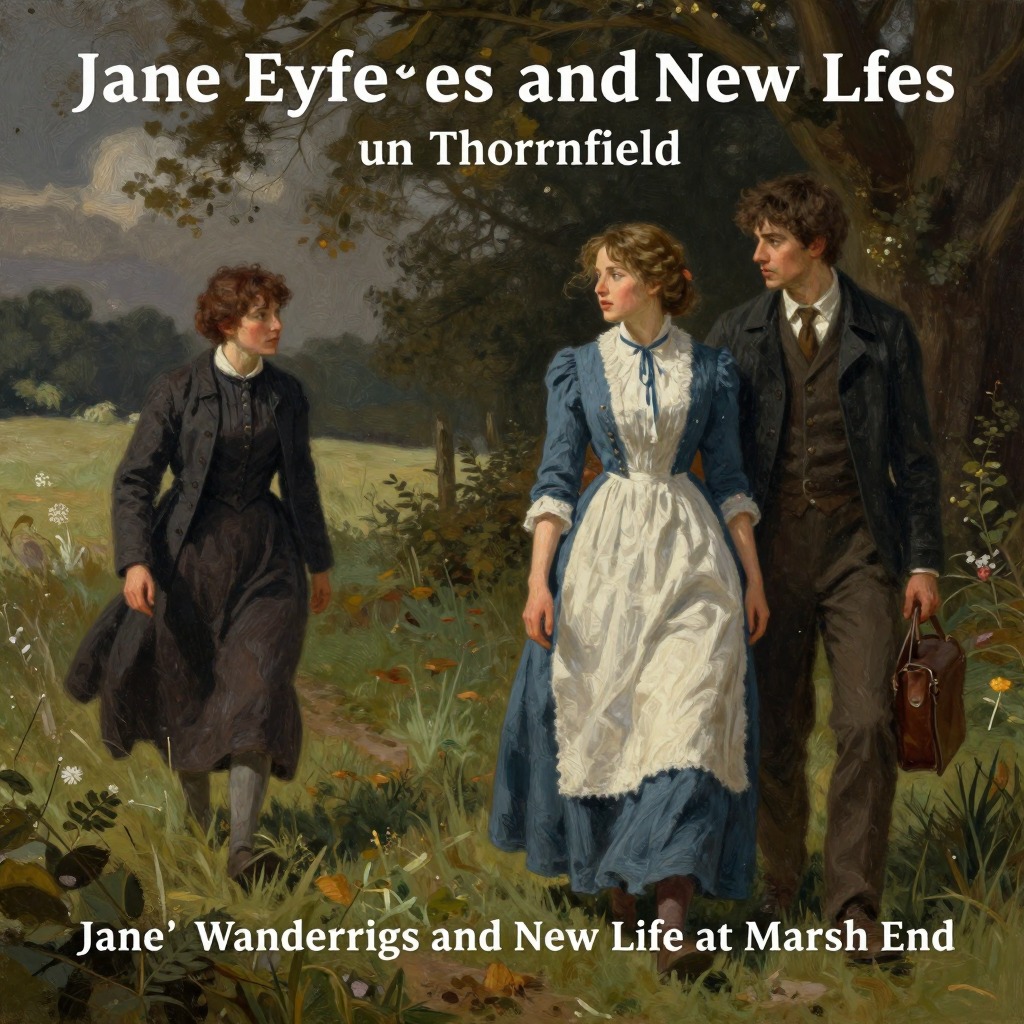
Hannah
Jane EyreHannah is the elderly, loyal housekeeper of the Rivers family at Marsh End (Moor House), who initially refuses to shelter the starving Jane Eyre out of suspicion but later becomes a devoted friend and helper. Her transformation from a wary gatekeeper to a warm ally mirrors Jane's own passage from outcast to family member, and her plain-spoken integrity anchors the household through grief, change, and reunion.
Identity and Role
Hannah has served the Rivers family for thirty years, having nursed all three children—St. John, Diana, and Mary—from infancy. She is a scrupulously clean, rough-looking but honest woman, deeply attached to the family and fiercely protective of them. When Jane first sees her through the window of Marsh End, Hannah is knitting by a glowing peat-fire in a spotless kitchen, her appearance and surroundings reflecting a life of hard work and order. She speaks in the broad dialect of the district, calling the young ladies "childer" and referring to the late Mr. Rivers as having died "of a stroke" three weeks before Jane's arrival. Her loyalty is absolute: she tells Jane that she thought more of "th' childer nor of mysel" when she refused to let a stranger into the house at night.
Initial Suspicion and Refusal
When Jane, exhausted and starving, knocks at the kitchen door of Marsh End on a rainy night, Hannah is the one who answers. She immediately distrusts the bedraggled stranger, refusing to let her speak to the young ladies and offering only a penny to send her away. "We can't take in a vagrant to lodge," she says, and when Jane pleads that she will die if turned out, Hannah retorts, "Not you. I'm fear'd you have some ill plans agate." She even threatens that the house has "a gentleman, and dogs, and guns" to deter any imagined accomplices. This harsh refusal, born of a lifetime of caution and a protective instinct toward the orphaned Rivers siblings, nearly costs Jane her life.
Change of Heart and Friendship
Hannah's attitude shifts dramatically once St. John Rivers overrules her and brings Jane inside. After Jane recovers and appears tidy and well-dressed, Hannah begins to relent. When Jane insists she is no beggar and reveals she was educated at a boarding school for eight years, Hannah opens her eyes wide in surprise. A direct confrontation over Hannah's earlier reproach that Jane had no "brass" (money) leads to a turning point: Jane tells her that poverty is not a crime and that "some of the best people that ever lived have been as destitute as I am." Hannah, moved, admits she was wrong, and the two shake hands. From that moment they become friends. Hannah proves herself a willing companion, sharing detailed stories about the Rivers family's history—how old Mr. Rivers was a plain gentleman of ancient lineage, how the mistress was a great reader, and how the three children had always been "of a mak' of their own."
Role in the Household's Renewal
When Jane inherits a fortune and insists on sharing it equally with her newly discovered cousins, she returns to Marsh End to prepare the house for Diana and Mary's homecoming. Hannah works alongside Jane with evident pleasure, helping to clean, dust, and cook for the Christmas season. Jane notes that Hannah "was charmed to see how jovial I could be amidst the bustle of a house turned topsy-turvy." When St. John arrives first and finds Jane in the kitchen watching cakes bake, Hannah is busy with the preparations. Later, when the sisters finally arrive, it is Hannah who throws open the parlour door and cries, "They are coming! they are coming!" and who lights a lantern to greet them in the dark. Her joy at their return is unfeigned and central to the warmth of the reunion.
Narrative Significance
Hannah embodies the honest, hardworking rural servant whose initial suspicion of a stranger is rooted not in cruelty but in a fierce, protective love for her charges. Her arc from refusal to friendship dramatizes Jane's reintegration into human society after her flight from Thornfield. Hannah's plain speech and practical nature also provide a foil to the intellectual and refined Rivers siblings, grounding the household in everyday labor and loyalty. Her presence throughout Jane's stay at Marsh End—from the night of her arrival to the Christmas celebrations—underscores the theme that genuine kindness often emerges after initial barriers are overcome, and that a faithful servant can become as dear as family.