John Reed
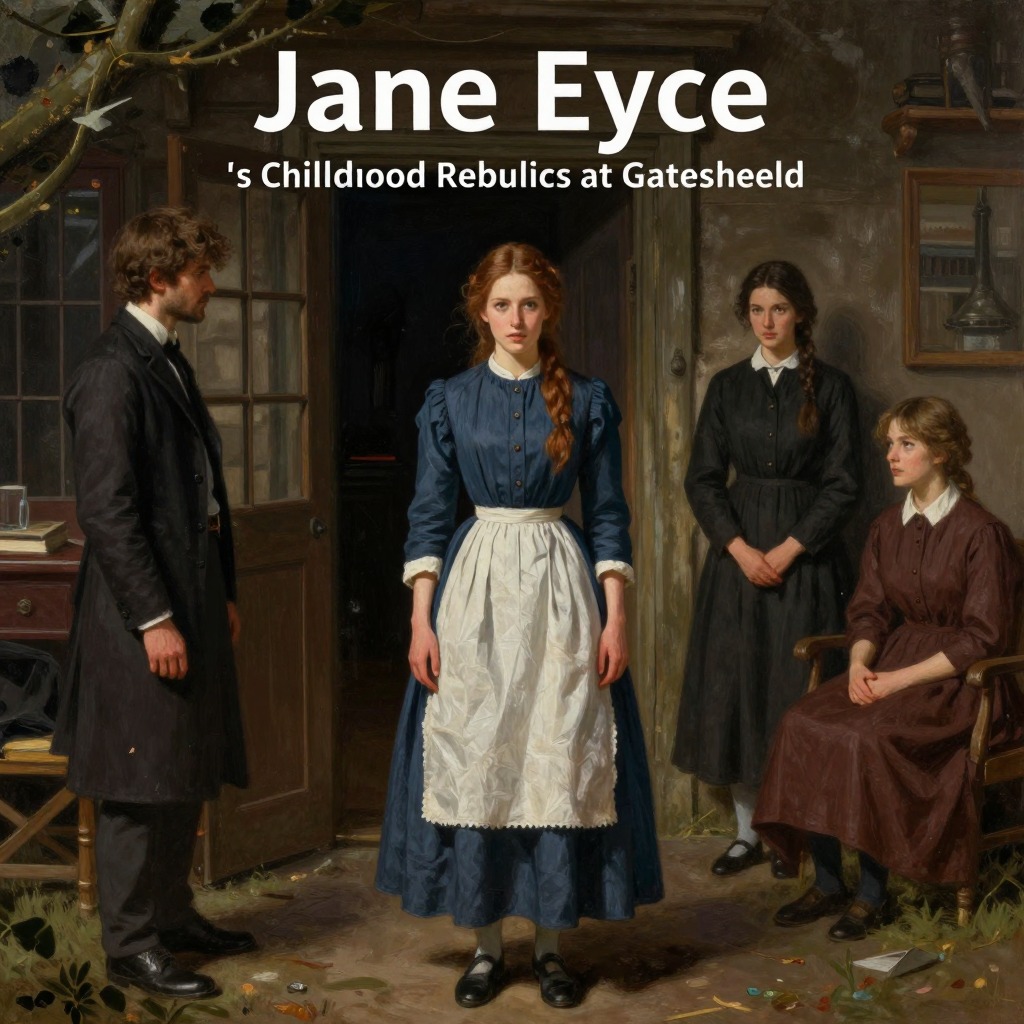
Jane EyreJohn Reed is the only son of Mrs. Reed of Gateshead Hall, and the chief tormentor of Jane Eyre's childhood. A schoolboy of fourteen when Jane is ten, he is described as large and stout for his age, with a dingy and unwholesome skin, thick lineaments, heavy limbs, and large extremities. He gorges himself habitually at table, which makes him bilious and gives him a dim and bleared eye and flabby cheeks. His mother has taken him home from school for a month or two on account of his delicate health, though the schoolmaster affirms he would do very well if he had fewer cakes and sweetmeats sent from home. John has little affection for his mother and sisters, and an active antipathy to Jane. He bullies and punishes her continually—not two or three times a week, nor once or twice a day, but constantly—so that every nerve she has fears him, and every morsel of flesh in her bones shrinks when he comes near. The servants do not like to offend their young master by taking Jane's part, and Mrs. Reed is blind and deaf on the subject, never seeing him strike or hearing him abuse her, though he does both now and then in her very presence.
Violence and Tyranny
John's cruelty is both physical and psychological. He strikes Jane suddenly and strongly for her impudence in answering his mother, for her sneaking way of getting behind curtains, and for the look in her eyes. He calls her a rat. When he finds her reading, he asserts his ownership over the books, declaring that she has no business to take them because she is a dependent, has no money, and ought to beg rather than live with gentlemen's children. He throws a book at her, hitting her and causing her to fall, striking her head against the door and cutting it. When Jane calls him wicked and cruel—comparing him to a murderer, a slave-driver, and the Roman emperors—he runs headlong at her, grasping her hair and shoulder. Jane fights back in frantic sort, and he bellows out aloud, calling her "Rat! Rat!" His mother, upon seeing the struggle, orders Jane taken away to the red-room and locked in there. John's tyranny extends beyond Jane: he twists the necks of the pigeons, kills the little pea-chicks, sets the dogs at the sheep, strips the hothouse vines of their fruit, and breaks the buds off the choicest plants in the conservatory. He calls his mother "old girl," sometimes reviles her for her dark skin, bluntly disregards her wishes, and not unfrequently tears and spoils her silk attire—yet she still calls him "her own darling."
Adolescence and Decline
Years later, when Bessie Leaven visits Jane at Lowood, she reports that John has gone to college and been "plucked," and that his uncles wanted him to be a barrister and study the law, but he is such a dissipated young man they will never make much of him. He is very tall, some people call him a fine-looking young man, but he has thick lips. Mrs. Reed is not easy in her mind about him; his conduct does not please her, and he spends a deal of money. By the time Jane returns to Gateshead to see the dying Mrs. Reed, John's fate has worsened dramatically. Robert Leaven, the coachman, reports that John died a week earlier at his chambers in London. His life has been very wild: for the last three years he gave himself up to strange ways, and his death was shocking. He ruined his health and his estate amongst the worst men and the worst women, got into debt and into jail, and his mother helped him out twice, but as soon as he was free he returned to his old companions and habits. His head was not strong; the knaves he lived amongst fooled him beyond anything. He came down to Gateshead about three weeks before his death and wanted his mother to give up all to him; she refused, her means having long been much reduced by his extravagance. He went back again, and the next news was that he was dead—they say he killed himself. The information about John's death and its manner came too suddenly for Mrs. Reed, bringing on a stroke.
Narrative Role and Significance
John Reed functions as the embodiment of the unjust, arbitrary power that Jane must learn to resist. His unchecked cruelty in childhood provokes Jane's first open rebellion and her subsequent punishment in the red-room, an event that scars her nerves for life. His later degeneration into a dissolute, suicidal gambler completes the moral arc of the Reed family: the pampered, tyrannical boy becomes a ruined, self-destructive man, leaving his mother broken and his sisters impoverished. John's fate also serves as a foil to Jane's own rise: while he squanders his inheritance and destroys himself, Jane, through principle and self-discipline, achieves independence and moral integrity. His death indirectly precipitates the revelation of Jane's inheritance, as it is the shock of his suicide that brings on Mrs. Reed's final illness and her confession about the letter from John Eyre.