Marsh End
Jane EyreMarsh End, also called Moor House, is the ancestral seat of the Rivers family, a low, grey, antique structure of stone buried deep in a wooded valley of the northern moors. It is the place where Jane Eyre, having fled Thornfield Hall in despair and wandered for days without food or shelter, collapses at the threshold and is rescued by St. John Rivers and his sisters. This humble, isolated house becomes the crucible in which Jane's identity is remade: she recovers her health, finds employment as a village schoolmistress, discovers she is the cousin of the Rivers siblings, inherits a fortune from her uncle John Eyre, and ultimately resists St. John's proposal of a loveless missionary marriage before hearing the supernatural call that leads her back to Mr. Rochester.
Setting and Appearance
Marsh End is described as a small, humble, and very old house, "aboon two hundred year old" according to the servant Hannah, built of grey stone with a low roof, latticed casements, and mouldering walls. It is surrounded by an avenue of aged firs that have grown aslant under the stress of mountain winds, and a garden dark with yew and holly where only the hardiest flowers bloom. The house sits in a hollow vale, with a pebbled bridle-path descending from its gate and winding between fern-banks and wild pasture-fields that border the heath. Inside, the rooms are plainly furnished but clean and comfortable: the kitchen has a sanded floor, a walnut dresser with pewter plates, and a glowing peat-fire; the parlour contains old-fashioned chairs, a walnut-wood table polished like a looking-glass, and a few strange antique portraits on the stained walls. The overall impression is one of "wintry waste and desert dreariness" without, but "bright modest snugness" within after Jane's renovations.
Sanctuary and Recovery
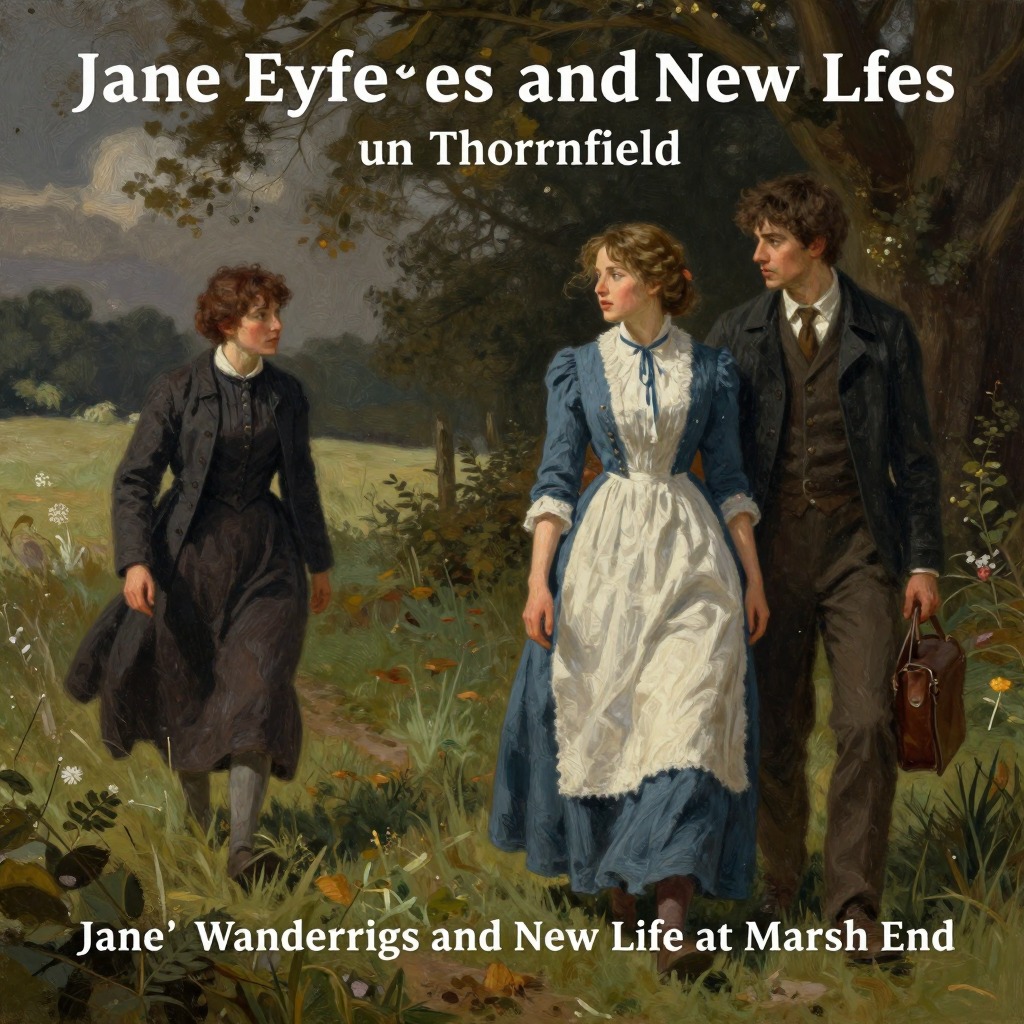
Jane arrives at Marsh End on a rainy June night, having spent two days wandering the moors without food, sleeping on the ground, and begging for bread. She is found by St. John Rivers at the kitchen door, where the servant Hannah has just refused her shelter. St. John insists on admitting her, and the Rivers sisters—Diana and Mary—immediately tend to her with milk and bread, remove her wet clothes, and put her to bed. For three days Jane lies in a narrow bed in a small room, too weak to move or speak, while the sisters whisper at her bedside, expressing pity and noting her pure accent and fine clothes. St. John pronounces her condition the result of "excessive and protracted fatigue" and says no doctor is needed. Hannah, initially suspicious and calling Jane a beggar, later becomes a friend after Jane insists she is no beggar and proves herself educated and capable. The family's hospitality saves Jane's life and provides her first experience of disinterested kindness from strangers.
Life at Marsh End: Kinship and Vocation
After her recovery, Jane finds in the Rivers household a "perfect congeniality of tastes, sentiments, and principles" she has never known before. She reads the same books as Diana and Mary, learns German from Diana, teaches them drawing, and shares their love of the moors. St. John, however, remains reserved and distant, though he secures Jane a position as mistress of the village school in Morton. When Jane learns that her uncle John Eyre has died and left her twenty thousand pounds, she discovers that St. John, Diana, and Mary are her first cousins—her mother's brother's children. She insists on dividing the inheritance equally among the four of them, and the Rivers siblings eventually accept. Jane then takes charge of refurbishing Marsh End for the sisters' return at Christmas, cleaning, decorating, and furnishing the house with new carpets, curtains, and ornaments, creating a warm and welcoming home.
St. John's Proposal and Jane's Refusal
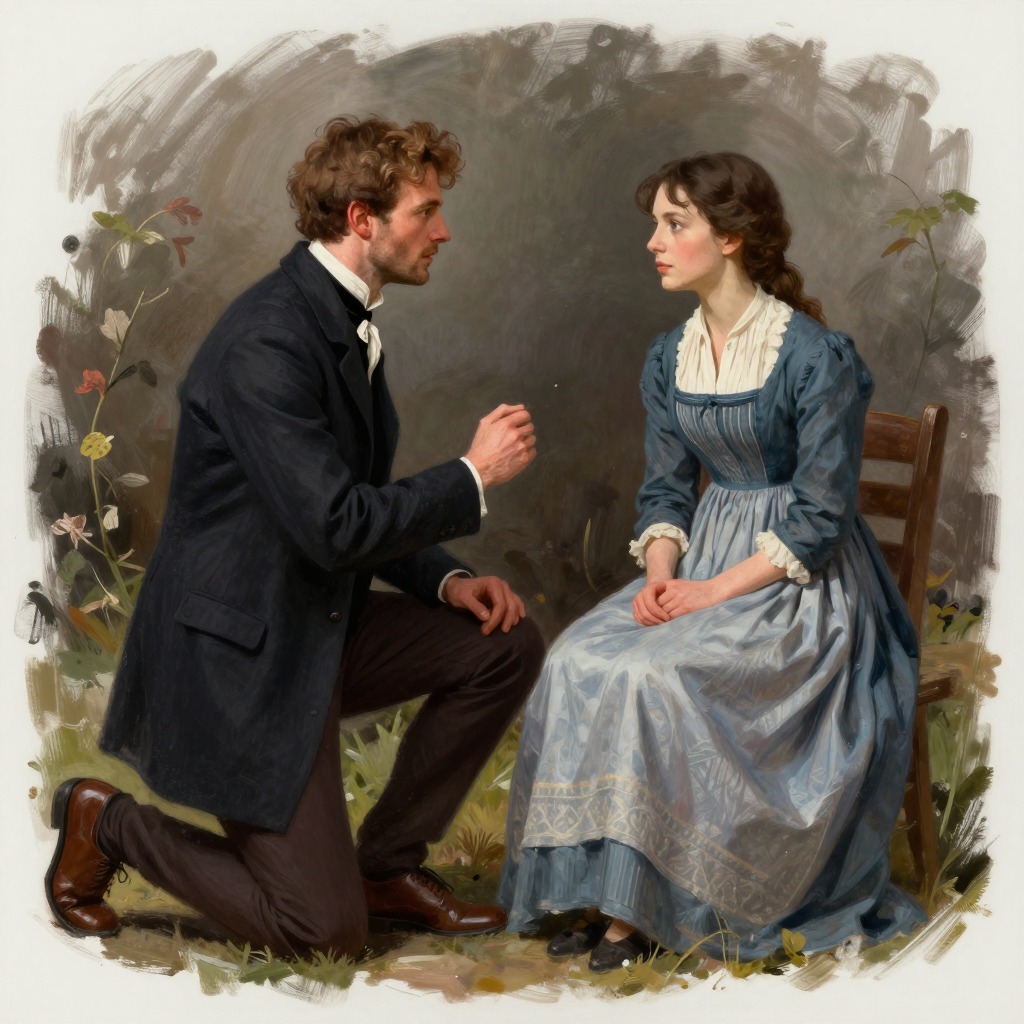
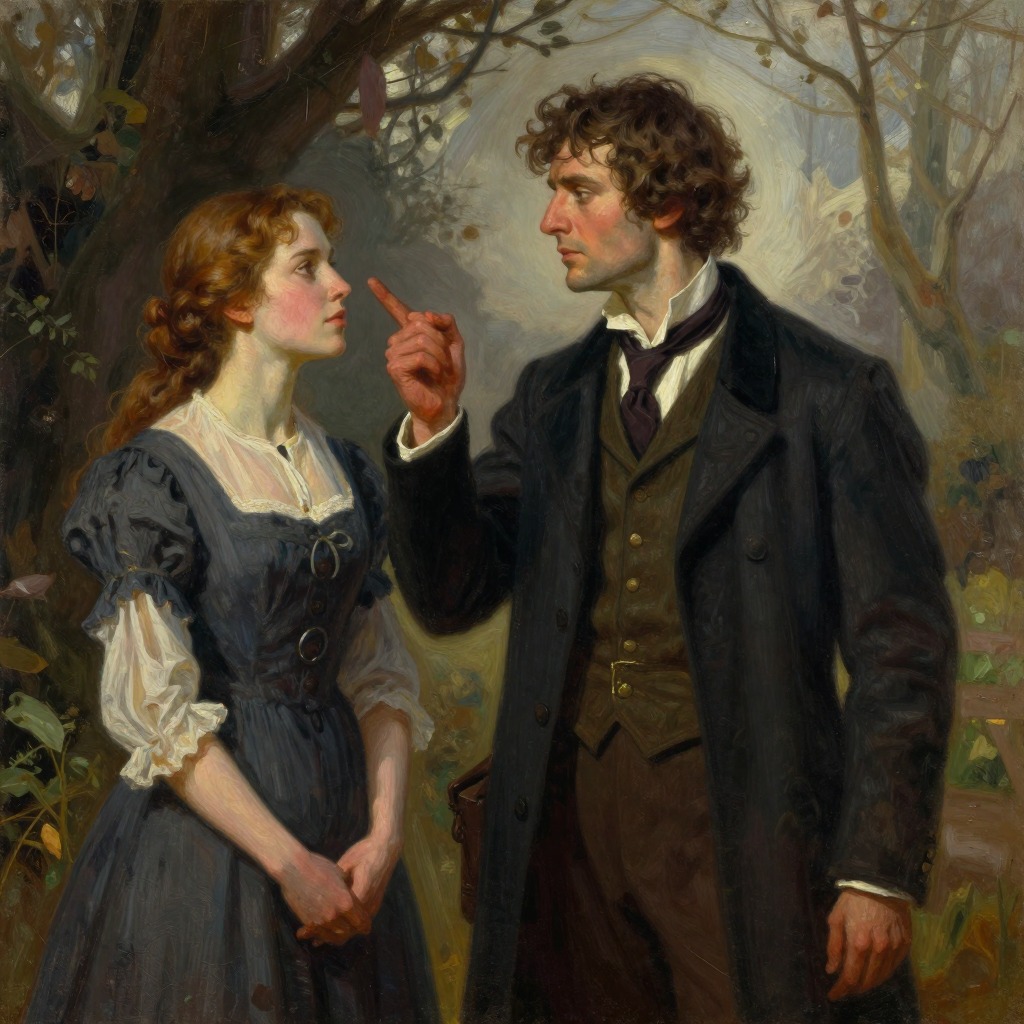
It is at Marsh End that St. John presses Jane to marry him and accompany him as a missionary to India. He argues that she is "formed for labour, not for love" and that as his wife she can be his helpmeet in his sacred work. Jane respects him deeply but knows he does not love her—he loves Rosamond Oliver, whom he has renounced for his vocation—and that a marriage without love would be a form of living death. She refuses him, offering instead to go as his sister and fellow-labourer, but he insists that only marriage will do. The conflict reaches its climax in the parlour of Marsh End, where St. John reads the twenty-first chapter of Revelation and prays with such earnestness that Jane is almost swayed. It is in this same room, after St. John has left her, that Jane hears Mr. Rochester's voice calling her name across the miles—a supernatural summons that breaks the spell and sends her back to Thornfield.
Narrative Significance
Marsh End functions as the structural and thematic antithesis to both Gateshead and Thornfield. Where Gateshead was a place of oppression and rejection, and Thornfield a place of passionate love mixed with hidden horror, Marsh End offers Jane a community of equals, a discovery of family, and the moral clarity to resist a marriage that would violate her integrity. It is the place where she becomes financially independent, learns the value of sisterly affection, and proves her capacity for principled resistance. The house itself—small, old, and remote—embodies the values of simplicity, loyalty, and quiet strength that Jane ultimately chooses over the grandeur of Thornfield or the exotic ambition of India. Her departure from Marsh End to return to Rochester is not a rejection of the Rivers family but a completion of the selfhood she forged within its walls.