Morton School
Jane EyreMorton School is the village school for poor girls in the parish of Morton, established by St. John Rivers shortly after he became its incumbent. The school occupies a hired building with a two-room cottage attached for the mistress's residence. Its creation was part of St. John's broader effort to improve the neglected district: he had already founded a boys' school two years earlier, and the girls' school was intended to extend educational opportunity to the female children of the poor, who had previously been excluded from any hope of progress. The school's funding comes from Mr. Oliver, the wealthy proprietor of a needle-factory and iron-foundry in the valley, whose only daughter, Rosamond Oliver, pays for the education and clothing of an orphan from the workhouse on condition that the orphan assists the mistress with menial household and school tasks. The mistress's salary is thirty pounds per year, and the cottage is furnished simply but sufficiently through Miss Oliver's kindness.
Jane Eyre's Tenure as Schoolmistress
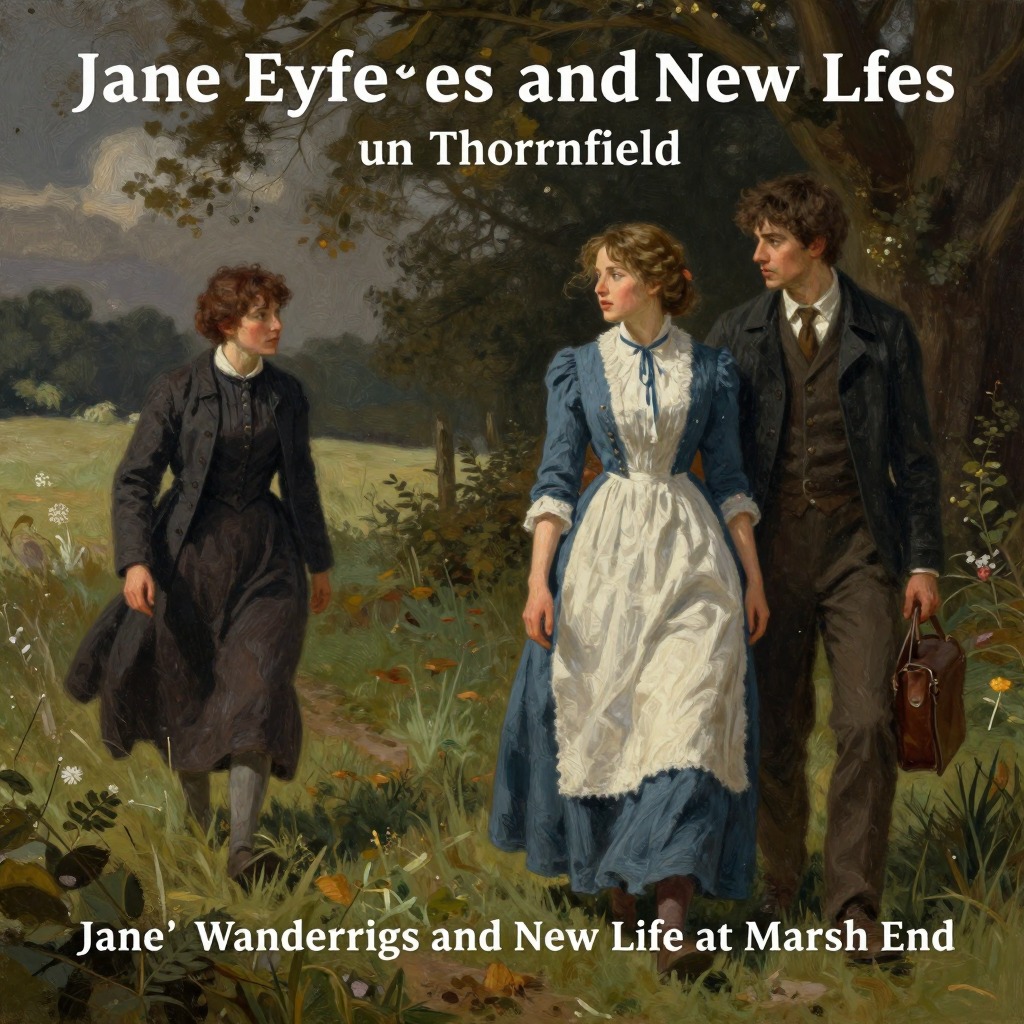
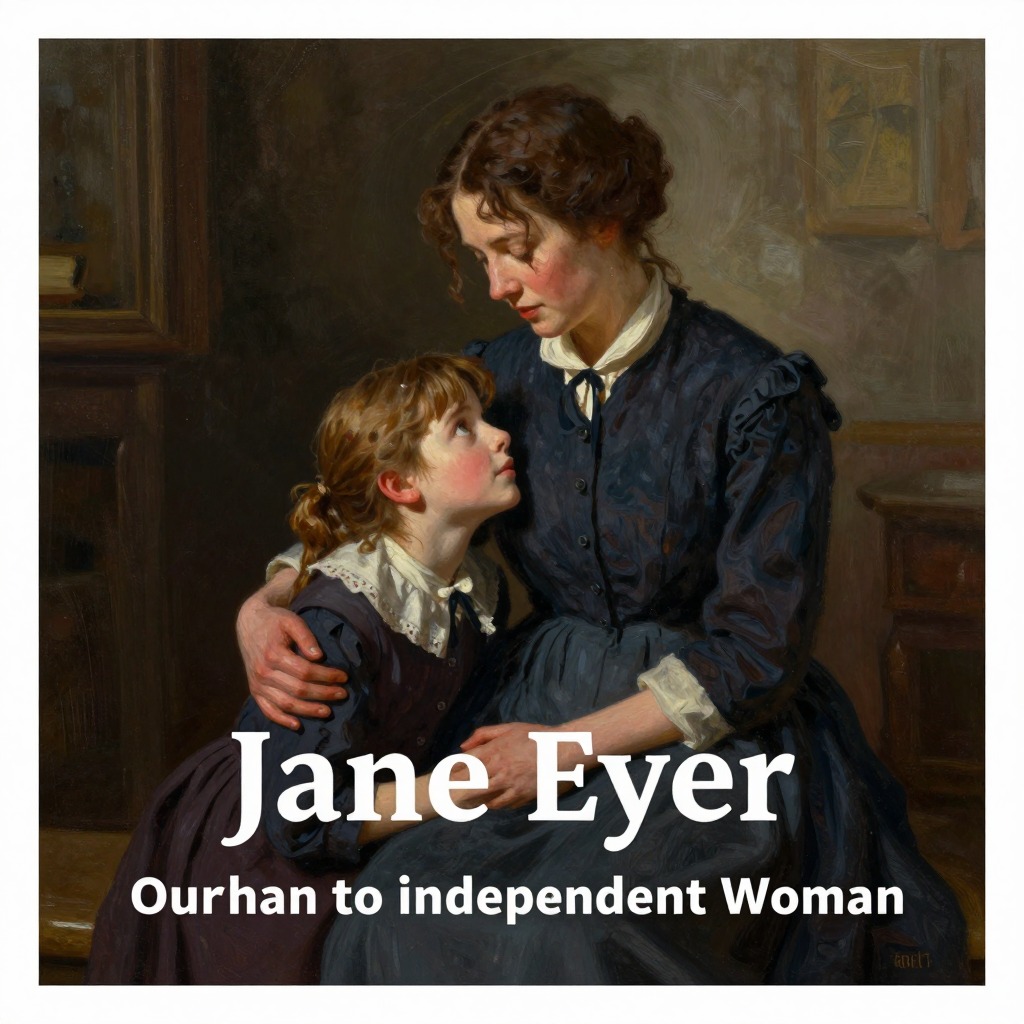
Jane Eyre accepts the position after St. John Rivers offers it to her during her convalescence at Moor House, when she is destitute and without any other prospect. She moves into the cottage and opens the school with twenty scholars, only three of whom can read and none can write or cipher. The children speak with the broadest local accent, and Jane initially struggles to understand them. She finds some of them unmannered, rough, and intractable, but others are docile and eager to learn. Despite her initial feelings of desolation and even degradation—she doubts whether she has taken a step that sinks rather than raises her in social standing—she resolves to overcome these feelings, reminding herself that the coarsely clad peasants are of flesh and blood as good as the scions of gentlest genealogy, and that her duty is to develop the germs of native excellence, refinement, intelligence, and kind feeling in their hearts. Over time, as she gets to know her scholars and they her, she discovers sharp-witted girls among them, examples of natural politeness and innate self-respect, and she takes honest and happy pride in their rapid progress. She teaches the elements of grammar, geography, history, and finer needlework to the older girls, and spends pleasant evening hours in their homes, where their parents load her with attentions. She becomes a favourite in the neighbourhood, greeted with cordial salutations and friendly smiles wherever she goes.
The School's Role in Jane's Moral and Emotional Life
Morton School serves as the crucible in which Jane tests the principles that led her to flee Thornfield. In her cottage on the evening of her first day, she asks herself which is better: to have surrendered to temptation and become Mr. Rochester's mistress in a southern clime, or to be a village schoolmistress, free and honest, in a breezy mountain nook in the healthy heart of England. She concludes that she was right to adhere to principle and law, and thanks God's providence for the guidance. Yet the school also becomes the setting for her ongoing emotional struggle: at night she rushes into strange dreams of Mr. Rochester, waking in convulsions of despair, only to be punctually opening the school by nine o'clock the next morning, tranquil and prepared for the steady duties of the day. The school thus becomes the visible expression of her self-discipline, the place where she enacts her resolve to live without him.
Connection to the Rivers Family and Rosamond Oliver
St. John Rivers visits the school daily to give his catechising lesson, and Rosamond Oliver frequently calls during her morning rides, cantering up to the door on her pony. Jane observes the powerful effect Rosamond has on St. John: his cheek glows and his marble-seeming features become expressive of repressed fervour when she appears. Rosamond takes an amiable caprice to Jane, declaring her a "lusus naturae" as a village schoolmistress, and discovers Jane's French books, German grammar, and drawings, including a portrait of one of her scholars. This leads to Jane being invited to Vale Hall and commissioned to paint Rosamond's portrait. The school also provides the occasion for St. John's first direct proposal to Jane: he offers her the post, and when she accepts, he smiles with deep gratification, though he predicts she will not stay long at Morton, reading in her eye a nature that will not maintain an even tenor in life.
Jane's Departure and Legacy
Jane closes Morton School when all is settled regarding her inheritance and her discovery of kinship with the Rivers family. She takes care that the parting is not barren on her side, giving gifts and promising the scholars that never a week will pass without her visiting them and giving an hour's teaching. The sixty girls file out before her, and she exchanges special farewells with half a dozen of her best scholars, whom she describes as decent, respectable, modest, and well-informed young women, as good as any in the ranks of the British peasantry. St. John asks her whether the consciousness of having done some real good gives her pleasure, and she affirms it does, though she declares she cannot go on forever and wants to enjoy her own faculties as well. After her marriage to Mr. Rochester, she continues to visit the school weekly, keeping her promise to the girls of Morton.