Mr. Brocklehurst
Jane EyreMr. Brocklehurst, the treasurer and manager of Lowood Institution, embodies the most oppressive form of religious hypocrisy in Jane Eyre's early life. A clergyman who preaches self-denial and humility while his own wife and daughters parade in velvet, silk, and ostrich plumes, he governs the school with a cold, punitive logic that starves both body and soul. His first encounter with Jane at Gateshead Hall and his subsequent public denunciation of her at Lowood establish him as the novel's most potent symbol of institutional cruelty masquerading as piety.
Identity and Introduction
Mr. Brocklehurst is introduced as a "black pillar"—a tall, narrow, sable-clad figure with a grim face like a "carved mask" and large, prominent features. When he first meets Jane at Gateshead, he subjects her to a theological interrogation, asking whether she knows where the wicked go after death and what hell is. He presents her with a pamphlet titled the "Child's Guide," which contains "An account of the awfully sudden death of Martha G——, a naughty child addicted to falsehood and deceit." Mrs. Reed, Jane's aunt, describes Jane to him as having a tendency to deceit, and Brocklehurst promises that the girl will be watched at Lowood. He agrees that Jane should spend all her vacations at the school, endorsing Mrs. Reed's wish that Jane be kept humble and made useful.
Governance of Lowood and Hypocrisy
As the institution's treasurer and manager, Brocklehurst controls every aspect of Lowood's operations, from food supplies to clothing. He buys the thread and needles himself, insisting that each pupil receive no more than one needle at a time. He limits the girls to one clean tucker per week and objects when Miss Temple serves bread and cheese after a burnt breakfast, arguing that such "indulgence" starves the pupils' immortal souls. He declares that his mission is to "mortify in these girls the lusts of the flesh" and to teach them "shame-facedness and sobriety." Yet when his own wife and daughters visit the school, they are "splendidly attired in velvet, silk, and furs," with elaborately curled hair—the very vanity he forbids the pupils. The contrast exposes his doctrine as a weapon wielded only against the powerless.
Public Humiliation of Jane Eyre
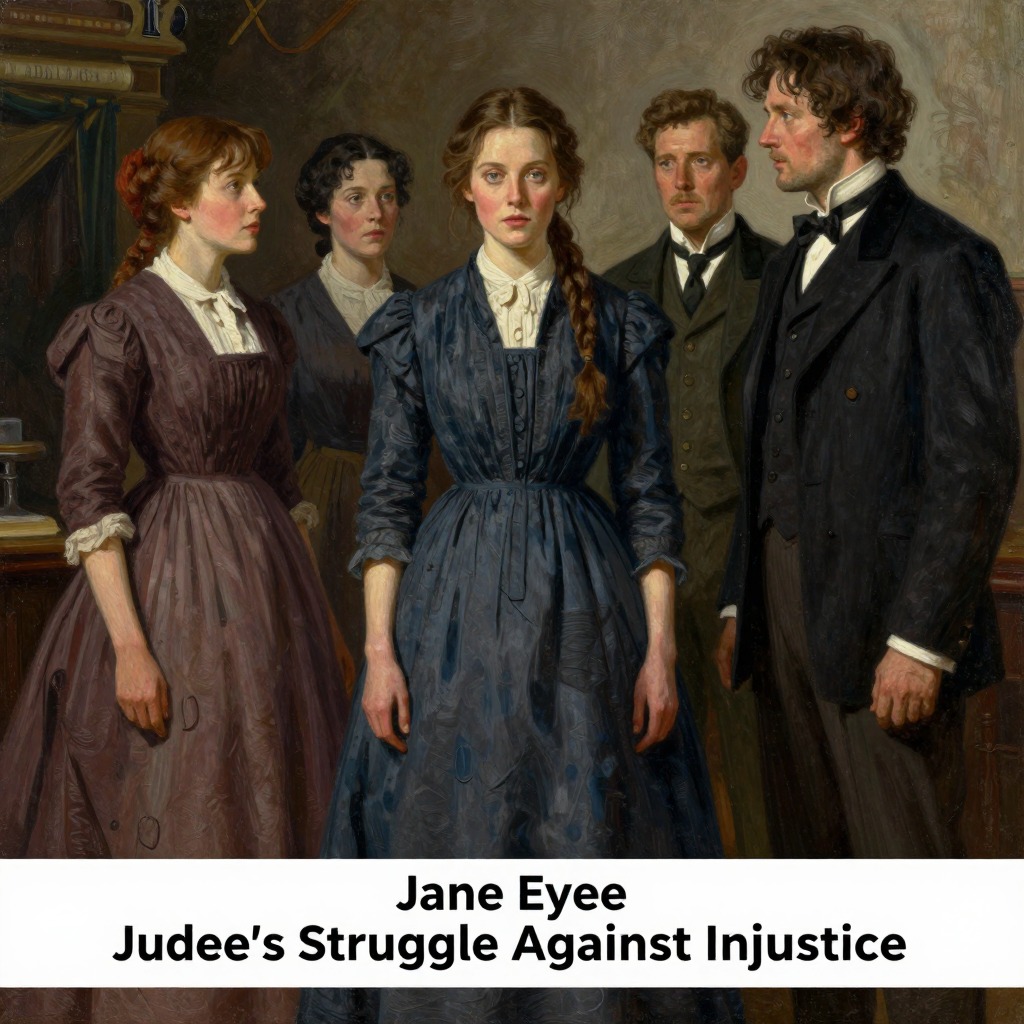
Brocklehurst's most devastating act occurs during a formal inspection of Lowood. After noticing a girl with naturally curled hair, he orders that all "top-knots" be cut off and that a barber be sent the next day. Then, singling out Jane, he forces her to stand on a high stool before the entire school. He announces that she is a "little castaway," an "interloper and an alien," and—most damningly—a liar. He instructs the teachers to watch her, weigh her words, scrutinise her actions, and punish her body to save her soul. The speech is delivered with theatrical pathos while his own family dabs their eyes with handkerchiefs. The humiliation is so complete that Jane later recalls it as a moment when she felt "exposed to general view on a pedestal of infamy."
Consequences and Decline
The typhus epidemic that devastates Lowood, killing forty-five of the eighty girls, exposes the true cost of Brocklehurst's regime. Public inquiry reveals the "unhealthy nature of the site; the quantity and quality of the children's food; the brackish, fetid water used in its preparation; the pupils' wretched clothing and accommodations." The scandal forces reforms: a new building in a better situation, improved diet and clothing, and the appointment of a committee to manage funds. Brocklehurst retains his post as treasurer due to his wealth and family connections, but his authority is diluted by "gentlemen of rather more enlarged and sympathising minds." His power, once absolute, is permanently checked.
Narrative Role and Thematic Significance
Brocklehurst functions as the embodiment of institutional religion divorced from compassion—a figure who uses the language of Christian humility to enforce class hierarchy and economic deprivation. His hypocrisy is not subtle but theatrical, making him a flat character in Forster's sense: built around a single idea of sanctimonious cruelty. Yet his impact on Jane is profound: his public accusation drives her to despair, but it also precipitates her vindication by Miss Temple and the forging of her first deep friendship with Helen Burns. He represents the social and religious forces that Jane must learn to resist, and his eventual diminishment signals the novel's faith that truth and justice can prevail over institutional abuse.