Mr. Wood
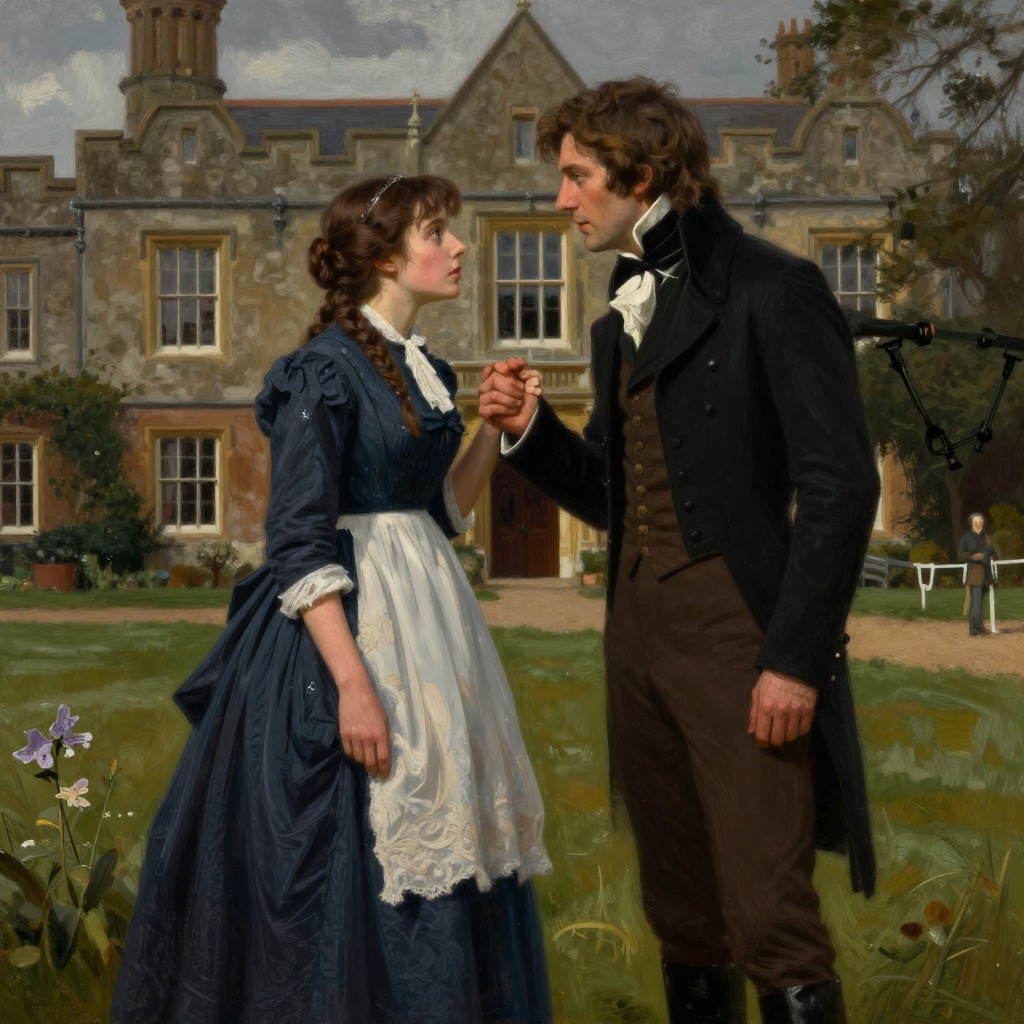
Jane EyreMr. Wood is the clergyman of the parish church near Thornfield Hall, a quiet and humble temple where Jane Eyre and Edward Rochester attempt to marry. He appears only in the wedding scene and its immediate aftermath, yet his presence is essential: it is before him that the marriage is halted, and it is to him that Rochester makes his defiant confession. Mr. Wood is a figure of the established church, caught between the formalities of his office and the extraordinary revelations that shatter the ceremony.
Role in the Interrupted Wedding
On the morning of the wedding, Mr. Rochester sends a footman to the church to see if Mr. Wood and the clerk are there. The footman returns to report that Mr. Wood is in the vestry putting on his surplice. When Jane and Rochester enter the church, Mr. Wood waits in his white surplice at the lowly altar, the clerk beside him. Two strangers—Richard Mason and the solicitor Mr. Briggs—stand in a remote corner by the vault of the Rochesters. The service begins: Mr. Wood goes through the explanation of the intent of matrimony, then steps forward and recites the charge requiring any who know an impediment to confess it. He pauses, as the custom is, and is about to proceed when a distinct voice declares, "The marriage cannot go on: I declare the existence of an impediment." Mr. Wood looks up at the speaker and stands mute. When Rochester commands him to proceed, Mr. Wood replies, "I cannot proceed without some investigation into what has been asserted, and evidence of its truth or falsehood." He asks the nature of the impediment, suggesting it might be got over or explained away. After Mason reveals that Rochester has a wife now living, Mr. Wood is visibly shaken: he exclaims, "At Thornfield Hall! Impossible! I am an old resident in this neighbourhood, sir, and I never heard of a Mrs. Rochester at Thornfield Hall." Rochester then orders him to close his book and take off his surplice, and the wedding is abandoned.
Witness to the Revelation
After the ceremony is broken off, Rochester invites Mr. Wood, along with Briggs and Mason, to come up to the house and see his wife. They ascend to the third storey, where Rochester unlocks the door to the tapestried room and then a second door, revealing Bertha Mason in a windowless cell. Rochester presents her to the clergyman, saying, "Wood and Briggs, look at the difference! Compare these clear eyes with the red balls yonder—this face with that mask—this form with that bulk; then judge me, priest of the gospel and man of the law, and remember with what judgment ye judge ye shall be judged!" Mr. Wood stays behind after the others leave to exchange a few sentences of admonition or reproof with his haughty parishioner, then departs. His role is that of the institutional church confronting a scandal it cannot contain: he is the official who must acknowledge the legal existence of Rochester's first marriage, yet he has no power to alter the consequences.
Narrative Significance
Mr. Wood is a flat character in E. M. Forster's sense—built around a single function as the officiating clergyman—but his presence is structurally crucial. He embodies the public, legal, and religious order that Jane and Rochester's private passion must reckon with. His inability to proceed without investigation, his shock at the revelation, and his final words of reproof all underscore the moral gravity of the moment. He is the representative of a community that has been kept ignorant of Rochester's secret, and his bewilderment mirrors the reader's own dawning comprehension. After the wedding is broken off, Mr. Wood disappears from the narrative, his function complete: he has presided over the exposure of a concealed marriage and has witnessed the truth that will drive Jane from Thornfield.