Red-Room Incident
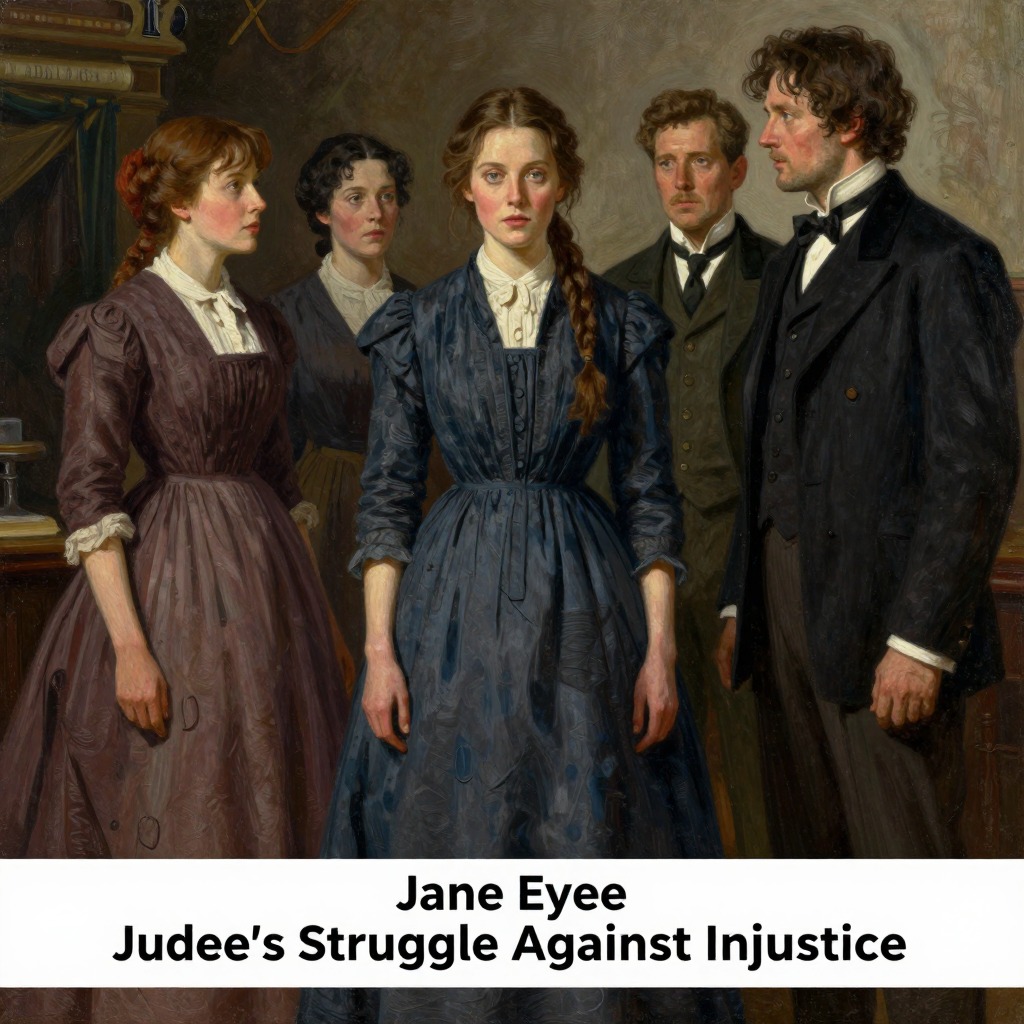
Jane EyreThe Red-Room Incident is the primal scene of Jane Eyre's childhood—a punishment that crystallizes her status as an outcast at Gateshead Hall and leaves a psychic scar she carries into adulthood. After John Reed strikes her and she fights back, Mrs. Reed orders Jane locked in the red-room, the chamber where Mr. Reed died nine years earlier. The room's funereal grandeur—its deep red damask curtains, mahogany bed like a tabernacle, and white easy-chair resembling a pale throne—creates an atmosphere of solemn dread. Jane's isolation there, combined with her terror of the supernatural, produces a fit of unconsciousness that the household dismisses as a tantrum but that Jane herself recognizes as a species of mental breakdown. The incident becomes the template for every subsequent crisis in which Jane must choose between submission and self-respect.
Causes and Background
The red-room is not merely a spare chamber but a mausoleum of family memory. Mr. Reed died there, lay in state, and was carried out for burial; since that day, a "sense of dreary consecration" has guarded it from frequent intrusion. Mrs. Reed visits it only at far intervals to review a secret drawer containing parchments, her jewel-casket, and a miniature of her deceased husband. For Jane, the room is doubly charged: it holds the ghost of the uncle who took her in as a parentless infant and who, on his deathbed, extracted a promise from Mrs. Reed to rear her as one of her own children. The punishment is thus not arbitrary but symbolically precise—Mrs. Reed locks Jane into the very space that testifies to the broken pledge.
The immediate trigger is Jane's violent resistance to John Reed. After he throws a book at her, cutting her head, she calls him "a murderer" and "a slave-driver," and when he attacks her again she fights back with a desperation that shocks the household. Bessie and Miss Abbot drag her upstairs, calling her "a mad cat" and insisting she is "less than a servant." Mrs. Reed, arriving on the scene, orders without hesitation: "Take her away to the red-room, and lock her in there."
What Happens
Thrust onto a low ottoman near the marble chimney-piece, Jane sits riveted by fear and fury. The room's oppressive details—the high dark wardrobe with its broken reflections, the muffled windows, the great looking-glass between them—press on her senses. When she crosses before the mirror, her own pale face and glittering eyes strike her as a real spirit, like the tiny phantoms of Bessie's evening stories. Her mind floods with retrospective bitterness: John Reed's tyrannies, his sisters' proud indifference, Mrs. Reed's aversion, the servants' partiality. She asks herself why she is always suffering, always browbeaten, and her reason, forced into precocious power, pronounces the word "Unjust!—unjust!" Resolve instigates strange expedients—running away, or, if that cannot be effected, starving herself to death.
As daylight fades, Jane's courage sinks. She recalls that Mr. Reed was her mother's brother, that he took her in, and that in his last moments he required Mrs. Reed's promise. A singular notion dawns: if Mr. Reed were alive, he would treat her kindly; perhaps his spirit, harassed by the wrongs of his sister's child, might quit its grave to punish the perjured and avenge the oppressed. She wipes her tears and hushes her sobs, fearful of wakening a preternatural voice. When a gleam of light—actually a lantern carried across the lawn—glides up the ceiling, she takes it for a herald of some coming vision. Her heart beats thick, her head grows hot, and she rushes to the door, shaking the lock in desperate effort. Bessie and Abbot enter; Mrs. Reed arrives and, instead of relenting, thrusts Jane back and locks her in again. Jane then has a species of fit: unconsciousness closes the scene.
Consequences and Aftermath
The physical aftermath is brief—no severe or prolonged bodily illness follows—but the psychological reverberation lasts a lifetime. Jane herself says, "It only gave my nerves a shock of which I feel the reverberation to this day." She explicitly addresses Mrs. Reed: "Yes, Mrs. Reed, to you I owe some fearful pangs of mental suffering, but I ought to forgive you, for you knew not what you did: while rending my heart-strings, you thought you were only uprooting my bad propensities." The incident directly precipitates Mr. Lloyd's visit, his recommendation that Jane be sent to school, and thus her departure from Gateshead for Lowood. It also becomes the template for later crises: when Jane is publicly humiliated by Mr. Brocklehurst at Lowood, she recalls the red-room; when she dreams on the eve of her interrupted wedding, the red-room reappears as a scene of childhood terror; and when she must choose between staying with Rochester as his mistress or leaving Thornfield, the same desperate resolve that first stirred in the red-room—"I care for myself"—reasserts itself. The red-room is thus not a single event but a recurring psychic landmark, the place where Jane first learned that injustice must be named and that survival requires an inner law stronger than any external authority.