A Vindication of the Rights of Women
Just DesertsA Vindication of the Rights of Women is not merely a book mentioned in Fitzwilliam Darcy’s history; it is the decisive instrument through which his mother interrupts a received belief about female inferiority. Given to him when he was a boy after he repeated that women were not rational enough to receive an education comparable to a man’s, the book becomes the foundation of his later reconsideration of women’s minds, education, and marital partnership.
The Book as a Corrective Education
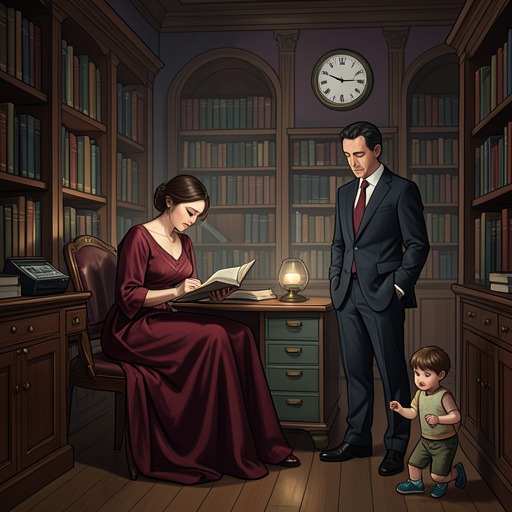
Fitzwilliam Darcy first encountered A Vindication of the Rights of Women after repeating a comment he had heard, perhaps while mocking his cousin Anne de Bourgh. His mother did not turn the incident into a public dispute. Instead, she handed him Mrs. Wollstonecraft’s work and required him to read it. The method matters: the book answers prejudice not by humiliation but by demanding sustained attention, placing an argument before the boy and requiring him to confront its implications himself.
Darcy’s reading occurs against the expectations of his social world. His two older cousins were already at Eton, and he expected to enter the same masculine educational path at thirteen. The book therefore reaches him at the point when education is being divided by gender and privilege. It makes the assumption that men are naturally suited to intellectual formation appear not as a neutral truth but as an inherited social judgment.
Re-reading and Intellectual Responsibility
As an adult, Darcy tells Elizabeth Bennet that he has not reread the entire work since the first occasion, but that he has returned to particular chapters many times. This repeated, selective reading gives the book an active afterlife in his thought. It is not a lesson completed and discarded in childhood; it remains a text to which he returns when considering what he believes and how those beliefs should govern his conduct.
His treatment of the book also reveals a guarded form of responsibility toward Georgiana Darcy. Darcy intends to read the entire work again before allowing his sister to read it, so that he will be prepared to answer her questions. The gesture combines protectiveness with intellectual accountability: he does not want merely to place a powerful book in her hands, but to be capable of discussing it with her. His relationship to education thus shifts from receiving correction to helping another woman pursue understanding.
The Book and Darcy’s Idea of Marriage
A Vindication of the Rights of Women becomes part of Darcy’s private deliberation about marriage. After reaching his majority and becoming Master of Pemberley, he spends considerable time considering what sort of woman he would want as a wife. The earlier book supplies an important standard for that reflection, because it has already taught him to question the belief that a woman’s sex limits her rational capacity.
The significance of the book is clearest in contrast with Darcy’s first conduct toward Elizabeth. At the Meryton Assembly he dismisses her as not sufficiently attractive to tempt him, and later his assumptions about her judgment contribute to a confrontation in which she condemns his arrogance and his failure to protect local women from George Wickham. The text does not present Darcy’s reading as proof that he has instantly overcome his class pride or moral evasions. Instead, it gives his later self-examination a history: the possibility of change has been planted in him long before Elizabeth forces him to recognize how incompletely he has lived by it.
Feminist and Narrative Significance
Within the story, the book gives intellectual authority to a woman’s argument while exposing the fragility of male certainty. Darcy’s mother uses it to challenge a boy’s casual repetition of misogyny; Darcy later carries its questions into his understanding of his sister and his choice of a wife. Its influence therefore crosses generations, moving from a mother’s intervention to a son’s conduct and potentially to a sister’s education.
The book also counters the social logic that repeatedly treats women as dependants, reputations, marriage prospects, or victims requiring male protection. Radha Bhimani’s account of kidnapping and attempted enslavement, Elizabeth Bennet’s anger at the failures surrounding Wickham’s abuse of women, and the danger faced by women whose voices are discounted all give Darcy’s intellectual lesson a larger moral field. A Vindication of the Rights of Women cannot by itself repair those structures, but its presence helps explain why the novel makes education, judgment, and the capacity to choose a partner central to the meaning of equality.
Its narrative function is consequently both retrospective and prospective. Retrospectively, it explains an early challenge to Darcy’s inherited assumptions. Prospectively, it prepares the reader for his later claim that he has thought seriously about the qualities he seeks in a wife. The book is the quiet hinge between those moments: a material object that carries an argument from one generation into another and turns an apparently minor childhood remark into a lifelong standard for self-correction.