Darcy and Elizabeth's public theatre outing
Just DesertsDarcy and Elizabeth's public theatre outing is the moment when Fitzwilliam Darcy and Elizabeth Bennet move their developing relationship from guarded private visits into the full visibility of London society. The invitation to the Earl’s box is not merely entertainment: it gives Elizabeth a recognized place beside Darcy, exposes her to public scrutiny, and makes their association legible to the very social world that has previously kept her at its edges.
The Invitation and Its Stakes
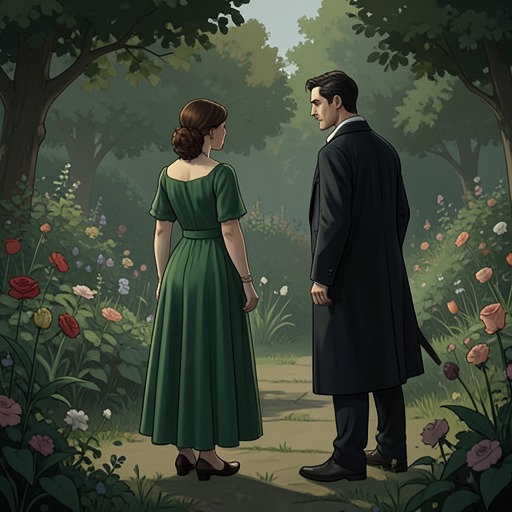
Elizabeth’s life had settled into a repeated pattern: Fitzwilliam Darcy called at Gracechurch Street on Monday and Thursday mornings, while a social outing took place in town on Friday or Saturday. During these visits, Elizabeth also ensured that the courier remained below stairs until Darcy had departed, preserving the privacy of their dealings. The theatre invitation therefore represented a deliberate change in scale and meaning. Darcy had been offered the Earl’s box for the Saturday evening and invited Elizabeth, Edward Gardiner, and Madeline Gardiner as his guests. He proposed that they dine first at Darcy House, where he would introduce Elizabeth’s party to Georgiana Darcy and Richard Fitzwilliam. The arrangement joined the Gardiners and Darcy’s family before placing the whole group in a highly visible public setting. Its purpose was social as much as personal: Elizabeth would no longer be treated as someone encountered discreetly at the margins.
Entering the Earl’s Box
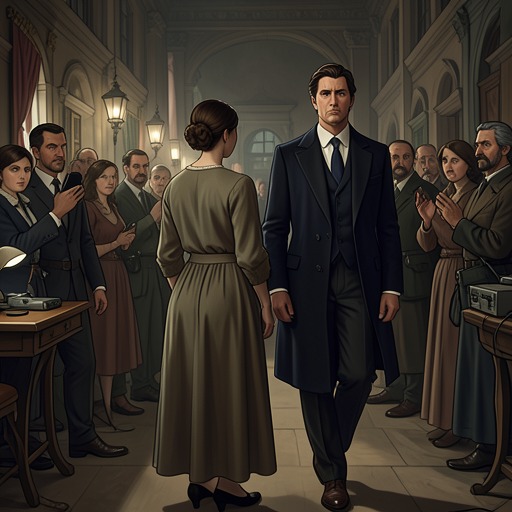
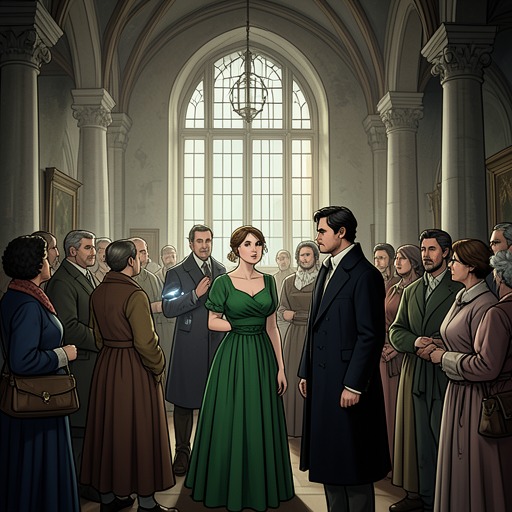
The outing made its significance explicit by taking place “Out in public,” not at the edges of society but “right in the heart of it.” Every participant understood that the gesture carried consequences. The theatre was a public stage, and the Earl’s box amplified that quality: it offered an excellent view of the performance while making its occupants conspicuous to the audience below. Elizabeth had attended plays before with the Gardiners and had occasionally watched from a box, but this was her first experience of occupying such a prominent position. Her entrance on Darcy’s arm was visible to all. She maintained an iron grip on herself, resisting the temptation to turn her head and absorb the theatre’s grandeur or the reactions of its patrons. Darcy had timed their arrival so carefully that they had no opportunity to linger in the foyer, where immediate curiosity might have surrounded them. Once inside the box, however, concealment became impossible. Elizabeth felt that half the theatre was watching her, though the actual number was smaller. The attention was nevertheless far more pointed than she was accustomed to receiving. She occupied the centre seat in the front row, with Darcy and Georgiana Darcy on either side of her, while Richard Fitzwilliam sat in the raised row behind with Edward and Madeline Gardiner. The physical arrangement itself displayed Elizabeth’s position: she was placed at the centre of Darcy’s family party rather than left among its peripheral guests.
The Performance and Elizabeth’s Self-Control
The extinguishing of the lights redirected the theatre’s attention to the stage and allowed Elizabeth to become absorbed in the performance. The play offered a temporary release from the pressure of being observed, but the first intermission interrupted that protection. Darcy asked whether she wished to step outside for refreshments or to stretch her legs. Elizabeth did not wish to leave the box, and a quick glance toward Madeline Gardiner confirmed that her aunt was content for her to remain. The exchange reveals the practical tension beneath the outing’s apparent ease. Elizabeth had been brought into public view, but she still had to manage the attention that followed. Remaining in the box meant accepting the scrutiny attached to Darcy’s invitation; leaving might have made the scrutiny more conspicuous rather than less. Her decision to stay demonstrates composure and an active willingness to inhabit the position Darcy had offered her.
Public Courtship and Social Consequence
The theatre outing transformed the meaning of Darcy’s earlier calls. Private visits could be interpreted, denied, or explained away; a formal invitation to the Earl’s box, preceded by dinner at Darcy House and accompanied by Darcy’s sister and cousin, was far harder to classify as casual acquaintance. It presented Elizabeth as Darcy’s chosen companion before an audience that could observe both their proximity and the family’s participation in the evening. For Edward and Madeline Gardiner, the outing also clarified what had previously remained uncertain. The exact nature of Elizabeth’s relationship with Darcy had already given them much to consider, and the public theatre appearance supplied a powerful answer without requiring either party to make a formal declaration. Darcy’s action functioned as a social acknowledgment: he was willing to associate Elizabeth with himself and his family where others could see. The event’s decisive value shift lies in the movement from privacy to exposure. Elizabeth begins the evening as a woman accustomed to guarded encounters and conscious of the danger of public interpretation. She ends it installed in the centre of Darcy’s family party, visibly connected to him in one of London’s most socially legible spaces. The outing does not complete their courtship, but it changes its conditions: their relationship has entered society’s field of vision, where it can be judged, discussed, and no longer easily hidden.