Elizabeth Bennet's widowhood
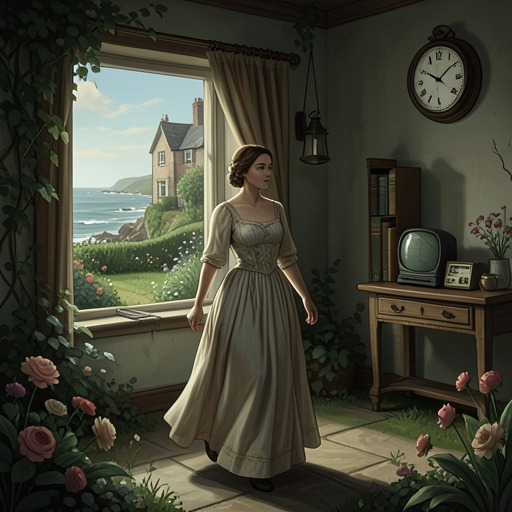
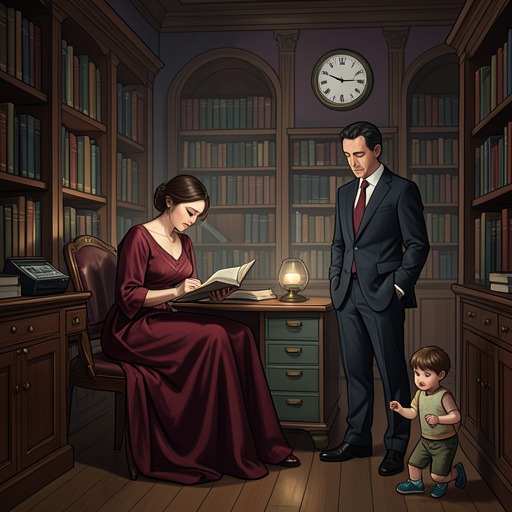
Just DesertsElizabeth Bennet's widowhood begins immediately after a marriage arranged to preserve Grenadine Reef and ends the social and legal interval before her marriage to Fitzwilliam Darcy. Though the marriage to Sir David Pentland is explicitly platonic and lasts only six days before his death, widowhood grants Elizabeth the exceptional position of a woman controlling substantial real property. It is therefore both a period of bereavement and the mechanism through which she acquires independent authority over an estate, its tenants, servants, finances, and future.
Creation of the Widowhood
Elizabeth accepts Sir David's proposal because he is dying and wants Grenadine Reef placed in the care of someone he trusts. He tells her that he loves her like the granddaughter he never had and proposes that she become his wife so that, as his widow, she will control and care for the estate after his death. He is candid that the marriage will be platonic and unconsummated, that it will delay Elizabeth's own marriage plans for a year, and that his request is partly selfish: he wants the woman who has cared for the house and understands its people to preserve it after he is gone.
The proposal is made against an unusually urgent medical reality. Sir David states that he has cancer and that the doctor doubts he will last the year; within days, his decline makes arrangements requiring prompt action matters of the utmost despatch. The will and marriage settlement are prepared together, with ordinary provisions for a widow, unmarried children, and routine settlements treated as unnecessary. Apart from specific bequests to James Pentland, his named children, his valet, and other long-serving servants, the estate is left to Elizabeth. The arrangement thus converts a personal act of affection into a carefully constructed transfer of authority.
Six days after the proposal, Elizabeth marries Sir David by common licence. He must be carried into the church in a chair because he can no longer walk, while Elizabeth is escorted down the aisle by Edward Gardiner; Lily serves as her maid of honour, Sir David's brother acts as his groomsman, and Fitzwilliam Darcy and the Gardiner family attend alongside servants and tenants. The small church is filled with people whose presence makes the ceremony a public declaration of confidence in the new mistress of Grenadine Reef rather than a conventional romantic wedding.
A Marriage Measured in Care and Loss
The wedding is performed according to the rites of the Church of England. Sir David had converted after Lady Radha Pentland's death, having sought counsel from a local vicar three years earlier so that he could worship in the local church. After the short, functional ceremony, he gently kisses Elizabeth on the forehead, and the congregation returns to Grenadine Reef for the wedding breakfast.
That celebration is more a gathering of tenants than a typical wedding breakfast, and the genuine relief on many faces reveals the practical stakes of the marriage. Sir David, however, is already in severe pain. After enduring the journey from the house, he retires to his bedroom, where a large dose of laudanum provides relief. Elizabeth escorts him there holding his hand, and he never leaves the bedroom alive again.
Elizabeth spends long stretches of Friday and Saturday beside him, reading aloud quietly. She does not know whether he remains lucid enough to recognize her presence, but her care is not conditional on receiving a response. She regards him as the kindest man she has known and continues the companionship that had defined their relationship before the marriage. She goes to bed late on Saturday night in her cottage and wakes the following morning a widow.
Sir David's death is formally confirmed by the vicar, Sir Frederick, James Pentland, Darcy, and Edward Gardiner. Elizabeth waits in the small chapel containing Lady Radha's grave, reflecting on the upheaval of her life rather than praying. Sir David is interred beside Lady Radha the next day. During the following three days, Elizabeth repeatedly returns to the chapel to give thanks for both their lives and for the fact that they entered hers. Widowhood therefore begins in a space shared by grief, gratitude, public responsibility, and a newly inherited future.
Authority over Grenadine Reef
The inheritance places Elizabeth in a position almost unavailable to women in her society. She understands that women ordinarily do not control real property: before marriage, authority rests with their fathers, and after marriage, with their husbands. Widowhood is the exception through which a woman may exercise control over property in her own right. Sir David's proposal consequently offers Elizabeth not merely protection but independence, while also burdening her with responsibility for the estate's servants, tenants, and wider community.
The financial scale of the transfer initially overwhelms her. James Pentland accepts the arrangement even though he could have refused it and inherited the estate, or challenged the settlement on the grounds of Sir David's illness. Instead, he and his family receive £75,000. When Elizabeth learns that substantial ready funds remain after this bequest, the enormity of Grenadine Reef finally reaches her and she breaks down in tears. Her reaction shows that widowhood is not presented as effortless empowerment: control brings fear, grief, and the knowledge that many lives now depend on her judgment.
Elizabeth's authority is also grounded in knowledge accumulated before she became a widow. Sir David acknowledges that Lady Radha had the better head for business and investments, and that her attention made the household prosperous. Elizabeth has learned from Lady Radha's example, from tenant visits at Grenadine Reef, and from the practical work she undertook with Jane Bennet at Longbourn. She inherits not an abstract fortune but a functioning system whose successful management depends on observation, care, and daily labor.
The contrast with Longbourn clarifies what Elizabeth's absence means. Longbourn reflects Thomas Bennet's lack of sustained attention: Jane Bennet and Mary Bennet work tirelessly, yet neither realizes how much Elizabeth had previously accomplished behind the scenes. Once she leaves, the household still has enough food, but everyone can feel that the estate produces less than it should. Grenadine Reef, by contrast, runs smoothly because Elizabeth understands its concealed work and because Sir David had already recognized women's practical competence.
Widowhood and Darcy's Courtship
Elizabeth's widowhood is deliberately temporary. Sir David's proposal interrupts her expectation that she will soon marry Darcy, but Darcy has proposed to her on the same day as Sir David, and she has accepted. She announces that they will marry after six months of mourning, in January of the following year, as soon after Twelfth Night as possible. The interval is therefore not a retreat from love but a legally and emotionally necessary period in which Elizabeth honors Sir David while assuming the identity and duties created by his death.
Darcy does not treat her new estate as property to be absorbed without qualification. Their marriage settlement is to state that anything pertaining to Grenadine Reef and the smaller estates can be transferred or otherwise dealt with only with Elizabeth's explicit written permission. Darcy explains that, regardless of the formal legal position, Elizabeth will remain the real mistress of the estate during their lifetimes. The provision directly addresses the danger that marriage could erase the independence widowhood has given her.
The same principle governs Darcy's acquisition of the remaining lease on Netherfield Park. He purchases it from Charles Bingley through solicitors while keeping his name out of the transaction, obtaining a hard bargain because the lease is already two-thirds complete. His motives are personal and administrative at once: he wants to remain within five miles of Elizabeth so their courtship will not be interrupted, to make her happy, to ease his guilty conscience, and to demonstrate a different character to the neighbors. He plans to spend at least half of each day managing Netherfield and to improve its planting and harvest rather than treating the property as a mere social convenience.
Thus widowhood changes the terms of Elizabeth's relationship with Darcy. She is not a dependent young woman waiting for a husband to provide a home. She is a widowed landholder whose consent, experience, and estate must be recognized within the marriage itself. Darcy's courtship survives because it accommodates that authority instead of demanding its surrender.
Narrative and Thematic Significance
Elizabeth's widowhood condenses several of the book's central arguments about gender, property, and care. The marriage to Sir David is a marriage of convenience in name and structure, yet it is founded on profound affection, trust, and reciprocal service. Sir David's willingness to admit that Lady Radha was better at business challenges the assumption that men, particularly military men, must be superior in financial judgment. Elizabeth's inheritance continues that challenge by making a young woman the operative authority over a large estate.
The state also links private grief to public administration. Elizabeth's mourning is not separate from her new responsibilities: she must grieve in the chapel, oversee the consequences of the will, understand the estate's finances, and prepare for the people who rely on Grenadine Reef. Her widowhood is a form of active mourning, in which remembrance becomes stewardship rather than withdrawal.
Finally, the brief duration of the marriage does not make it narratively insignificant. Sir David's illness, his proposal, the six-day marriage, his death, and the settlement of the estate create the legal and moral conditions for Elizabeth's later marriage to Darcy. The widowhood period proves that Elizabeth can possess authority before entering a marriage based on deepest love, while the carefully drafted settlement ensures that such love will operate as partnership. What begins as an ending therefore becomes the institutional foundation for Elizabeth's independence and for the future governance of both Grenadine Reef and the Darcy estates.