Grenadine Islands
Just DesertsThe Grenadine Islands are the Caribbean location whose reef becomes the origin story of Grenadine Reef and the material foundation of the Pentland family’s wealth. Though the later estate lies more than fifty miles from the sea, the islands remain embedded in its name, finances, family memory, and succession plans: the place where a Spanish treasure galleon was wrecked becomes the source of a British estate and, generations later, the reference point for a new family lodge.
Maritime Setting and the Wreck
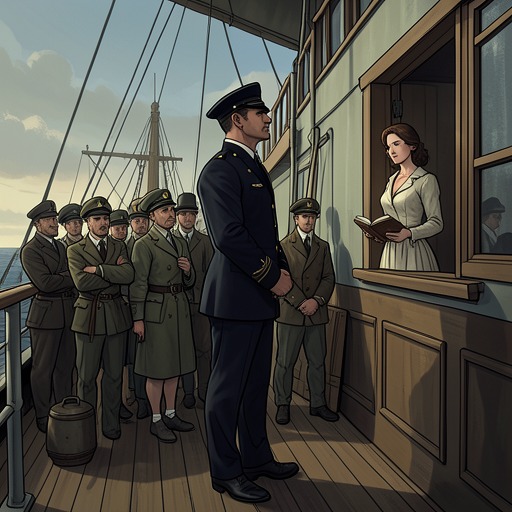
The islands enter the narrative through Sir David Pentland’s naval exploit in 1770. Newly appointed captain of HMS Glory, he was sent to the West Indies after the ship’s refit in Plymouth, despite the Admiralty’s demand that it reach its station at the beginning of hurricane season. The ship encountered the edge of the first hurricane, was battered and lost spars, but survived with only minor injuries among the crew and one broken leg.
A Spanish treasure galleon attempted to reach Havana before the storm and failed. It ran aground on a reef off one of the Grenadine Islands and broke apart, with nearly all its crew perishing in the wreck during the hurricane. HMS Glory reached the remains two days later, finding what was left of the hull wedged on the reef. Sir David and his crew recovered a substantial portion of the treasure before the wreck was finally smashed apart and sank.
Wealth and the Making of Grenadine Reef
The salvage transformed the Grenadine Islands from a remote maritime setting into the economic origin of Grenadine Reef. Sir David was knighted for the action, and his share of the recovered treasure provided the money with which he and Lady Radha Pentland purchased the estate. The estate’s name therefore preserves the exact maritime source of its fortune: Grenadine Reef is named after the reef off the Grenadine Islands where the Spanish galleon was lost.
The connection is deliberately striking because Grenadine Reef is located far inland from the sea. Elizabeth Bennet finds it amusing that an estate more than fifty miles from the coast should bear a name taken from a Caribbean reef, but the incongruity also reveals how completely the naval episode has been converted into landed identity. A dangerous imperial and commercial adventure is recast as a country estate, a title, and a stable place in British society.
Cross-Imperial Routes and Human Consequences
The islands belong to a wider route of forced and voluntary movement that shapes the Pentland history. Lady Radha Pentland, originally Radha Bhimani from Kutch in western India, was kidnapped when she was only a year older than Elizabeth Bennet and intended for sale into slavery. She was rescued off the coast of the Arabian Peninsula by a Spanish ship carrying priests, learned rudimentary Spanish during the voyage, and was then forced into a nunnery outside Cadiz.
In 1772 she was sent without meaningful consent on a mission from Cadiz to Cartagena on the Spanish Main. Pirates captured the ship during the voyage, and she endured four days of their depredations before being rescued. Severely wounded in the stomach and left behind because she was too ill to travel, she survived after Sir David took her into his house in Bridgetown on Barbados and arranged care through his housekeeper and a nurse. Her later life in Britain thus links the Grenadine Islands’ maritime world to enslavement, piracy, Spanish religious institutions, naval rescue, and colonial displacement.
Lady Radha’s history also exposes the unequal judgments attached to survival. Although she had been the victim of repeated crimes and had survived a wound that was nearly fatal, people in Barbados treated her survival as an embarrassment and made hostile comments about her. Sir David eventually resigned his naval commission, returned with her to Britain, converted her to the Church of Scotland on her own willingness, and married her near Edinburgh. Their life together, and the estate purchased with the treasure from the Grenadine wreck, turn the islands into a concealed but decisive link between violence at sea and domestic security on land.
Commerce, Estate Expansion, and Inheritance
The wealth originating at the Grenadine wreck does not remain a single windfall. Sir David’s fortune from the Spanish treasure ship was large enough to purchase a substantial estate while leaving the remainder in Consols. He and Lady Radha lived quietly and with near-frugality, spending little on fashionable entertaining, London seasons, additional horses, schooling, university expenses, Grand Tours, or daughters’ dowries. Their annual surplus was invested, and the returns enlarged the capital still further.
That accumulated wealth enabled the Pentlands to transfer money, double the size of Grenadine Reef, and purchase smaller estates. Sir David’s will left £50,000 in Consols and an additional £25,000 to his brother, while Elizabeth Bennet ultimately received assets of £400,000 producing nearly £20,000 a year after tax. The Grenadine Islands therefore signify not merely the origin of a fortune but the conversion of recovered maritime treasure into enduring investment income, landownership, and intergenerational power.
Memory, Naming, and the Future Estate
The islands remain present in the family’s later geography. After Elizabeth Bennet and Fitzwilliam Darcy have seven children in their first ten years of marriage, they divide the original Grenadine Reef estate into portions for their descendants. Their daughter Helena receives 3,000 acres; the twins David and Richard receive 2,000 acres each from different family lands, including portions connected with Grenadine Reef and the former Longbourn estate.
The final 1,000 acres of the original Grenadine Reef property surround the dower house. Elizabeth and Fitzwilliam Darcy build a lodge there and name it St. Vincent Lodge after consulting an atlas and nautical charts to identify the large island nearest the site where Sir David discovered the wrecked treasure ship. The family stays at the lodge when visiting the estate, while Edward Gardiner and Madeline Gardiner are expected to move there when Helena inherits. The later plans thus preserve the Grenadine Islands’ maritime memory through a new domestic space, ensuring that a reef, a shipwreck, and a rescue at sea continue to shape the family’s land-based future.