Primogeniture inheritance convention
Just DesertsPrimogeniture inheritance convention governs the distribution of family power by privileging the eldest male heir, making inheritance more than a private transfer of property: it determines who controls estates, who enters professions, whom daughters marry, and how families pursue status. The novel presents it as a social system reinforced by title, wealth, marriage, and law, but also as a source of vulnerability when a family has no surviving male successor.
Definition and Social Operation
Primogeniture inheritance convention appears as the ordinary architecture of Regency British class society. Elizabeth Bennet explains that families marry, have children, allow the oldest son to inherit, send other sons into professions, and marry daughters off to enlarge family connections, power, and wealth. Under this arrangement, inheritance creates a chain of unequal destinies before individual preference can intervene: one son receives the estate, younger sons must find careers, and daughters become instruments of alliance through marriage.
The convention joins property to political authority. An Earl possesses not merely land or a title but influence in the House of Lords, where legislation can affect ordinary people and commercial interests. Elizabeth describes society as fundamentally concerned with power, money, connections, and advancement, with social glamour forming the visible surface of this structure. Marriage therefore becomes a mechanism for preserving or improving a family's place within the hierarchy. A daughter of a Baron may marry a Viscount and become a Countess, while a daughter of an Earl may marry a wealthy untitled man for love only by making a significant departure from the expected upward alliance.
Younger Sons, Daughters, and Marriage Strategy
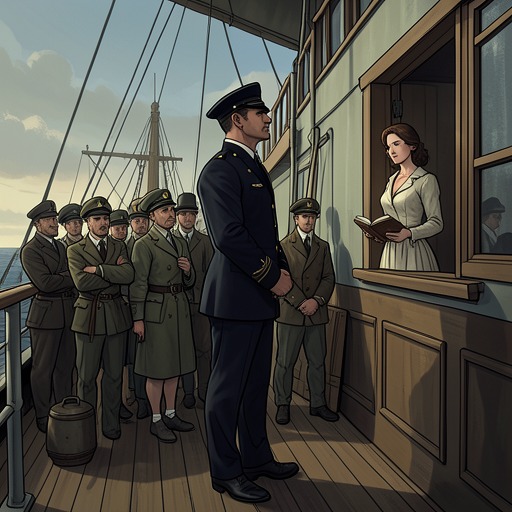
The system's effects are especially clear in the Darcy and Matlock family examples. Sir David Pentland had a twin brother who was older by ten minutes; that small difference gave the brother their father's estate and left Sir David without a future there. Recognising his exclusion while still a child, Sir David eventually left and joined the Royal Navy. His path demonstrates how primogeniture converts birth order into a professional obligation for younger sons, even when they are close in age and family position to the heir.
The same structure shapes the marriages of the Matlock family. The current Earl inherited the title from his father, while another daughter married a Viscount who would later become an Earl. An aunt married a Baronet several levels below her father and brother, but the man's substantial estate and wealth made the match materially secure. The youngest daughter of an Earl, by contrast, appears to have married an untitled but wealthy man for love, a decision that her father could have opposed until she reached twenty-one. These examples show marriage operating simultaneously as romance, property arrangement, rank management, and family strategy.
Elizabeth also applies the logic of the marriage market to the next generation. A second son of an Earl would be expected to seek a woman with a substantial dowry; a large heiress would be an ideal match because she could compensate for the younger son's lack of inherited title or estate. Elizabeth recognises that her own position as a gentle-born woman with enormous wealth would make her attractive within this system, regardless of personal compatibility. The convention thus turns women’s property into a bargaining resource while treating their marriages as routes for consolidating male family power.
Entail, Control, and Female Property
Primogeniture is closely connected with the Longbourn entail, which restricts the estate's succession through a legally established male line. Elizabeth's rejection of William Collins is presented against this background. She insists that a bride cannot be forced to marry and refuses to be treated as something to be sold merely because Longbourn's future depends on a male heir. Her anger exposes the human cost of a property system that places the estate's continuity above a daughter's consent and emotional welfare.
The novel contrasts Longbourn's formal male-oriented inheritance structure with the practical management of Grenadine Reef. Mr. Case reports that Thomas Bennet has an academic bent and regards books as his first love; he does what is necessary for the estate but no more. Longbourn consequently reflects its master's limited attention. After Elizabeth leaves, Jane Bennet and Mary Bennet work tirelessly, yet neither initially understands how much Elizabeth had previously accomplished behind the scenes. The estate has enough food for the reduced household, but everyone can see that it ought to produce more.
At Grenadine Reef, by contrast, Lady Radha Pentland exercises substantial business judgment despite the gender hierarchy that officially places men above women in commercial matters. Sir David openly acknowledges that she has a better head for business and investments and credits her attention for the couple's prosperity. Elizabeth learns from Lady Radha through ordinary conversation, gradually being trained to become the lady of an estate and to understand management, menus, investments, and the daily partnership of husband and wife. The comparison distinguishes nominal inheritance from actual competence: legal convention may privilege men, but effective stewardship depends on knowledge, attention, and judgment.
That tension is carried into Elizabeth's own legal arrangements. When Sir David plans for her future, the marriage settlement is drafted so that matters concerning Grenadine Reef and the smaller estates require Elizabeth Bennet's explicit written permission. Although the legal position would normally give a husband control over a wife's assets, the settlement preserves Elizabeth's practical authority. During their lifetimes she is to be the real mistress of the estate. The arrangement does not abolish primogeniture, but it limits the power that marriage and male legal control would otherwise confer, separating inheritance from day-to-day governance and protecting a woman's property through contract.
Crisis and Institutional Limits
Primogeniture creates urgency when Sir David becomes older, frailer, and increasingly conscious that his death is approaching. Vivian Harkness asks what will happen to the estate when he dies, a question so inappropriate for a servant that he does not expect an answer. Yet her question identifies the central institutional problem: without a clear successor, an estate's servants, dependants, and charitable work are all exposed to uncertainty. Sir David realises that Elizabeth's predicament and his own may be connected and that a solution is needed soon.
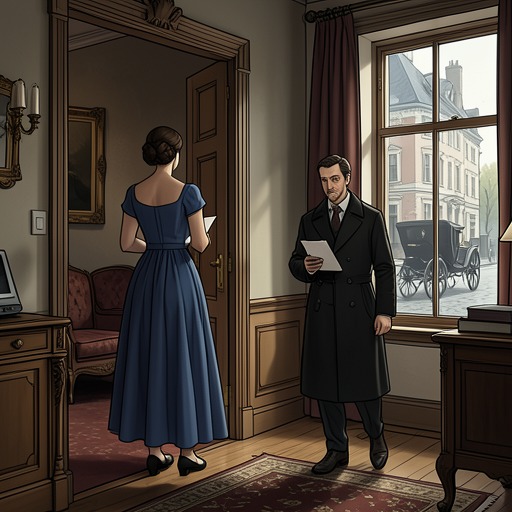
His first long-term plans are interrupted by terminal cancer. Lady Radha had apparently begun thinking about Elizabeth's future within a year of meeting her, while Sir David's own will originally left everything to his twin brother. After Lady Radha's death, his mortality becomes pressing, and Elizabeth's need to reach adulthood and escape Mrs. Bennet makes the question more immediate. Once the cancer is discovered and the expected span of time contracts from years to a summer and then to weeks, Sir David turns to a new will, a marriage settlement, and a proposed marriage arrangement involving Elizabeth Bennet and Fitzwilliam Darcy. The plan uses existing legal instruments to compensate for the absence of a natural heir, though it places an emotional demand on the young couple by asking them to suspend their personal happiness for a year.
The military consequences of the same broader social order appear in Lydia Bennet's crisis. Lieutenant Denny is offered money as an inducement to marry Lydia, but the decisive pressure is the threat of court-martial for desertion. If convicted, he could be shot; officers also describe the punishment as a warning intended to enforce discipline. Denny therefore accepts the marriage arrangement and prepares to travel through Meryton and Liverpool before embarking for Canada. Here institutional authority does not transfer an estate, but it similarly uses rank, duty, and punishment to force individual action. The story places inheritance law, marriage settlement, and military discipline within a common world of rules that convert personal choices into family or institutional necessities.
Collapse of the Bennet Succession
The convention reaches its decisive test when the Bennet male succession is traced through the family records. Thomas Bennet, Edward Gardiner, Philips, Sir William Lucas, and Clive Bredason examine the line beginning with Martin Bennet, who received the royal grant of Longbourn and its attendant lands for loyal service between 1651 and 1660. They consult legal documents preserved from the original entail, parish records, and the Bennet Family Bible, treating inheritance as a matter requiring documentary reconstruction rather than assumption.
Their conclusion is that there are no male heirs in any line descending from Martin Bennet and that the last heir died without male issue. The entail is therefore broken. This result overturns the apparent inevitability of the system: a rule designed to preserve an estate within a male line cannot continue once that line has ended. Longbourn's future becomes open to a new legal settlement, enabling proposals to acquire the estate and incorporate it into the wider Grenadine Reef holdings.
The ending does not depict primogeniture as simply defeated by individual rebellion. Its power has already shaped the characters' lives, from Sir David's departure for the Royal Navy to the marriage calculations surrounding titles and dowries, from Elizabeth's refusal of William Collins to the need for carefully drafted settlements. Yet the broken entail reveals that the convention depends on biological succession, legal continuity, and documentary proof. When those supports fail, women’s competence, contractual protection, and deliberate estate planning can redirect property without pretending that the old hierarchy never existed.