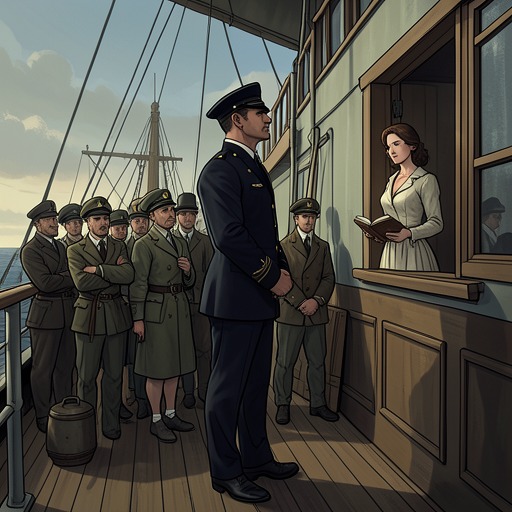
Sir David Pentland's terminal stomach cancer
Just DesertsSir David Pentland's terminal stomach cancer is both a physical decline and the central practical crisis of the final phase of his life. Diagnosed with a growing stomach tumour and given less than a year to live, Sir David confronts his approaching death with unusual bluntness. The illness reorganizes every surrounding relationship: it makes Elizabeth Bennet's attendance and care urgent, turns the future of Grenadine Reef into an immediate legal problem, and produces a marriage whose purpose is protection and continuity rather than sexual union. By compressing a plan that once belonged to the distant future into a matter of weeks, the cancer converts affection into responsibility and private grief into estate governance.
Diagnosis and Bodily Course
The illness first reaches Elizabeth through warning rather than formal announcement. Vivian Harkness tells her that she believes Sir David is dying, explaining that the servants are worried even though the household is so discreet that no gossip has escaped. The warning matters because Elizabeth has not seen Sir David for more than two months; the deterioration will therefore appear more shocking to her than to those who witness it daily. When she reaches Grenadine Reef, the advance notice does not protect her from the sight of how far he has declined. Her arrival nevertheless brightens him, showing that his illness has not erased the emotional significance of their established bond.
Sir David then states the diagnosis himself. He says that he is dying, that the doctor believes the disease is cancer, and that he is unlikely to last the year. The medical explanation is concrete rather than evasive: a lump is growing in his stomach, and the doctor has physically felt it while examining him. His symptoms consist of a general, constant ache punctuated by occasional spikes of pain. He takes a very diluted solution of laudanum before retiring to help him sleep, while no treatment is available that can reverse the disease. The scene gives the illness a specific bodily reality instead of treating death as an abstract plot device: examination, pain, sleep, medication, and the visible deterioration of the patient all shape the decisions that follow.
Illness and the Ethics of Care
Elizabeth responds to the diagnosis by asking what she can do to help, not by attempting to deny the prognosis. Sir David's answer comes within a relationship he understands as familial affection: he regards Elizabeth as the granddaughter he never had and imagines that Lady Radha Pentland would be proud of her. This language establishes care as reciprocal. Elizabeth is not merely a beneficiary waiting for an inheritance; her presence, conversation, and attention give Sir David comfort during the last part of his life, while his final arrangements are intended to secure her independence and preserve the home associated with Lady Radha.
The cancer also redistributes responsibility throughout the household. Sir David's servants observe the decline without betraying his confidence, while Vivian Harkness and Violet Harkness take on the difficult task of preparing Elizabeth for what she will see. Their warning is an act of care, but it also acknowledges the limits of what they can do: they cannot cure Sir David, and they cannot remove the grief that Elizabeth must process. Elizabeth sits quietly, initially unable to offer them comfort, then meets Sir David despite her sadness. The narrative thus presents terminal care through practical attentiveness rather than miraculous recovery or sentimental denial.
The Compressed Marriage Plan
Before the cancer was discovered, Sir David had already begun thinking about how to assist Elizabeth. Lady Radha Pentland may have contemplated such a future within a year of meeting her, and after Lady Radha's death Sir David's own mortality became more pressing. He was especially concerned with Elizabeth reaching adulthood so that she could escape Mrs. Bennet's control. Yet the diagnosis makes long-term assistance impossible. As the expected period of survival shrinks from a year to the summer and then to a matter of weeks, Sir David concludes that he has run out of alternatives.
His proposal is therefore a legal and emotional response to terminal illness. He asks Elizabeth to marry him so that, as his widow, she will control and care for Grenadine Reef. He makes the conditions explicit: the marriage will be platonic and unconsummated, and Elizabeth will have to postpone her own marriage plans for a year. The arrangement offers her what unmarried women ordinarily lack—the power to control real property—while asking her to bear the consequences of becoming a widow almost immediately. Sir David admits that the proposal is partly selfish because he wants Elizabeth to care for his home after his death, but it is also an attempt to give her independence and protect the people connected with the estate.
The proposal places Darcy and Elizabeth in an impossible conflict. Elizabeth had recently imagined marrying Mr. Darcy within weeks; Sir David's request could delay that prospect for more than a year. Darcy is torn between supporting Elizabeth and resenting Sir David's interference with their happiness. Sir David recognizes the moral pressure of his request, understanding that emotional coercion can function like financial blackmail even when no money is demanded from the person being asked to sacrifice. The illness therefore exposes the unequal stakes of the decision: Sir David is securing his household's future, while Elizabeth and Darcy must suspend their personal future to make that security possible.
Legal Arrangements and Final Decline
The speed of the disease determines the speed of the paperwork. Sir David arranges for James Pentland to witness the new will, the marriage settlement, and the wedding. A letter from the doctor and the local magistrate confirms that Sir David is of sound mind, guarding the arrangement against a later challenge based on his illness. James and his descendants receive significant bequests, as do the long-term servants and Sir David's valet; apart from those specific provisions, the estate passes to Elizabeth as his widow. The ordinary provisions for a widow and unmarried children are unnecessary because the marriage is designed around this exact terminal circumstance.
The following week begins in a rush and becomes a crisis of utmost dispatch as Sir David fades. Six days after proposing, he marries Miss Elizabeth Bennet by common licence. His physical condition is unmistakable: he must be carried into the church in a chair and can no longer walk. After the short Church of England ceremony, he kisses Lady Pentland on the forehead, and the congregation returns to Grenadine Reef. The wedding breakfast becomes an affirmation by tenants and servants as much as a private family celebration, but pain soon forces the new bridegroom to retire, requiring a large dose of laudanum after the effort of leaving the house.
Sir David never leaves his bedroom alive again. Elizabeth spends long periods with him on Friday and Saturday, reading aloud quietly even though she cannot know whether he remains sufficiently lucid to recognize her presence. Her care continues without the assurance of a response; the act of reading becomes a form of witness and companionship at the edge of consciousness. She sleeps in her cottage and wakes the following morning a widow. His death completes the transformation begun by the diagnosis: within days, the disease has moved Elizabeth from prospective bride to legal holder of the estate and from protected young woman to person responsible for its people.
Consequences for Grenadine Reef and the Narrative
After Sir David's death, the vicar, the local magistrate, James Pentland, Fitzwilliam Darcy, and Edward Gardiner confirm the identity of the dead man. Elizabeth spends the interval in the small chapel containing Lady Radha's grave, reflecting on the upheaval of her life rather than praying. Sir David is buried beside Lady Radha, joining the two figures whose affection and protection have shaped Elizabeth's connection with Grenadine Reef. The reading of the will strikes her even though it is only a week old, because its legal clarity cannot lessen the human weight of what she has inherited.
The cancer thus makes succession inseparable from mourning. Elizabeth inherits not only land and authority but also servants, tenants, and the obligation to preserve a household whose future might otherwise be threatened by sale. James Pentland is kind but distant, and his agreement prevents a more contentious inheritance struggle; he could have rejected the plan or challenged it in light of Sir David's illness. Instead, the legal instruments prepared during the final weeks hold. Sir David's terminal stomach cancer is consequently the immediate cause of the estate's transfer, the marriage's unusual form, and Elizabeth's new independence, while also making that independence inseparable from bereavement and care.