Sir David Pentland’s salvage of the Spanish treasure galleon
Just DesertsSir David Pentland’s salvage of the Spanish treasure galleon is the founding event of the Pentland fortune and the material origin of Grenadine Reef. The episode turns a dangerous naval assignment into a prize whose consequences reach far beyond the wreck itself: it establishes Sir David’s public reputation, finances the purchase of the estate, and later supports a disciplined investment network and an enduring family legacy.
The Hurricane and the Wreck
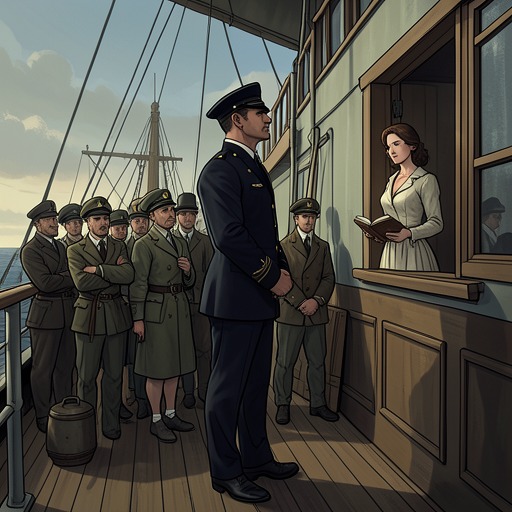
In 1770, Sir David was the newly appointed captain of HMS Glory, sent to the West Indies after the ship’s refit in Plymouth. The Admiralty ordered the vessel onto station immediately, even though the hurricane season had begun. HMS Glory encountered the edge of the first hurricane of the season. The ship was battered and lost some spars, but survived with relatively limited injuries: the crew suffered bumps and bruises, and only one man sustained a broken leg.
The storm proved fatal to a Spanish treasure galleon attempting to reach Havana before the weather worsened. The galleon ran aground on a reef off one of the Grenadine Islands and broke apart. Nearly all of its crew died in the wrecking conditions created by the hurricane. Two days later, HMS Glory reached the site and found what remained of the hull wedged on the reef, already close to complete destruction.
Salvage and Knighthood
Sir David and his crew recovered a significant portion of the treasure before the wreck’s remaining structure was smashed apart and sank. The action is presented as a salvage operation performed under extreme natural and maritime pressure rather than as the culmination of a long series of celebrated campaigns. Sir David later describes his reputation as resting chiefly on this single exploit, which gives the event an unusual double character: it is both a practical rescue of valuable cargo and the condensed origin of his public identity as a naval hero.
The salvage earned Sir David a knighthood. His share of the captured treasure supplied the funds with which he and Lady Radha Pentland purchased their estate. The wealth therefore moved directly from a wreck in the Caribbean into British landed society, transforming maritime danger and imperial commerce into property, title, and security. The estate’s name, Grenadine Reef, preserves the geographical memory of the reef where the galleon was lost and the treasure was recovered.
Wealth, Property, and Investment
The salvage remained economically important long after the original purchase. Sir David’s fortune was described as coming from one of the richest prizes ever taken by the Royal Navy. He used the proceeds to acquire a substantial estate and placed the remainder in Consols. Sir David and Lady Radha then lived quietly and with near-frugality: they did not entertain extensively, spend London seasons, or maintain the costly household and social display expected of wealthy families, and they had no children whose education, travel, horses, or dowries would consume the surplus.
Their excess annual income was invested rather than spent. The returns increased the surplus, which in turn enlarged the investment base. Over time, the Pentlands transferred funds and cashed out investments to double the size of Grenadine Reef and acquire smaller estates. The original salvage thus became more than a windfall. Through restrained expenditure and repeated reinvestment, it developed into a self-expanding financial structure that later helped support Elizabeth Bennet and many of her projects.
Connections to the Wider Story
The treasure’s consequences are inseparable from the Pentlands’ global history. Grenadine Reef’s wealth is connected to a Spanish vessel, a British naval expedition, the Caribbean, and the imperial maritime routes that also shaped Lady Radha’s life. Lady Radha was born Radha Bhimani in Kutch, was displaced by conflicts involving the Mughals, the Marathas, and the British, and was kidnapped for sale into slavery when she was about a year older than Elizabeth Bennet. After being rescued off the coast of the Arabian Peninsula by a Spanish ship carrying priests, she was taken to Spain, forced into a nunnery outside Cadiz, and later sent toward Cartagena. Her eventual survival and life with Sir David therefore bring together the same transcontinental systems of war, shipping, religion, coercion, and rescue that surround the galleon’s story.
Sir David’s wealth also made possible the care that saved Lady Radha after pirates attacked the ship carrying her religious order. When she was taken to Barbados, gravely wounded and left behind because she was too sick to be moved, Sir David brought her into his house in Bridgetown and paid for her care with the assistance of his housekeeper and a nurse. The salvage did not merely establish his estate; indirectly, it helped create the material conditions for the relationship and household that became the Pentland legacy.
Long-Term Legacy
The fortune continued to shape the family after Sir David’s death. His will left £50,000 in Consols to his brother, together with an additional £25,000, while Elizabeth Bennet inherited £400,000 in assets producing nearly £20,000 a year after tax. The scale of those resources is traced back to the Spanish treasure and to the quiet investment policy begun with the salvage proceeds.
The estate’s later division preserves the event’s influence across generations. Elizabeth Bennet and Fitzwilliam Darcy divided the original Grenadine Reef lands among their children, retaining 1,000 acres around the dower house. They built St. Vincent Lodge there after consulting an atlas and nautical charts, naming it for the nearest large island to the place where Sir David discovered the wrecked treasure ship. In this way, the salvage survives not only in the estate’s name and wealth but also in the map-like arrangement of the family’s memory: a Caribbean wreck becomes a British estate, then a network of inheritances, investments, and homes whose geography continues to point back toward the sea.