
Proximity as a Way of Knowing
Just MercyThis thread traces the book’s argument that approaching people directly reveals realities that distance, labels, and legal abstractions conceal.
increasing Bearing strength in each event
 decreasing
Bearing strength in each eventdecreasingThe Lesson of the Hug

Learning to Get Close
A grandmother’s instruction
Bryan’s grandmother hugs him tightly and asks whether he can still feel her embrace.
A principle takes shape
She tells him that important things cannot be understood from a distance. The lesson later informs his practice as a lawyer.
Henry’s Gift

Humanity on Death Row
An unexpected encounter
Henry welcomes Bryan, a nervous law student, and offers him patience and generosity.
The meaning of proximity
A conversation in a prison changes Bryan’s understanding of the people condemned there. The condemned man is not reducible to his legal status.
Sitting Beside Charlie

Listening Before Investigating
A silent child
Charlie does not answer questions about his case and remains withdrawn.
The truth emerges
Bryan moves beside him, shares ordinary thoughts, and waits. Charlie eventually discloses the sexual abuse he suffered in jail.
Listening to Prisoners’ Families

Beyond the Trial Transcript
A community speaks
Walter’s relatives describe the alibi, their fear, and the pain of being disbelieved.
Knowledge gained
Bryan’s visits reveal how a conviction spreads harm beyond the accused. Listening becomes both a source of facts and a form of respect.
A Broader Measure of Justice
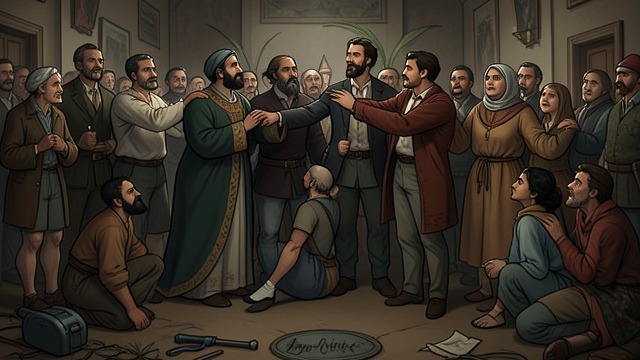
Closeness Changes Judgment
Seeing whole lives
Bryan argues that contact with the poor, accused, imprisoned, and condemned makes their humanity harder to ignore.
A social obligation
Proximity challenges communities to assess justice by their treatment of the most vulnerable, not by how they treat the powerful.
During Bryan’s childhood
December 1983
During Bryan’s first jail visit
During Bryan’s early representation of Walter
In the introduction and closing reflections
