60 Minutes
Just Mercy60 Minutes is a CBS investigative program whose reporting on Walter McMillian’s case carried evidence of his wrongful conviction beyond the Alabama courts and into the public sphere. The program’s intervention was significant not simply because it challenged the prosecution’s account, but because it confronted a local media narrative that had repeatedly portrayed McMillian as a dangerous criminal. Its broadcast created questions about the conviction, reached a community hungry for a fuller account, and helped intensify scrutiny of the investigators and prosecutors defending it.
From reluctance to reporting
The decision to cooperate with 60 Minutes came after years of caution about publicity. The narrator had received calls from news-magazine programs interested in the legal work, but regarded press attention as a potential danger to clients. In a region where national media were often resented and the death penalty was politically charged, even sympathetic coverage could provoke local backlash. Publicity had, in other cases, contributed to expedited execution dates or retaliatory mistreatment in prison. The clients themselves sometimes wanted attention, but the risks of discussing pending cases made the narrator resistant to interviews.
A producer from 60 Minutes contacted the narrator after attending a speech at Yale Law School. By then, the case had also reached journalist Pete Earley through Washington Post journalist Walt Harrington, who had previously heard the narrator describe it. Earley reviewed transcripts and files, spoke with people involved, and came to share the team’s astonishment that McMillian had been convicted on such unreliable evidence. The narrator nevertheless worried that national coverage might complicate the pending appeal and make a fair trial harder if the conviction were overturned. At the same time, local coverage had demonized McMillian and defended both the reliability of the conviction and the necessity of execution. The team hoped a more informed account could improve public understanding and make his life after release less dangerous.
The reporting and the local counterattack
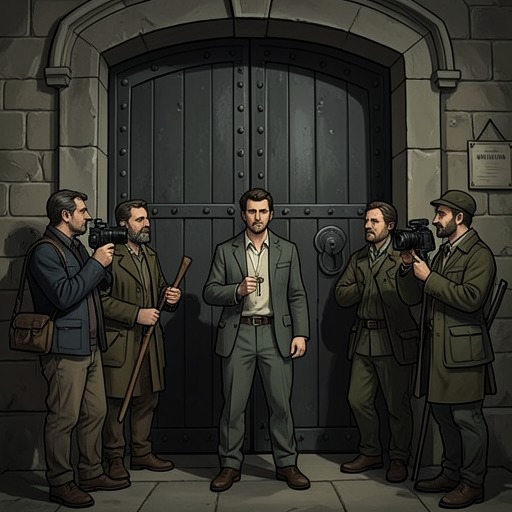
The appeal was filed that summer in the Alabama Court of Criminal Appeals. With lingering uncertainty, the narrator agreed to proceed with the program. In July, on a day when the temperature in Monroeville reached 100 degrees, veteran reporter Ed Bradley and producer David Gelber traveled from New York City to interview people whose testimony had been presented at the hearing. They spoke with McMillian, Ralph Myers, Karen Kelly, Darnell Houston, Woodrow Ikner, and members of McMillian’s family. They confronted Bill Hooks at his job and interviewed Tommy Chapman at length. The reporting also included other hearing witnesses. Word of Bradley’s presence spread quickly and upset local officials.
The Monroe Journal answered before the broadcast, criticizing visiting reporters as outsiders who displayed scorn for local institutions, gathered facts superficially, and sometimes reported inaccurately. Its complaint about the “big-time reporter comes to hick town” genre framed the controversy as a clash between national media and a locally misunderstood community. A separate Journal story, “CBS Examines Murder Case,” reported Chapman’s claim that the CBS researchers had already made up their minds before arriving.
Chapman also challenged the program’s depiction of McMillian by pointing to a photograph taken at arrest, when McMillian had long, bushy hair and a beard. He argued that the clean-shaven man interviewed at Holman Prison was not the same person arrested by Sheriff Tate. The contrast depended on a transformation produced by prison rules: Alabama prisoners were required to remain clean-shaven. The Journal reported Chapman’s complaint that CBS was not interested in the arrest photograph. Before viewers had seen the report, local coverage was already encouraging them to distrust it.
The broadcast and its divided reception
Months later, when the 60 Minutes piece aired, local officials moved quickly to discredit it. The Mobile Press Register headlined its response “DA: TV Account of McMillian’s Conviction a ‘Disgrace’ ” and quoted Chapman calling the program irresponsible. Local writers also presented the renewed attention as an injury to Ronda Morrison’s parents, warning that publicity “could lead many people to think McMillian is innocent.” That response echoed a broader local press record in which McMillian had been labelled a “drug kingpin,” a “sexual predator,” and a “gang leader.” Headlines had stressed his alleged sexual misconduct with Myers, including “McMillian Charged with Sodomy,” and invoked other crimes to sustain the impression that he was exceptionally dangerous.
The program’s account faced not only officials’ objections but the local press’s stake in the original narrative. Local papers had largely repeated the prosecution’s theory and characterization of McMillian and the crime; a national report laying out the defense evidence therefore also called their coverage into question. Yet many local people watched 60 Minutes regularly and trusted it. The program gave viewers a concise account of evidence presented in court and opened space for doubt about McMillian’s guilt. Some community leaders, concerned that the case made Monroeville appear backward or racist and could harm efforts to attract business, began asking Chapman and law enforcement difficult questions.
For Black residents, the broadcast had a different force. People in the community had whispered for years that McMillian was wrongfully convicted, followed court developments closely, and called the defense team for updates or to clarify points debated at barbershops and social gatherings. Seeing the evidence presented in court laid out on national television was, for many, therapeutic: a long-held account of injustice had become publicly visible.
From public defense to renewed scrutiny
Chapman presented a confident defense of the conviction in his 60 Minutes interview. He dismissed suggestions of racial bias, insisted that McMillian was guilty and should be executed as soon as possible, and expressed contempt for the lawyers and for “people who try to second-guess juries.” The certainty he displayed publicly contrasted with his private response to the hearing. He had begun to worry about the reliability of the evidence, including contradictions that the defense had exposed. As the public face of the conviction, he had put his own credibility behind investigators’ work, which now appeared gravely flawed.
After the hearing, Chapman called Sheriff Tate, Woodrow Ikner, and Benson together and asked them to explain the conflicting evidence. Their answers did not satisfy him. Not long afterward, he formally asked the Alabama Bureau of Investigation to conduct another investigation into the murder and confirm McMillian’s guilt. The account does not present the broadcast as a substitute for legal proceedings or as an automatic resolution of the case. Its consequence was instead to widen the audience for the evidence, unsettle the local defense of the conviction, and contribute to pressure for closer examination. In a place where public attention had long reinforced the prosecution’s story, 60 Minutes made that story harder to sustain without questions.