Alabama Bureau of Investigation reopens the Ronda Morrison murder case
Just MercyThe Alabama Bureau of Investigation’s renewed examination of the Ronda Morrison murder case turned an effort to reaffirm Walter McMillian’s conviction into an official repudiation of the case against him. Prompted by problems exposed at a post-conviction hearing, the inquiry brought investigators from outside the local circle into a case that had long resisted scrutiny; they concluded that McMillian was innocent and uncovered admissions that major prosecution witnesses had lied.
Background and pressure to reinvestigate
The original prosecution was entangled with a racial history in which intimacy between Black men and white women was treated as a threat to white supremacy. Laws against interracial relationships had helped preserve racial hierarchy, and Southern law-enforcement officials had long regarded investigating and punishing Black men involved with white women as part of their duty. McMillian’s relationship with Karen Kelly thus sat within a history that made racial suspicion consequential, not incidental.
The local institutional setting sharpened the concern. In 1987, all forty of Alabama’s elected district attorneys were white, including in a state with sixteen majority-Black counties. Monroe County was about 40 percent Black, yet defendants there could still face all-white juries. Although the Supreme Court’s 1986 decision in Batson v. Kentucky made racially discriminatory jury strikes more directly challengeable, prosecutors continued to seek ways to exclude Black jurors. These conditions framed the doubts voiced by Black residents who believed McMillian was innocent and the stakes of a prosecution resting on contested testimony.
Ralph Myers’s changing accounts supplied another warning. Investigators had first encountered him in connection with the Vickie Pittman murder. He shifted from denying direct involvement to offering elaborate accusations against others, including a claim against a sheriff that officials increasingly doubted. He then implicated McMillian in Pittman’s murder and accused him of killing Ronda Morrison as well. The second accusation attracted the attention of officials already focused on Morrison’s unsolved death, but Myers’s shifting stories made the reliability of his testimony a central issue.
From public certainty to a new inquiry
At the post-conviction hearing, the defense exposed contradictions and serious weaknesses in the evidence used to convict McMillian. In public, prosecutor Tom Chapman dismissed suggestions of racial bias, professed certainty in McMillian’s guilt, and said he should be executed as soon as possible. Privately, however, he had begun to worry about the evidence and the possibility that an appellate court would overturn the conviction. As the public defender of the verdict, he also had his own credibility at stake: the hearing had made the local investigation look deeply unreliable.
Chapman brought local investigators together and asked them to explain the contradictions. Unsatisfied with their responses, he formally asked the Alabama Bureau of Investigation in Montgomery to conduct another investigation to confirm McMillian’s guilt. The request was striking because McMillian’s attorneys had been seeking a fresh examination for more than two years, without Chapman informing them that he had initiated one.
When investigators Tom Taylor and Greg Cole contacted Bryan Stevenson, he agreed to share the defense files and information. He had reason to be cautious: if the conviction were reversed and the case retried, disclosing the defense’s material might help the prosecution prepare to attack its case. He nevertheless provided files, memoranda, and even original evidence, confident that an honest review would expose how untenable the charges were.
Independent review and witness admissions
Taylor and Cole appeared to Stevenson to be experienced investigators, unconnected to the local officials whose work was under scrutiny and intent on conducting a credible inquiry. Within weeks, they seemed doubtful that McMillian was guilty. Their assessment also challenged the prosecution’s account of McMillian as a drug kingpin: Taylor questioned why someone supposedly in that position would live as McMillian did while working fifteen hours a day cutting timber on difficult terrain. He found the local account implausible and Myers’s trial story incoherent.
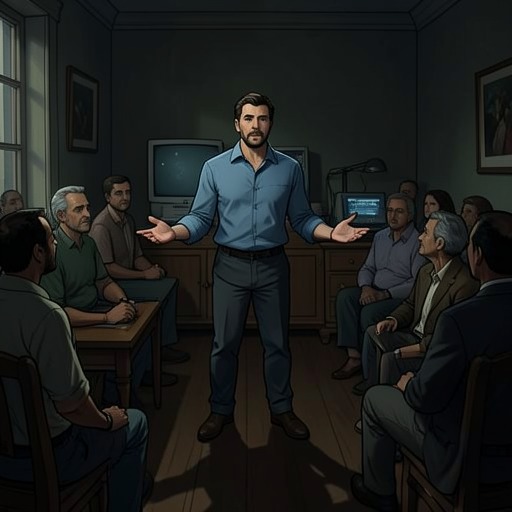
In January, six months after the defense had filed its appeal, Taylor called Stevenson and arranged a meeting to discuss the investigators’ findings. He stated their conclusion directly: “There is no way Walter McMillian killed Ronda Morrison.” Taylor said they would report to the attorney general, the district attorney, and anyone who asked that McMillian had played no part in either murder and was completely innocent. The investigators did not merely identify weaknesses for the defense to argue; they were prepared to tell state officials that the central accusation was false.
Cole added that Bill Hooks and Joe Hightower had admitted their trial testimony was false. The detail that led them to those admissions was itself unsettling: when the new investigators began their work, they had been told to investigate Stevenson because Hooks had accused him of offering money and a condominium in Mexico in exchange for changing his testimony. Taylor and Cole found that Hooks had never spoken with Stevenson, had not been bribed, and had fabricated his testimony against McMillian. The investigators also began using polygraphs, after which, Cole said, the accounts quickly began to collapse.
Consequences and significance
The investigation reversed the direction of the case. Chapman had requested a review intended to confirm guilt; instead, investigators independent of the local prosecution concluded that McMillian was innocent and identified false testimony at the heart of the conviction. The inquiry therefore challenged not only Myers’s accusation but also the credibility of Hooks, the alleged bribery story, and the local investigation on which the prosecution had relied.
Its findings carried particular weight because they came from state investigators rather than solely from McMillian’s defense team. Taylor and Cole had received the defense’s materials, tested the prosecution’s account against the evidence, and reached a conclusion they were willing to report to state officials. Their work did not establish, in the account of this inquiry, who committed Morrison’s murder. It did establish that the case against McMillian could not be sustained honestly: the man condemned for the crime had nothing to do with it. The gap between Chapman’s public confidence and the investigators’ findings made the case’s central reversal unmistakable.