Apalachee prison
Just MercyApalachee prison is the adult Florida institution to which thirteen-year-old Ian Manuel was sent after a guilty plea brought him a life-without-parole sentence instead of the fifteen years his appointed lawyer had led him to expect. The prison’s treatment of him—first as a child processed into an adult institution, then as a young prisoner held apart from others—makes it a concrete setting for the book’s account of childhood punishment and prolonged isolation.
Setting and Introduction
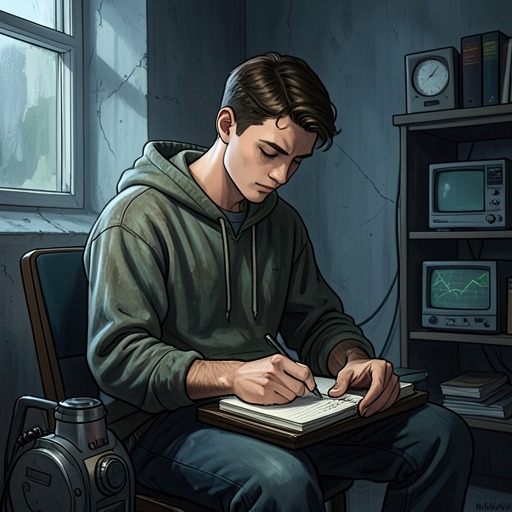
The facility, identified in the account as the Apalachee Correctional Institution, was one of Florida’s toughest prisons. When staff at its processing center could not find a uniform small enough for Ian, they cut six inches from the bottom of the smallest pair of pants. The detail marks the mismatch between the adult institution and the thirteen-year-old it was receiving: the prison could alter its clothing, but it was not built around his needs as a child. Because juveniles in adult prisons were five times more likely to be sexually assaulted, staff placed the small-for-his-age Ian in solitary confinement.
Solitary Confinement and Its Effects
At Apalachee prison, solitary meant a concrete cell no larger than a walk-in closet, with meals passed through a slot and no contact with other prisoners. The regime also punished distress by prolonging it: refusing an officer’s order, shouting, refusing food, mutilating himself, or complaining could each extend Ian’s isolation; on some occasions he was made to sleep on the bare concrete floor without a mattress. He received three showers a week and a few periods of exercise in a small caged area, but otherwise remained alone in the box week after week and month after month. Ian began cutting his wrists and arms with sharp objects from his food tray, attempted suicide several times, and saw each episode of self-harm lengthen his confinement. He spent eighteen years in uninterrupted solitary, turning a measure imposed to protect a small child in an adult prison into a prolonged system of isolation that deepened his despair.
A Lifeline Beyond the Cell
The prison’s monthly phone call became Ian’s rare means of reaching beyond solitary confinement. On Christmas Eve in 1992, soon after arriving, he called Debbie Baigre, the woman he had shot. He poured out an apology and his remorse; Baigre was stunned, but moved. She had physically recovered, was pursuing bodybuilding, and had started a women’s health magazine. Their unexpected first conversation grew into regular correspondence, and she became one of the few people encouraging Ian to hold on as despair deepened around him.
After years of communicating with Ian, Baigre wrote to the judge who had sentenced him, arguing that the punishment was too harsh and his confinement inhumane. She also tried to reach prison officials and spoke to the press. She did not minimize the recklessness and harm of Ian’s crime; she insisted that the response to a thirteen-year-old without supervision or help had become mean and irresponsible. The courts ignored her appeal for a reduced sentence. Her efforts expose the distance between the prison’s closed regime and the outside world: a victim’s sustained plea for accountability joined to compassion could make Ian’s confinement visible, but could not persuade the courts to change it.
Place in the Book’s Account of Juvenile Punishment
Apalachee prison belongs to a broader pattern in which children were sentenced under adult rules and then confined in adult institutions, even as the book emphasizes that many people convicted of violent acts in adolescence matured into adults markedly different from the children they had been. By 2010, Florida had sentenced more than a hundred children to life without parole for non-homicide offenses; the youngest condemned children, aged thirteen or fourteen, were all Black or Latino. The institution therefore stands within a system that treated childhood as no barrier to permanent punishment. The later creation of an EJI re-entry program for people imprisoned for years after being incarcerated as children marks a counterpoint to that logic: release required not only a changed sentence but practical support for rebuilding a life outside prison.