Chester, Pennsylvania
Just MercyChester, Pennsylvania, is the setting for Trina Garnett’s childhood and the fire for which she was convicted of murder at fourteen. The city’s concentrated poverty and failing public-school system form part of the context in which her story unfolds, before a tragic incident in a row house becomes a life sentence.
Setting and Social Conditions
Chester is a financially distressed municipality outside Philadelphia. The account describes a city marked by high poverty, crime, and unemployment, alongside the worst-ranked public-school system among Pennsylvania’s 501 school districts. Close to 46 percent of Chester’s children lived below the federal poverty level. These conditions frame the severe deprivation in Trina Garnett’s family life and the setting of the fire that would bring her into the adult criminal courts.
Family Life and Displacement
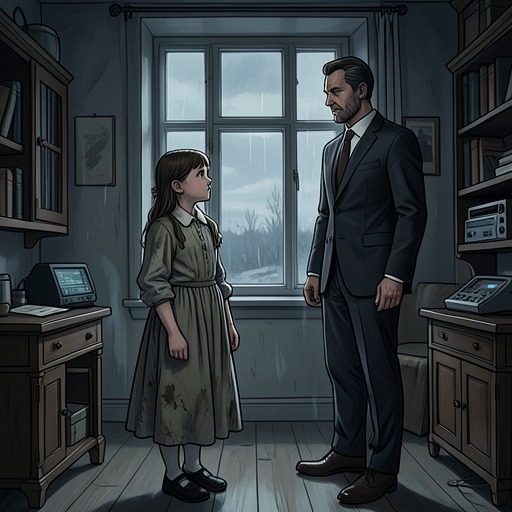
Trina was the youngest of twelve children in a household ruled by her father, Walter Garnett, a former boxer whose failed career had given way to heavy drinking and violence. He was known to local police for striking people with little provocation. Her mother, Edith, was sickly after bearing so many children, some conceived through her husband’s rapes, and Walter increasingly directed his rage at her. He punched and kicked Edith in front of the children; at times he stripped her and beat her until she lay writhing on the floor. When she lost consciousness, he used a stick to revive her so the beating could continue. The violence reached the household’s animals as well: Trina saw Walter strangle the family dog, kill it with a hammer, and throw its body out a window.
Trina’s twin sisters, Lynn and Lynda, were a year older and tried to protect her while they were young. They taught her to play invisible when their father prowled the apartment drunk, hiding under a bed or in a closet and staying quiet as he stripped and randomly beat the children. Edith died when Trina was nine. The older sisters initially tried to care for her, but when Walter began sexually abusing them, they fled; after the older siblings left, his abuse focused on Trina and the twins.
The girls ran away and wandered the streets of Chester, eating from garbage cans and sometimes going days without food. They slept in parks and public bathrooms, and temporary shelter with relatives repeatedly ended when violence or death disrupted the household. Even a stay with their older sister Edy ended after Edy’s husband began sexually abusing them. Edith’s death, the abuse, and the instability aggravated Trina’s emotional and mental-health problems. At times she became so distressed and ill that her sisters sought a relative to take her to a hospital, but poverty meant she was never allowed to remain long enough to stabilize or recover.
The Fire and Adult Prosecution
Late at night in August 1976, fourteen-year-old Trina and her sixteen-year-old friend, Francis Newsome, climbed through a window into a row house in Chester. They wanted to talk with the boys who lived there, although their mother had forbidden her children to play with Trina. Trina lit matches to find her way to the boys’ room; the house caught fire, and two boys, asleep inside, died of smoke asphyxiation. Their mother accused Trina of setting the fire deliberately, while Trina and Francis maintained that it was an accident.
The deaths left Trina traumatized and barely able to speak when police arrested her. Her appointed lawyer thought she was incompetent to stand trial, a determination that would have prevented prosecution unless she became well enough to defend herself. Yet the lawyer did not file the necessary motions or present evidence to support an incompetency finding, and also failed to challenge the decision to try her as an adult. Trina was brought before an adult court on a second-degree murder charge. Francis testified against her in exchange for the State dropping the charges against Francis, and Trina was convicted.
At sentencing, Judge Howard Reed found that Trina had not intended to kill. Pennsylvania law nevertheless required life imprisonment without parole for second-degree murder, leaving the judge unable to account for her age, mental illness, poverty, abuse, or the circumstances of the fire. He imposed the mandatory sentence despite his misgivings, calling it the saddest case he had ever seen. A fire that began when a child struck matches to find her way through a house ended with Trina condemned to spend her life in prison.
Narrative Significance
Chester’s significance lies in how the account connects a city’s public conditions to the private instability surrounding Trina without treating either as a complete explanation of the fire. Poverty, an underperforming school system, abuse, and interrupted access to care form an accumulating context; adult prosecution then converts a child’s traumatic crisis into a permanent sentence. The location therefore anchors a central contrast in her story: the circumstances that limited her protection and recovery recede from the legal outcome, while the punishment imposed on her endures.