Mitigating evidence at capital sentencing
Just MercyMitigating evidence at capital sentencing is information about a defendant’s life and circumstances that may show why death is not an appropriate punishment, even when guilt is not the central dispute. The account of Herbert Richardson makes its importance concrete: his military trauma, injuries, and personal history were absent from his trial, and only as his execution approached did a lawyer try to place that context before the courts.
Purpose and Legal Stakes
The idea of mitigation turns attention from the crime alone to the person facing sentence. In Herbert Richardson’s case, his lawyer later argued that the court should have heard about the trauma of his military service and the difficulties of his childhood. This evidence did not depend on denying that he had constructed a bomb; it bore on whether the law permitted the crime to be treated as capital murder and whether death was justified as punishment. The distinction mattered because Alabama required an intentional murder for the death penalty, while the defense maintained that Herbert had not intended to kill anyone.
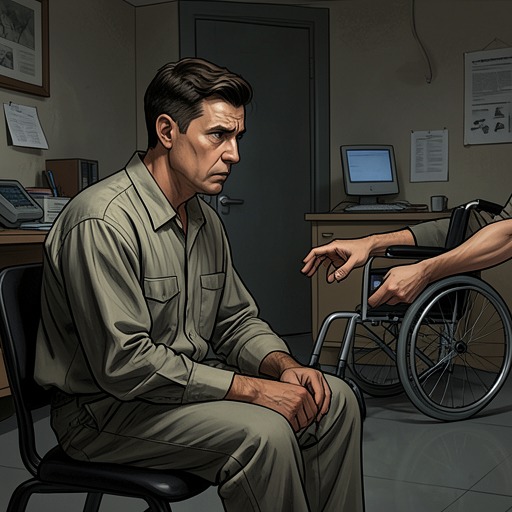
The trial record contained none of that human context. Herbert’s appointed lawyer presented no evidence about his background, his service in Vietnam, his war-related trauma, his relationship with the victim, or his fixation on his girlfriend. Alabama limited appointed counsel’s compensation for out-of-court preparation to $1,000, and the lawyer spent almost no time preparing. The trial lasted just over a day; the judge imposed a death sentence, and the lawyer filed no appeal brief after telling Herbert that he saw no reason to appeal. Mitigation was therefore not simply information left out of a fuller story: its absence shaped what the court was able to consider before condemning him to die.
The History the Trial Omitted
Herbert Richardson’s military service began in 1964, when he enlisted in the United States Army at eighteen. Assigned to the 11th Aviation Group, 1st Cavalry Division, he was sent to Camp Radcliff in An Khe, near Pleiku, an area of especially heavy fighting in the mid-1960s. His missions brought him face to face with repeated violence: friends were killed or seriously injured, and in one ambush his entire platoon was killed and he was severely wounded. He regained consciousness covered in the blood of fellow soldiers, disoriented and unable to move. Soon afterward, he suffered a mental breakdown and attempted suicide amid severe headaches.
His commanders referred him for psychiatric evaluation more than once, but he remained in combat for seven months. In December 1966, after episodes of crying and withdrawal, he received an honorable discharge. The discharge ended his military service, not its effects. Back in Brooklyn, New York, he experienced nightmares and disabling headaches, and at times ran from his house shouting an alarm that recalled incoming fire. He married and had children, but his post-traumatic stress continued to undermine his ability to manage his behavior. He later spent time in a veterans hospital in New York City, recovering slowly and painfully from head injuries sustained in the war.
Richardson’s history also belonged to a wider pattern the trial did not address: by the mid-1980s, nearly 20 percent of people in jails and prisons in the United States had served in the military. The book describes the incarceration of veterans after combat as a little-discussed consequence of war, as trauma returned with them to their communities. In Richardson’s case, mitigation required the court to confront that history as part of the person before it—not as an excuse for the bombing, but as essential context for deciding whether death was an appropriate sentence.
The Last-Minute Attempt to Reopen the Record
Two weeks after first speaking with Herbert Richardson, Bryan Stevenson was seeking a stay of execution with less than two weeks remaining. The question was not only whether Herbert had committed the bombing. Stevenson believed the case raised a separate legal question: whether Herbert had intended to kill, as Alabama law required for a capital murder conviction. And even if the conviction stood, the courts had never heard evidence of his military trauma, service, and childhood difficulties that could have argued against a death sentence. Stevenson saw the omissions as consequential, not incidental: without the history that might have changed the sentencing decision, Herbert had become an easy target for a system that had not attended to the requirements of capital punishment.
Stevenson asked several courts to halt the execution, challenging the ineffective representation, racial bias at trial, the prosecutor’s inflammatory comments, and the absence of mitigating evidence. The courts rejected the requests as too late. In a hastily arranged hearing in Dothan, Alabama, Stevenson presented an expert who could testify that Herbert’s bomb was a timed device, designed to go off at a particular time rather than kill on contact. The judge stressed that the evidence was not newly discovered and should have been presented at trial or in earlier proceedings, so it could not now justify a stay. The hearing exposed the bind created by the original omission: evidence that might have mattered at trial was treated as unavailable for meaningful consideration because it had not been introduced then.
Herbert sat beside Stevenson and recognized the judge’s lack of interest. As his anxiety rose, he whispered requests that the expert make claims about his intent beyond the expert’s knowledge, then began speaking audibly in court. Stevenson asked for a brief recess to calm him. Without co-counsel to help manage the hearing or support Herbert, he struggled to present the evidence and steady his client at once. At the end, Herbert was shackled and returned to death row, vexed and disappointed; Stevenson left without knowing whether the evidence had been enough to alter the court’s view. The episode made the human cost of a missing mitigation record immediate: a late hearing could expose what had been left out without giving the courts a practical way to remedy it.
As Stevenson was leaving, a group of Black women and children approached him. One woman explained that she was Rena Mae’s mother, the mother of the child killed in the bombing. The family had been promised help that never came; MaryLynn’s hearing had never been right since the explosion, and the woman and another daughter also had nerve problems. She asked Stevenson for assistance, cautiously offering her hand. He told her gently that he represented Herbert. The encounter did not erase the family’s injuries or turn their needs into evidence for the defense. Instead, it placed the bombing’s consequences alongside the case’s neglected questions of intent and punishment, revealing people on both sides of the prosecution who had been left without the help they had expected.
A Wider Practice of Making a Life Legible
The book extends the logic of mitigation beyond the question of whether an adult defendant should be executed. In cases involving people sentenced as children, it repeatedly sets a violent act beside the age, experience, and capacity for change of the person who committed it. The juvenile clients had often grown into reflective adults who were no longer like the confused children they had been at the time of their crimes. That change did not undo the harm; it challenged the assumption that a sentence imposed on a child could treat an entire life as already settled.
Ian Manuel’s history shows how that fuller account can include responsibility and relationship, not only deprivation. On Christmas Eve in 1992, soon after arriving in prison, he used his monthly phone call to apologize to Debbie Baigre, the woman he had shot. She was stunned, but moved by the call; it began years of correspondence. Although Ian had been neglected before the crime and spent eighteen years in uninterrupted solitary confinement, Debbie became one of the few people encouraging him to remain strong. After years of communication, she asked the sentencing judge to recognize both the severity of Ian’s punishment and the inhumane conditions of his confinement. She did not minimize the crime: she argued that a thirteen-year-old who had lacked supervision and help should not be treated as though he were an adult. The courts ignored her appeal, but her testimony as the injured person made visible a relationship and a possibility of change that a sentence alone could not describe.
Other histories make clear why such context cannot be reduced to a single account of childhood hardship. Trina Garnett was the youngest of twelve children in Chester, where poverty, unemployment, and a poorly ranked school system narrowed the circumstances around her. After years of witnessing her father’s violence toward her mother, she was fourteen when she entered a house with a friend, lit matches to find the boys’ room, and a fire killed two sleeping children. Her appointed lawyer did not properly pursue an incompetency determination or challenge her trial as an adult; a witness testified against her in exchange for dropped charges, and a mandatory life-without-parole law left the judge unable to consider her age, mental illness, poverty, abuse, or lack of intent at sentencing. The case demonstrates what is lost when a system can register a conviction but has no room in its sentencing rules for the circumstances that shaped a child’s life.
The book also treats support after prison as part of the practical meaning of recognizing change. Because some clients had spent decades incarcerated as children and had few support systems, the Equal Justice Initiative created a re-entry program offering housing, job training, life skills, counseling, and other assistance. In 2016, Ian was released, embraced by Debbie, and later joined the program; he now writes and performs spoken-word poetry. These outcomes do not retroactively supply the evidence omitted from Herbert Richardson’s trial, nor do they collapse juvenile sentencing into capital sentencing. They show, instead, why a judgment about punishment requires more than a description of an offense: it must attend to a person’s history, the injuries carried by victims and families, the possibility of change, and the conditions that make a different future possible.