Post-traumatic stress disorder
Just MercyPost-traumatic stress disorder is presented in Herbert Richardson’s story as a lasting consequence of combat and as evidence the capital trial failed to consider. His experience links the delayed return of wartime trauma to the difficulties of life after service, and to the sentencing question of whether the state had fully considered the circumstances that argued against death.
Combat and Its Aftermath
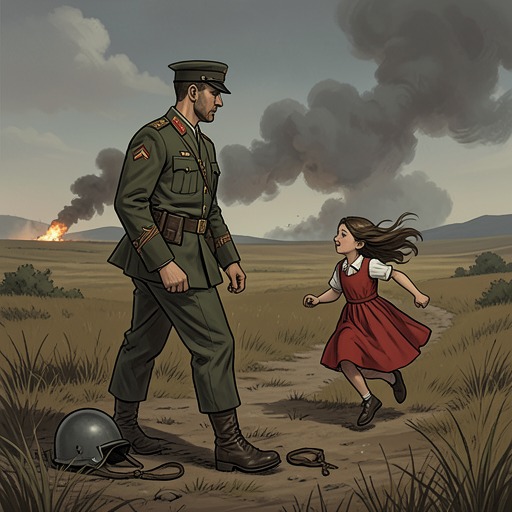
Richardson remained in combat for seven months despite his commanding officers’ efforts to obtain a psychiatric evaluation. In December 1966, crying outbursts and withdrawal preceded his honorable discharge. The discharge ended his military service, but not its effects: after returning to Brooklyn, New York, he experienced nightmares and disabling headaches, and at times ran from his home shouting a warning associated with incoming fire.
The account identifies post-traumatic stress disorder as a continuing force in Richardson’s life. He married and had children, but his symptoms continued to undermine his ability to manage his behavior. The condition is thus described not as a brief crisis confined to military service, but as an enduring disruption that followed him into family and community life.
Treatment and Incarceration
Richardson eventually entered a veterans hospital in New York City. His recovery from severe head pain associated with his war injuries was slow and difficult. The account offers no simple resolution: military discharge was followed by years of struggle and a gradual, arduous effort to recover.
His experience is set against a broader postwar problem that the book describes as rarely discussed: combat veterans returning to their communities and ending up in jail or prison. By the mid-1980s, nearly 20 percent of people in jails and prisons in the United States had served in the military. That share declined during the 1990s as the effects of the Vietnam War receded, then rose again amid the conflicts in Iraq and Afghanistan. These figures establish a wider context for Richardson’s trajectory without implying that every incarcerated veteran had PTSD or the same history.
Trauma and Capital Sentencing
Two weeks after his first conversation with Richardson, Bryan Stevenson was urgently seeking a stay of execution. Stevenson acknowledged that Richardson’s guilt was not really in question, but argued that there were substantial reasons the case should not have been treated as capital murder, including the absence of a specific intent to kill. Separately, Richardson’s trauma, military service, and childhood difficulties offered powerful grounds for arguing against a death sentence.
That mitigating history had not been presented at trial. The omission mattered because, in Stevenson’s account, a fair decision about execution required careful consideration of the reasons death might not be an appropriate sentence. PTSD therefore enters the case not as a claim that erased responsibility, but as part of the human and historical context that the sentencing process failed to hear.
Individual History and Public Context
Richardson’s case gives concrete form to the book’s account of veterans’ postwar difficulties: combat-related distress continued after an honorable discharge, accompanied him home, affected his behavior, and was followed by incarceration. The narrative also distinguishes the existence of trauma from whether institutions recognize and respond to it. In Richardson’s trial, the evidence of trauma and service that could have informed the sentence was not put before the jury.
The account does not suggest that one diagnosis alone explains Richardson’s life or determines the proper outcome of a capital case. Instead, it shows why a person’s history—including the lasting consequences of war—must be considered before the state imposes its most severe punishment. In this telling, PTSD is both a sustained personal condition and a neglected part of the record.