Vietnam
Just MercyVietnam is central to Herbert Richardson’s history because the combat he experienced there left physical and psychological injuries that continued to shape his life after his return to the United States. Years later, on the day of his execution, he compared the certainty of facing death in prison with his experience of war, describing the former as stranger.
Wartime Setting and Lasting Consequences
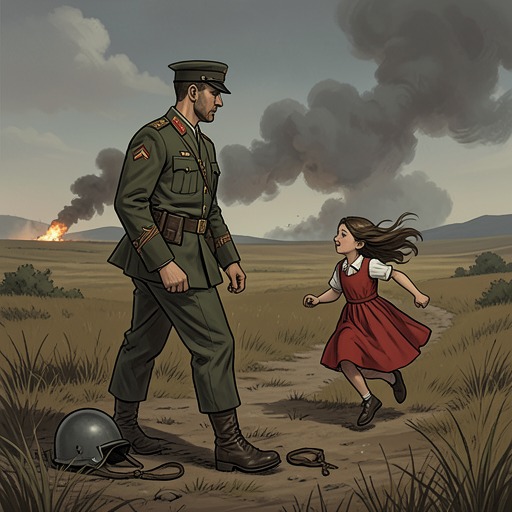
Herbert enlisted in the United States Army in 1964, at eighteen, and was assigned to the 11th Aviation Group, 1st Cavalry Division. He served at Camp Radcliff in An Khe, near Pleiku, an area of exceptionally heavy fighting in the mid-1960s. On one mission, an ambush killed his entire platoon and left him severely injured. He regained consciousness covered in his fellow soldiers’ blood, disoriented and unable to move; after severe headaches and a suicide attempt, he suffered a mental breakdown. Despite repeated referrals from commanding officers for psychiatric evaluation, he remained in combat for seven months. In December 1966, crying outbursts and uncommunicative withdrawal led to his honorable discharge. The effects of the war continued after he returned to Brooklyn: he had nightmares and disabling headaches, and sometimes ran from his home screaming that the enemy was coming. His trauma also continued to undermine his ability to manage his behavior, linking the combat landscape of Vietnam to the difficulties he faced in civilian life and, later, to the circumstances recalled during his final hours.
War Remembered at the Execution
On the day of his execution, Herbert Richardson told Bryan Stevenson that the certainty of being killed in prison felt stranger than Vietnam. During his final fourteen hours, officers repeatedly offered him breakfast, lunch, a meal, stamps for letters, water, coffee, or access to a telephone. Herbert observed that more people had asked what they could do for him in those hours than had asked during the years when he was growing up. The contrast turned his execution into an indictment of care arriving only when it could no longer change the outcome. As officers led him away while “The Old Rugged Cross” played from a cassette recorder, Stevenson thought about the support Herbert had lacked as a child, as a teenager struggling with drugs and alcohol, and after returning from war traumatized and disabled. Vietnam thus remained present not only in Herbert’s injuries and memories, but in the question his final hours forced into view: why help had come at the point when it could do nothing to save him.
The Route Home from Vietnam
After returning from the war, Herbert Richardson was treated at a veterans hospital in New York City, where he slowly recovered from severe head pain associated with his injuries. There he met a nurse from Dothan, Alabama, whose compassionate care made him feel comfortable and hopeful; when she moved back to Alabama, he followed her. The move carried the effects of Vietnam into the landscape of the case that would later end his life: the war was not a closed chapter, but part of the history he brought with him to Alabama.
Vietnam and the Postwar Prison Population
Herbert Richardson’s return from Vietnam belongs to a broader, often overlooked pattern: combat trauma followed veterans into civilian life, and many later ended up in jail or prison. By the mid-1980s, nearly one in five people incarcerated in the United States had served in the military. The proportion declined during the 1990s as the Vietnam War’s influence receded, then rose again amid the conflicts in Iraq and Afghanistan. In this wider account, Vietnam is not simply the setting of Herbert’s wartime injuries; it marks a passage from combat into a society that frequently failed to meet veterans’ needs before they became entangled in the criminal legal system.