Walter McMillian–Ralph Myers fabricated association
Just MercyThe fabricated association between Walter McMillian and Ralph Myers turned two strangers into alleged partners in murder and became the central link in the case against McMillian. Myers’s changing accusations drew the men together in the official story, but an encounter staged to verify their connection showed that Myers could not recognize McMillian. Investigators persisted anyway: the supposed relationship helped justify an arrest, prolonged coercive pressure on both men, and supplied the prosecution with its principal witness.
How the Accusation Took Shape
Myers was illiterate, but he understood that investigators remained consumed by the unsolved murder of Ronda Morrison. His allegations against the sheriff were going nowhere. He then changed his account, saying he had taken part in the murder of Vickie Lynn Pittman with Karen Kelly and her Black boyfriend, McMillian. He went further and accused McMillian of killing Morrison as well. That second accusation redirected the investigation toward the crime that had held the community’s attention for months.
The claim arose amid intense pressure to solve Morrison’s murder. Seven months had passed, public criticism was mounting, and the community was fearful and angry. Sheriff Tom Tate had limited law-enforcement experience and faced the burden of an apparently unsolvable case early in his term. Myers’s account also connected McMillian to Karen Kelly, whose custody dispute had made her relationship with him a subject of local gossip. The evidence did not establish that McMillian had committed either murder; the affair instead gave the accusation a racialized and sensational context in which officials could treat him as suspicious.
At first, the story did not become more convincing as Myers supplied details. Investigators began to suspect that Myers might be the sole killer and was trying to reduce his own culpability by implicating someone else. District Attorney Ted Pearson later encountered an account so far-fetched and dramatically embellished that even its basic allegations were unnecessarily complicated. Its vividness did not make it reliable, but the accusation nevertheless became the foundation for further action against McMillian.
A Meeting That Revealed No Acquaintance
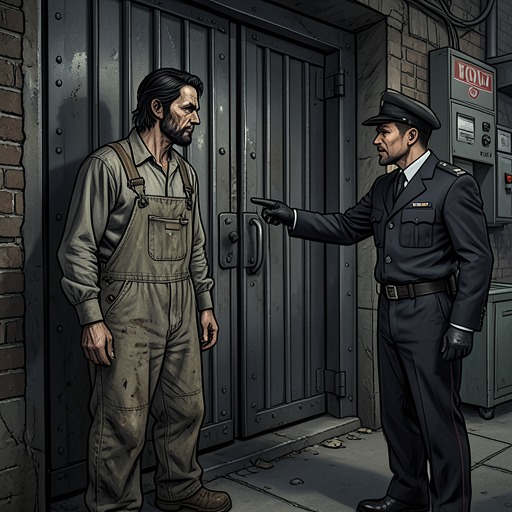
An Alabama Bureau of Investigation agent arranged a monitored meeting at a store to test whether Myers and McMillian knew one another. By then, several months had passed since Morrison’s murder. The encounter was supposed to help substantiate the claim that the men had acted together. Instead, Myers could not pick McMillian out among several Black men in the store; he had to ask the owner to identify him.
Myers then delivered a note supposedly written by Karen Kelly. McMillian appeared confused by the unfamiliar man and the note, threw it away, and returned to what he had been doing. He paid little attention to the encounter. The agents monitoring them found nothing to suggest a relationship and substantial indication that the two men had never met. The scene thus contradicted the premise the investigation was meant to support: Myers could not identify the alleged accomplice without help, and McMillian responded as if confronted by a stranger.
The officials nevertheless continued with the McMillian theory. As the months passed without an arrest, the pressure to produce one intensified. The failed meeting did not end the investigation’s focus on McMillian; it exposed how little the supposed association rested on firsthand familiarity while leaving the accusation in place.
From Alleged Partners to Arrested Suspects
After months of frustration and public scorn, Tate, lead investigator Simon Benson, and district attorney’s investigator Larry Ikner decided to arrest McMillian primarily on Myers’s allegation. They had done little investigation of McMillian and chose a pretextual charge while they built their case. Myers said he was terrified of McMillian. When an officer suggested that McMillian might have sexually assaulted him, Myers recognized the usefulness of the suggestion and agreed. Because Alabama law criminalized nonprocreative sex, officials planned to arrest McMillian on sodomy charges.
On June 7, 1987, Tate led more than a dozen officers to a back-country road McMillian used on his way home from work. The officers stopped his truck, drew their weapons, and surrounded him. Tate said McMillian was under arrest for sodomy. McMillian was confused by the charge and denied both the sexual accusation and any involvement in Morrison’s murder. The arrest did not rest on an established relationship between the two men; it used an inflammatory allegation about that relationship to detain McMillian while authorities continued investigating the murder.
The story Myers gave about Morrison’s killing supplied an elaborate version of how the strangers had supposedly come together. He claimed that McMillian had forced him at gunpoint to drive McMillian’s truck to Monroeville because McMillian’s arm was hurt. Myers said he waited while McMillian went into Jackson Cleaners, left to buy cigarettes after a long delay, and later heard McMillian admit he had killed the clerk. Myers further claimed that McMillian threatened to kill him if he told anyone. This account placed Myers at the crime scene and cast him as an unwilling witness, but it sat uneasily beside his inability to identify McMillian in the monitored store encounter.
Recantation, Death Row, and the Prosecution
Myers began to reconsider his accusations while facing indictment in the Morrison murder. He had been promised that he would not receive the death penalty and would receive favorable treatment in exchange for testifying. He also began to recognize the danger of admitting to a notorious murder he had not committed. A few days before the capital charges against McMillian were made public, Myers told investigators that his allegations were untrue.
Rather than treat the recantation as reason to reassess the case, investigators pressured Myers to provide additional incriminating details. He protested that he had none because the story was false. At some point, officials decided to place both Myers and McMillian on death row before either had been tried. The precise decision-maker was unclear, but the maneuver applied pressure to the two pretrial detainees and proved effective. They were transferred from the county jail to Holman Correctional Facility on August 1, 1987, less than a month before Wayne Ritter’s scheduled execution.
Death row was not ordinary pretrial detention. The men were housed among convicted prisoners in the most restrictive punitive confinement available, locked alone for twenty-three hours a day, with limited exercise and visitation and close proximity to the electric chair. Myers’s recantation had not dissolved the alleged partnership; instead, both men were confined under the weight of an accusation that Myers said was false. The imprisonment made the fabricated connection consequential even before a jury heard the case.
After Myers was removed from death row and returned to Monroe County, he affirmed his original accusations. With Myers again serving as the principal witness and Bill Hooks prepared to say he had seen McMillian’s truck at the crime scene, Pearson believed the prosecution could proceed. The case was scheduled for trial in February 1988. In this final turn, the alleged relationship survived both the failed identification and the recantation: the prosecution returned to Myers’s testimony, while the evidence that he and McMillian had never met remained a fundamental contradiction in the story used to connect them.