Walter McMillian's Rule 32 evidentiary hearing
Just MercyWalter McMillian’s Rule 32 evidentiary hearing was the pivotal effort to place his innocence and the State’s suppressed evidence before a court. Over three days in Bay Minette, the defense presented Ralph Myers’s new testimony alongside records that had never been disclosed to McMillian’s trial lawyers, turning a conviction built on contested witnesses into a case measured against documentary evidence and the State’s own files.
Background and stakes
The hearing followed months of investigation and repeated efforts to obtain police and prosecution records. The defense had uncovered substantial exculpatory material and believed that more remained undisclosed; after the ninth or tenth request for files, Judge Thomas B. Norton Jr. called the lawyers’ efforts fishing. By the time the final hearing was scheduled, he had grown weary of the contentious case, while the defense worried that Myers might again buckle under pressure when returned to the county courthouse. The documentary evidence offered a counterweight: unlike a witness’s account, records could be introduced without the same unpredictability.
Evidence and unequal access to the courtroom
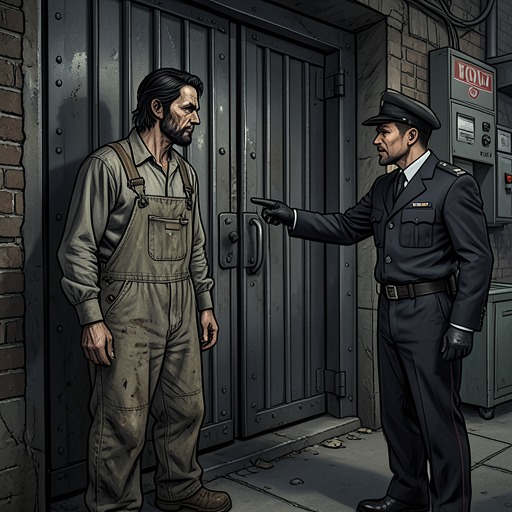
The hearing’s evidence unfolded against a courtroom whose public access was itself contested. When Bryan Stevenson arrived on the next hearing day, a deputy initially stopped him at the door. Inside, a large metal detector stood beside a police officer holding back a German shepherd. The benches where Walter McMillian’s supporters had sat the day before were now mostly occupied by older white people supporting the Morrisons and the prosecution, while McMillian’s family and supporters waited outside after being told they could not enter. Stevenson challenged the prosecutors about the exclusion and took the matter to Judge Thomas B. Norton Jr.; the contrast made the hearing’s formal testing of evidence inseparable from the unequal treatment surrounding it.
The defense then tested the claim that McMillian’s modified truck had been seen leaving the cleaners near the time of Ronda Morrison’s murder. White mechanic Clay Kast testified that the truck was not a low-rider in November 1986. His records and recollection placed the modification in May 1987, more than six months after Bill Hooks and Joe Hightower said they had seen such a vehicle at the cleaners. The detail turned an apparently identifying feature of the prosecution’s account into a chronological problem: the truck could not have looked as the witnesses described on the date they claimed to have seen it.
Monroeville police officer Woodrow Ikner supplied a separate contradiction. As the first officer at the scene, he testified that Morrison’s body was not where Ralph Myers had placed it in his trial account. Ikner described a struggle that began in the bathroom and ended at the rear of the cleaners, where Morrison was found; this conflicted with Myers’s account of seeing her near the front counter. More damaging still, Ikner testified that trial prosecutor Ted Pearson had asked him to say the body was dragged from the front counter to its final location. Ikner refused because he knew that account was false, and he was later discharged from the police department. Together, the truck records and Ikner’s testimony challenged not only witness accuracy but the prosecution’s presentation of the crime scene.
The final day brought witnesses who had been jailed or imprisoned with Myers. Several testified consistently that Myers had said he was being pressured to give false testimony against McMillian. Isaac Dailey, whom Myers had falsely accused of the Vickie Pittman murder, recounted that Myers had told him he and Karen Kelly discussed blaming that crime on McMillian. Another inmate, who had written letters for Myers in the Monroe County Jail, testified that Myers did not know McMillian, knew nothing about Morrison’s murder, and was being pressured by police to implicate him. These accounts placed Myers’s recantation within a pattern of statements he had made to others while in custody.
The most consequential evidence came in recordings of Myers’s interrogations by Tom Tate, Benson, and Ikner. Across multiple recorded statements, Myers repeatedly said that he knew nothing about Morrison’s murder or McMillian; the tapes also captured officers threatening him and Myers resisting the effort to frame an innocent man. They supported his hearing testimony and contradicted his trial testimony, while exposing that Myers had given at least six additional statements beyond the two Pearson had disclosed to the court, jury, and defense counsel. The typed statements were exculpatory and had not been turned over to McMillian’s lawyers. Bruce Boynton and J. L. Chestnut, McMillian’s trial lawyers, testified about how disclosure could have strengthened their defense and their effort to win an acquittal.
After the defense completed its presentation, the State offered no rebuttal evidence. Norton appeared surprised and requested written briefs from both sides on the ruling he should make. The three days of litigation ended without an immediate decision: the evidence was now before the court, but McMillian’s release still depended on the judge’s forthcoming order.
Race, Jury Selection, and the Meaning of the Record
The evidentiary dispute took place within a legal system where formal guarantees of racial equality had often coexisted with practices that kept Black people from meaningful participation. In 1987, all forty elected district attorneys in Alabama were white, although sixteen counties had Black majorities. Monroe County was 40 percent Black, yet prosecutors in serious felony cases had commonly used peremptory strikes to remove Black prospective jurors. Earlier rulings had barred racial exclusion in principle, but the evidentiary threshold for challenging discriminatory strikes had left the practice largely intact. The 1986 decision in Batson v. Kentucky offered defendants a more direct way to contest those strikes, while also requiring prosecutors to find more creative means of excluding Black jurors.
That history sharpened the significance of what the hearing placed on the record. The defense was not simply disputing the credibility of Ralph Myers and Bill Hooks: Clay Kast’s records dated the truck modification to May 1987, and Woodrow Ikner’s testimony contradicted both Myers’s account of where Ronda Morrison’s body had been found and the prosecution’s proposed description of the scene. Myers’s recorded statements, meanwhile, showed that he had repeatedly denied knowing about the murder or Walter McMillian. These different forms of evidence converged against a prosecution account that had been presented to a jury without the exculpatory statements disclosed to McMillian’s lawyers.
The courtroom’s shifting audience gave that evidentiary struggle a visible counterpart. On one hearing day, McMillian’s family and supporters were kept outside while older white supporters of the Morrisons and the prosecution occupied the benches; a metal detector and a German shepherd marked the changed entrance. Bryan Stevenson challenged the exclusion before Judge Thomas B. Norton Jr. The hearing therefore tested more than whether particular testimony could withstand scrutiny: it also exposed the distance between a process that claimed to evaluate evidence impartially and the unequal conditions under which Black defendants and their communities encountered that process.
The racial politics behind Walter’s changed status
The hearing’s stakes reached beyond the disputed crime scene and the prosecution’s evidence. Before the murder case, Walter McMillian had been known to white residents largely as a hardworking pulpwood cutter. That standing shifted after he was subpoenaed in the custody dispute between Karen Kelly and her husband. Walter acknowledged that he was Karen’s friend; her lawyer objected to the husband’s attorney’s crude questions, so Walter was spared from giving details about their relationship. But leaving the courthouse did not end the matter: anger toward him was palpable, and word spread quickly. He was no longer seen only as a man valued for his work with a saw in the pine trees, but as something more troubling to the community.
That change acquired its force from a much longer history. In the United States, fears of interracial sex and marriage helped undermine Reconstruction, sustain Jim Crow laws, and shape racial politics across the twentieth century. After slavery, laws and social practices enforced racial hierarchy in part by preventing intimate relationships such as Walter and Karen’s. The term “miscegenation” itself entered use in the 1860s, coined by slavery’s supporters to stoke fear of interracial relationships and the racial mixing they imagined abolition would bring. For generations, law-enforcement officials in many Southern communities treated the investigation and punishment of Black men who had been intimate with white women as part of their duty.
The retreat from Reconstruction in Alabama brought the loss of Black voting rights and a succession of restrictive laws designed to restore white supremacy. Racial-integrity laws reinforced that hierarchy and were used to justify the forced sterilization of poor and minority women; forbidding relationships between white women and Black men became an intense preoccupation across the South. This history does not substitute for the hearing’s specific proof about the murder, but it clarifies why Walter’s relationship with Karen could transform his standing and why accusations against him unfolded within a charged racial order. The hearing’s challenge was to put testimony and records to the test in a setting where racialized assumptions had already shaped how his conduct was understood.