
Carl Vespa’s Search for Balance
Just One LookThis flow follows Carl Vespa’s pursuit of vengeance against Wade Larue as new testimony challenges his idea that punishment can restore balance.
increasing Bearing strength in each event
 decreasing
Bearing strength in each eventdecreasingA Grief Kept Alive
Grief Becomes a Mission
A Father Without His Son
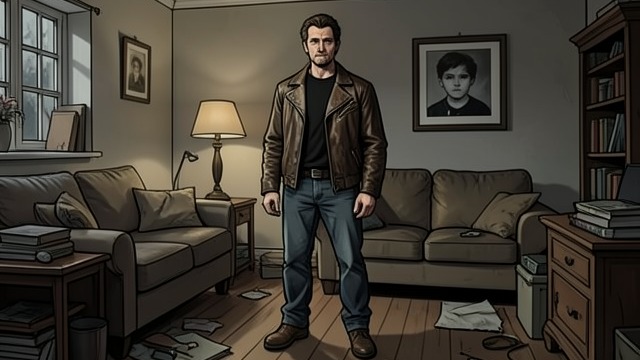
Carl Vespa has spent fifteen years living with the death of Ryan Vespa in the Boston Garden stampede. His grief persists long after the public’s attention has faded, and the impending possibility of Wade Larue’s release brings the old loss sharply back into the present.
A Personal Measure of Justice
Vespa understands that Grace Lawson does not share his desire for revenge. She regards Larue as a reckless, intoxicated young man, while Vespa sees the killing of Ryan as an injury for which someone must answer.
His belief that the world requires balance drives his choices, but it also narrows his attention: he increasingly treats vengeance as a duty owed to the dead, even as the living around him try to survive what happened.
A Survivors’ Reckoning

Release Reopens the Conflict
A Public Return
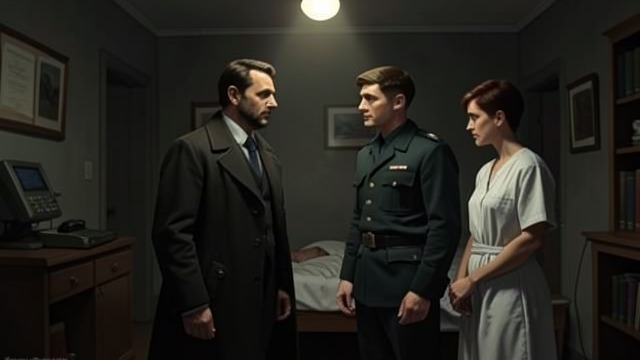
Wade Larue leaves Walden Prison after nearly fifteen years, and Sandra Koval publicly argues for rehabilitation and a second chance. Carl Vespa attends the press conference with Grace, facing the man he has long associated with the death of his son.
Restraint Gives Way
After the conference, Vespa takes Larue to his home and asks whether he fired the shots. Larue admits that he did. Vespa responds with a beating, trying to turn accumulated grief into a concrete act of punishment.
The encounter shows how little release has changed Vespa’s inner condition. Even when he can reach the person he blames, physical retaliation does not settle his grief or tell him the whole story.
A Confession of Another Kind
The Question Beneath Revenge
Larue Challenges the Motive
As Vespa beats him, Larue asks whether the revenge is for Vespa himself or for Ryan. Vespa insists it is not for himself, but cannot explain who would benefit from the punishment now that his son is dead.
A New Account of the Past
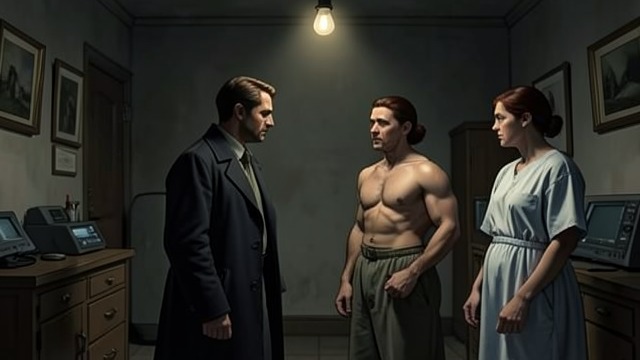
Larue says that the dying security guard Gordon MacKenzie visited him in prison and confessed to firing the first shot backstage. The disclosure unsettles the simple story in which Larue alone embodies the cause of the tragedy.
Vespa’s pursuit shifts from punishing a known offender to hearing a wider account of responsibility. The possibility that another person’s action helped trigger the disaster does not absolve Larue, but it makes Vespa’s idea of clean retribution harder to sustain.
Truth for a Price
Vengeance Meets New Evidence
The Proposed Exchange
Larue explains that MacKenzie confessed because he was dying and could no longer live with his actions. Larue, who has reconsidered revenge after leaving prison, tells Vespa what he knows and gives him information about Eric Wu in exchange for being left alone.
Vespa’s Unspoken Decision
Vespa listens without revealing what he intends to do. Larue hopes that telling the truth will let him begin a new life; Vespa still has the power to interpret that truth as an opportunity for justice or as an invitation to retaliate.
The bargain temporarily changes the conflict from physical punishment to a transfer of knowledge. Yet its terms are unstable because Vespa’s grief has never been governed by a promise of proportionality.
A Cycle Without Closure
Retaliation Repeats Itself
The End of Two Lives
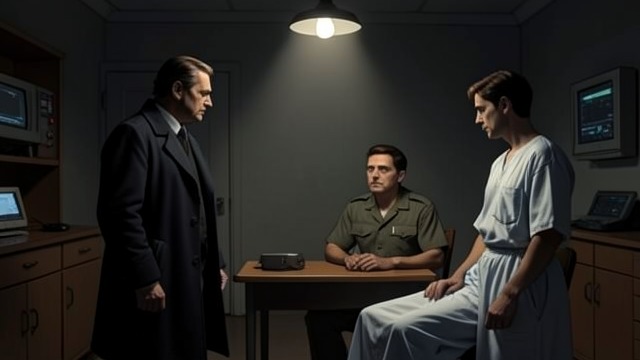
Wade Larue is shot after leaving the press conference, and Jimmy X is later killed outside the hospital. The killings remove two people connected to the old catastrophe, while the evidence and circumstances point toward Vespa’s circle without providing a public resolution.
A Truth That Cannot Restore
Vespa later admits that he learned about Jimmy X from Larue and says that what happened that night was Jimmy’s fault. Grace challenges the certainty behind that claim, but Vespa’s grief leaves little room for distinctions between blame, punishment, and recovery.
The conflict ends without restoring Ryan or producing a satisfying balance. Vespa can retaliate against those he sees as responsible, but each act extends the chain of violence rather than repairing the original loss.
Fifteen years after the Boston concert stampede
The day Wade Larue is released from prison
During the meeting after the press conference
After Larue reveals MacKenzie’s confession
After Wade Larue and Jimmy X are found dead
